

King Saud University gets US patent on biometrics security invention by Pakistani scientist

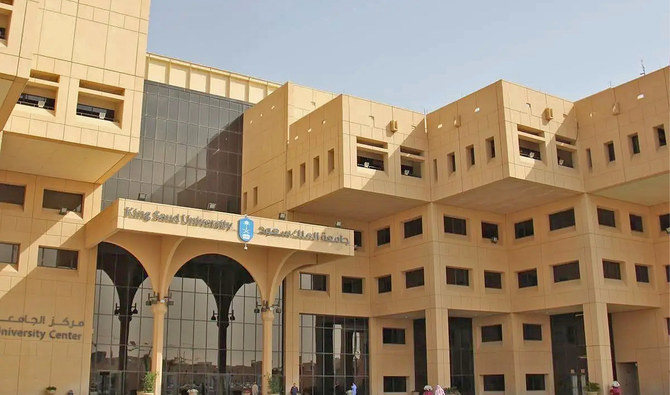
The undated picture shows the King Saud University in Riyadh, Saudi Arabia. (King Saud University)
Short Url
Updated 18 January 2024
Follow

King Saud University gets US patent on biometrics security invention by Pakistani scientist

  • Khan is distinguished professor of cybersecurity from KSU’s Center of Excellence in Information Assurance
  • In October, KSU won another US patent for developing biometrics-based iris recognition system invented by Khan

KARACHI: The United States Patent and Trademark Office (USPTO) has granted a patent to the King Saud University for an invention entitled “Methods and Systems for Implementing Secure Biometric Recognition” designed by a team led by a Pakistani scientist, the university announced this week.

The invention is the outcome of a research grant funded by Saudi Arabia’s National Plan for Science, Technology, and Innovation, King Abdulaziz City for Science and Technology. The project is led by Pakistani Professor Dr. Muhammad Khurram Khan as the principal investigator.

Khan is a distinguished professor of cybersecurity from KSU’s Center of Excellence in Information Assurance, and his co-inventors, Dr. L. Leng and PhD student Mr. W. Tengfei, have invented a “groundbreaking approach by developing an AI-enabled, highly secure palmprint biometrics cryptosystem,” KSU said on its website.

“This invention harnesses the deep hashing network by leveraging deep learning, which is considered a game changer in the field of computer vision,” KSU said.

“It utilizes a fuzzy commitment scheme based on deep hashing codes, whose templates are much smaller than traditional texture-coded templates, thereby significantly reducing storage and computation requirements. A set of rigorous experimental results have demonstrated robustness of the system against security attacks and privacy leakage.”

Biometrics is a commonly used authentication factor that utilizes human behavior and physical attributes for the purpose of personal identification and identity management. 

Biometrics has recently become the de facto method of authentication for smartphones, computing devices, border control systems, payment gateways, and online services for consumer and commercial applications. But a biometrics system can however suffer from a variety of attacks that compromise its data privacy and security.

In October, King Saud University won another patent from the United States by developing a biometrics-based iris recognition system also led by Khan, who is the founding CEO of the US think tank, Global Foundation for Cyber Studies and Research.

He has contributed to cyber policy work for the G20 (Saudi and Italian Presidencies) in shaping a safer cyberspace for children, protecting the masses and vulnerable populations in cyberspace, and empowering and enabling women in the cybersecurity profession. In 2019, he played an instrumental role as a cybersecurity subject expert for a $6 million series B investment in a South Korean startup, “SecuLetter,” which has received a corporate valuation of over $100 million (2023).

Khan is the Editor-in-Chief of the well-reputed international journal, ‘Telecommunication Systems’, published by Springer-Nature for over 27 years, with a recent impact factor of 2.5 (JCR 2023). He is also the Editor-in-Chief of Cyber Insights Magazine.


Pakistan PM to attend World Economic Forum’s annual meeting in Switzerland next month

Updated 29 December 2025
Follow

Pakistan PM to attend World Economic Forum’s annual meeting in Switzerland next month

  • The WEF meeting, scheduled to be held in Davos on Jan. 19-23, will focus on global challenges, public-private dialogue and cooperation
  • Government, business, civil society and academia leaders will engage in forward-looking discussions to address these issues, set priorities

ISLAMABAD: Pakistan Prime Minister Shehbaz Sharif will travel to Switzerland next month to attend the 56th annual meeting of the World Economic Forum (WEF), Pakistani state media reported on Monday.

The WEF annual meeting, themed as ‘A Spirit of Dialogue,’ will be held from Jan. 19 to Jan. 23 in Davos, where world leaders from government, business, civil society and academia will engage in forward-looking discussions to address global issues and set priorities.

Prime Minister Sharif is expected to interact with global leaders and investors on economic challenges, regional and international issues and various opportunities for cooperation.

On Monday, Deputy PM Ishaq Dar presided over a meeting in Islamabad to oversee preparations for Sharif’s upcoming visit to Switzerland to attend the WEF meeting, the Radio Pakistan broadcaster reported.

“Dar instructed to maximize the engagements with the incoming Heads of States, Governments and senior leadership of economic, business and financial institutions,” the report read.

The WEF meeting program will be structured around key global challenges where public-private dialogue and cooperation, involving all stakeholders, is necessary for progress, according to the WEF website.

In addressing these challenges, growth, resilience and innovation will serve as cross-cutting imperatives, guiding how leaders engage with today’s complexity and pursue tomorrow’s opportunities.

Pakistani foreign ministry officials briefed the deputy PM about preparations for the WEF meeting, according to Radio Pakistan. The participants of Monday’s meeting in Islamabad discussed in detail the bilateral component and media engagements during the visit.

“He [Dar] further stressed that opportunities be explored to foster collaboration with private sector business entities,” the state broadcaster said.