

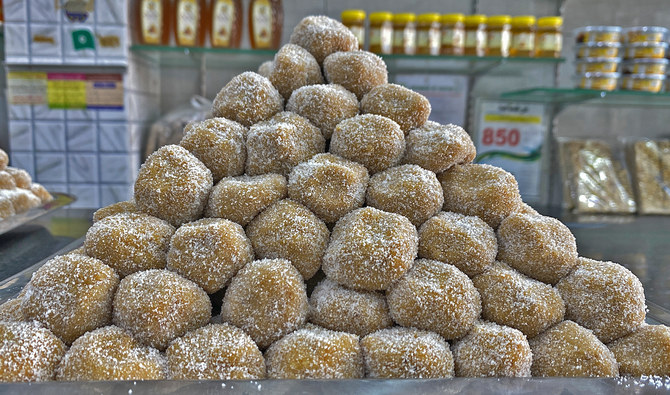
Sweet connection: Mardan’s Budayuni Pera, a delicacy with roots in India, captivates people in Pakistan

Mardan’s Budayuni Pera are pictured in a shop in Mardan, Pakistan, on 27 December, 2023. (AN photo)
Short Url
Updated 01 January 2024
Follow

Sweet connection: Mardan’s Budayuni Pera, a delicacy with roots in India, captivates people in Pakistan

  • Budayuni Pera is a symbol of a shared history and enduring ties between the two South Asian countries 
  • Migrants from India brought the treasured recipe of the sweet with them to Pakistan after August 1947 

MARDAN: Amid the streets of Mardan, the second-largest city in Pakistan’s northwestern Khyber Pakhtunkhwa province, a sweet legacy from across the border captivates both locals and visitors. 

Budayuni Pera, a delicacy with its roots in the Indian city of Budaun in Uttar Pradesh, has found a second home in Pakistan owing to the migrants who brought the treasured recipe with them in the years following the 1947 partition. 

On Mardan’s Bank Road, about a dozen shops proudly display their version of the beloved sweet that is reminiscent of a dough ball despite being quite unique in its flavor. 

Budayuni Pera is more than just a treat: it’s a symbol of a shared history and enduring ties between the two South Asian countries, in spite of the geopolitical bitterness between them. 

“My father’s workers came from [Budaun] and brought the unparalleled formula from there,” Muhammad Adnan, 32-year-old custodian of one of the outlets stretching along the Bank Road, told Arab News, while narrating the journey of the sweet to Pakistan. “This is now Mardan’s gift which is known for its unique and sweet taste.”
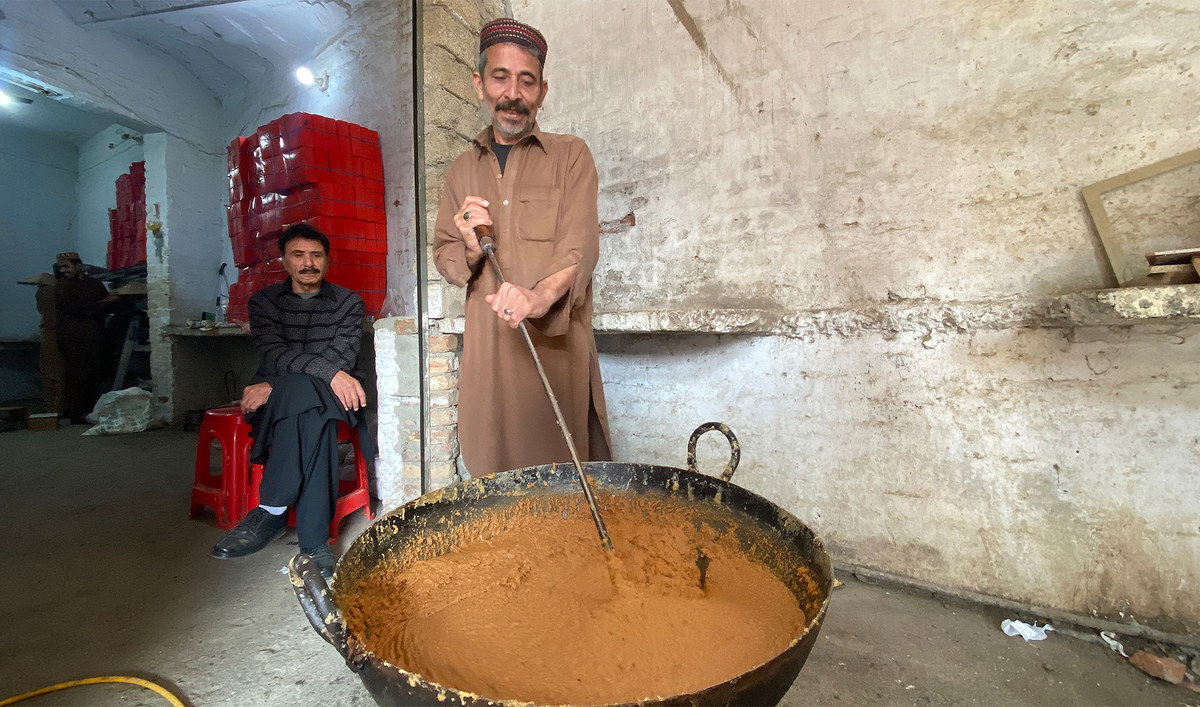


Fifty-year-old Hazrat Ali is making Badayuni Pera in Mardan, Pakistan, on 27 December, 2023 (AN photo)

Adnan’s father, Muhammad Usman, now 70, was among the first in the city to master the art of making Budayuni Pera, learning from Muhammad Zamir Khan, an early migrant from India. 

Usman dedicated 33 years to perfecting Budayuni Pera in Mardan before he quit working at other shops and set up his own in 2000, serving customers the delicacy. He passed the family business down to his sons and brothers. 

“We have taught many people the process of making the sweet,” Adnan said. “We don’t keep its ingredients secret. It’s the blessing of Allah that makes it special.” 

The primary ingredients of Budayuni Pera are simple yet precise: condensed milk and sugar, cooked in imported essential oil. 

Fifty-year-old Hazrat Ali, Usman’s brother and Adnan’s uncle, has been crafting the sweet since 2000. 

“We start with condensed milk, add sugar and cook it until it reaches the perfect consistency and color,” he said.
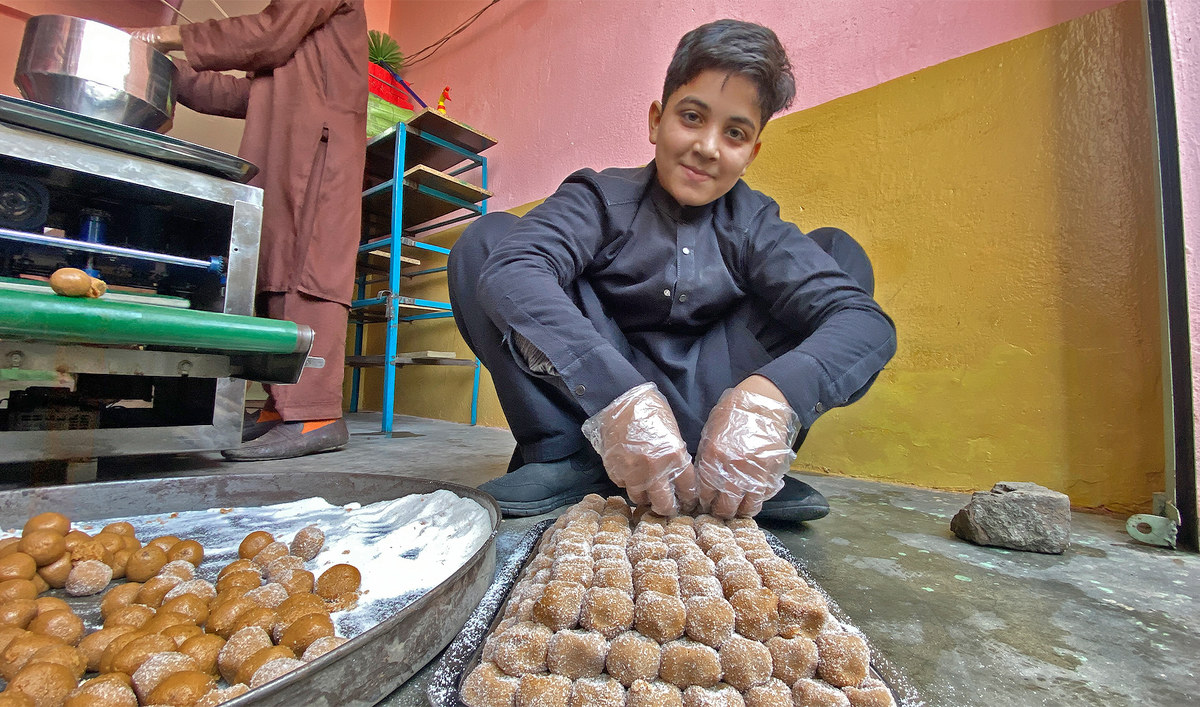


Hazrat Ali's son, Muhammad Sadiq, is placing the pera on a tray in Mardan, Pakistan, on 27 December, 2023. (AN photo)

The process requires at least one hour of cooking, followed by a cooling period before the mixture is cut into small pieces with a machine. 

Budayuni Pera has not only captivated local customers but also people living in other parts of the world. 

“We’ve sent it globally, particularly to Saudi Arabia, where there’s high demand for it among the Pathan community,” Adnan said. 

Muhammad Zakaria, a young customer who has been sending Budayuni Pera to friends in Saudi Arabia, and Hassan Meer, who is in his late 30s, are regular visitors to Mardan, both attesting to the unique taste of this special sweet. 

“Its flavor is unmatched by any other sweet,” Meer said. 


Death toll in Pakistan shopping plaza fire rises to 67, officials say

Updated 6 sec ago
Follow

Death toll in Pakistan shopping plaza fire rises to 67, officials say

  • Rescue teams still searching for damaged Gul Plaza in Karachi where blaze erupted on Saturday, says police surgeon
  • Karachi has a long history of deadly fires, often linked to poor safety standards, weak regulatory enforcement

KARACHI: The death toll from a devastating fire at a shopping plaza in Pakistan’s southern port city of Karachi jumped to 67 on Thursday after police and a hospital official confirmed that the remains of dozens more people had been found.

Police surgeon Dr. Summaiya Syed said rescue teams were still searching the severely damaged Gul Plaza in the Karachi, where the blaze erupted on Saturday.

Most remains were discovered in fragments, making identification extremely difficult, but the deaths of 67 people have been confirmed, she said. Asad Raza, a senior police official in Karachi, also confirmed the death toll. Authorities previously had confirmed 34 deaths.

Family members of the missing have stayed near the destroyed plaza and hospital, even after providing their DNA for testing. Some have tried to enter the building forcibly, criticizing the rescue efforts as too slow.

“They are not conducting the search properly,” said Khair-un-Nisa, pointing toward the rescuers. She stood outside the building in tears, explaining that a relative who had left to go shopping has been missing since the blaze.

Another woman, Saadia Saeed, said her brother has been trapped inside the building since Saturday night, and she does not know what has happened to him.

“I am ready to go inside the plaza to look for him, but police are not allowing me,” she said.

There was no immediate comment from authorities about accusations they have been too slow.

Many relatives of the missing claim more lives could have been saved if the government had acted more swiftly. Authorities have deployed police around the plaza to prevent relatives from entering the unstable structure, while rescuers continue their careful search.

Investigators say the blaze erupted at a time when most shop owners were either closing for the day or had already left. Since then, the Sindh provincial government has said around 70 people were missing after the flames spread rapidly, fueled by goods such as cosmetics, clothing, and plastic items.

The cause of the fire remains under investigation, though police have indicated that a short circuit may have triggered the blaze.

Karachi has a long history of deadly fires, often linked to poor safety standards, weak regulatory enforcement, and illegal construction.

In November 2023, a shopping mall fire killed 10 people and injured 22. One of Pakistan’s deadliest industrial disasters occurred in 2012, when a garment factory fire killed at least 260 people.