

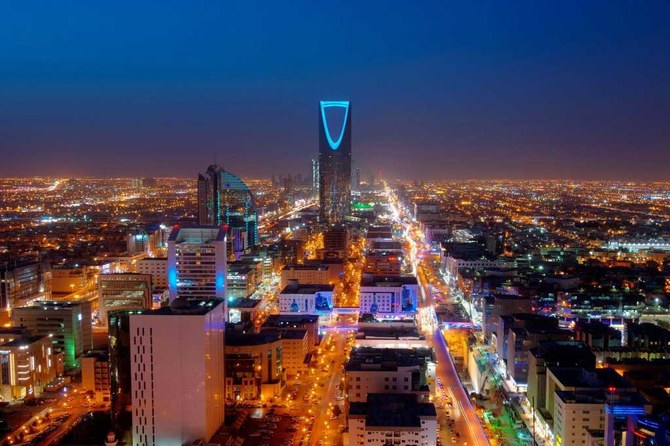

RIYADH: When Saudi Arabia launched its ambitious roadmap for economic diversification in 2016, there was too much skepticism over its outcome, as the Kingdom had been reliant on crude oil for several decades.
Seven years later, the Vision 2030 blueprint has not only facilitated the rise of the Kingdom’s non-oil sector but also fired up the economy with sunrise industries fueled by the sovereign wealth fund.
The Public Investment Fund engages in equity investments, loans and guarantees, channeling public funds into strategic projects locally and globally. It also finances significant government and private industrial ventures, catalyzing economic change in the Kingdom.
To its credit, the PIF has established over 79 companies and created over 500,000 jobs. In 2023, it had a series of successful launches and purposeful partnerships, consolidating its position as one of the world’s largest sovereign funds with over $700 billion in assets under management.
Here’s a wrap of PIF’s high-profile launches and partnerships this year that promise to catapult the Kingdom’s economy to new heights.
Dan Co.
In December, Dan Co. entered the market to promote ecotourism and agricultural tourism in Saudi Arabia.
Established by the PIF, the company is expected to contribute SR6 billion ($1.6 billion) to the country’s non-oil gross domestic product by 2030.
The company will develop and operate high-end resorts and lodges in the Kingdom in partnership with the local community.
The PIF also revealed that the firm’s first project will be located in the Al-Ahsa region, across 1.8 million sq.m., featuring an eco-resort, an agri-resort and an adventure resort.
Tasaru Mobility Investments
In October, Tasaru Mobility Investments was launched to boost the automotive and mobility ecosystem in Saudi Arabia.
The firm founded by the PIF is expected to accelerate strategic investments and partnerships with local and global companies.
At the time of the launch, the fund revealed that Tasaru’s first investment is a joint venture with Zamil Group Real Estate Co., Abdullah Ibrahim Alkhorayef Sons Co. and Dar Al-Himmah Projects Co. Ltd. which will develop an automotive logistics hub in King Abdullah Economic City.
To propel the growth of Tasaru, PIF appointed Michael Muller as its CEO. Muller has previously held several senior management positions in companies like Porsche AG and Volkswagen Group.
Al Balad Development Co.
In October, Al Balad Development Co. set the stage to transform the historic Jeddah district into a renowned tourist destination.
The company is working toward restoring heritage buildings and improving the infrastructure in Al-Balad.
The project will oversee the creation of 9,300 homes and 1,800 hotel units across an area of 2.5 million sq. meters.
The development will also create 1.3 million sq. meters of commercial and office space.
The company aims to position Jeddah as a global economic hub, a cultural and heritage destination, and a premier tourism hot spot aligned with Saudi Vision 2030.
SRJ Sports Investment Co.
In August, SRJ Sports Investment Co. entered the gaming arena to accelerate the sports sector’s growth in the Kingdom and the Middle East and North Africa region.
The investment company focuses on acquiring and developing new sports events and intellectual property, besides availing commercial rights of big games and hosting major global championships in Saudi Arabia.
The PIF company also plans to target businesses offering unique fan engagement activities and transformative sports technology across the industry.
According to media reports, the company acquired a minority stake in the Professional Fighters League, a prestigious mixed martial arts company, to boost PFL’s regional expansion.
Saudi Facility Management Co.
In August, Saudi Facility Management Co., also known as FMTECH, dawned on the country’s institutional landscape to improve operational efficiency within the local facilities handling sector.
The PIF company offers maintenance services for the health, industrial, real estate and entertainment sectors, besides catering to aviation facilities and educational institutions.
It delivers comprehensive services, including utilities, energy and waste management. Housekeeping, security, and landscaping are the other services that the company provides.
Sawani Co.
Sawani Co. hit the dairy scene in July to grow the Saudi camel farming industry and contribute to its sustainable development.
Sawani Co. is working in partnership with the private sector to boost the production capacity of the camel dairy industry and is also trying to modernize the sector by implementing new technologies.
Last month, the PIF company signed a memorandum of understanding with Al Balad Development Co. to provide the “Noug” brand of camel milk products for all visitors to the historic Jeddah district.
Saudi Tourism Investment Co.
In July, Saudi Tourism Investment Co., also known as Asfar, unlocked the potential of the Kingdom’s leisure opportunities.
The PIF company aims to accelerate investments in tourist destinations and projects nationwide.
It is also enabling the private sector by creating investment opportunities for local suppliers, contractors, and small and medium enterprises.
The company is also focused on developing attractive destinations with hospitality, retail, and food and beverage offerings in cities across Saudi Arabia.
In November, Asfar CEO Fahad bin Mushayt told Arab News that the company’s long-term goal is to contribute to positioning the Kingdom as a leader in sustainable and innovative tourism.
“Asfar envisions Saudi Arabia as a globally recognized tourism hub, a destination that seamlessly blends tradition with modernity,” bin Mushyat told Arab News.
Lifera
In June, Pharmaceutical Investment Co., also known as Lifera, entered the Kingdom’s healthcare sector to boost the domestic pharmaceutical industry.
The company manufactures lifesaving products, including insulins, vaccines, plasma therapeutics and monoclonal antibodies. It also works toward developing cell and gene therapies and innovative small molecules.
In July, Lifera partnered with French pharmaceutical company Sanofi and Saudi manufacturer Arabio to increase the local production of vaccines in the Kingdom.
Equity investments
The PIF also made significant investments in several reputed organizations this year besides launching these companies.
In December, the sovereign wealth fund bought a significant minority stake in UK-based Rocco Forte Hotels.
It said that the agreement is in line with the fund’s plans to invest in promising sectors globally and obtain returns in the long term.
In November, the fund also bought a 10 percent stake in Heathrow Airport from Spanish infrastructure giant Ferrovial.
Heathrow is one of the world’s largest air traffic platforms, connecting the UK with global trading partners to help stimulate economic growth.
Moreover, in November, the fund raised its stakes in luxury carmaker Aston Martin to 20.5 percent from 17.9 percent.
The fund’s bullish move through emerging opportunities is not only providing optimism to the Saudi economy but also prompting the Kingdom’s vibrant workforce to join hands in achieving national goals scripted in the Vision 2030 blueprint.


