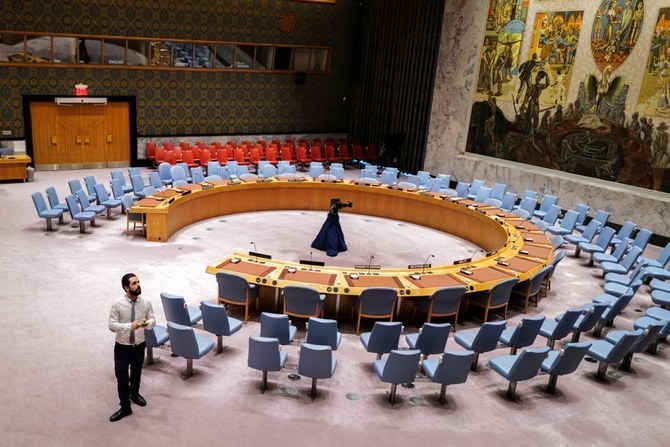
UNITED NATIONS: The United Nations Security Council once again pushed back a vote for a much-delayed resolution on the war between Hamas and Israel, diplomatic sources said Thursday.
The postponement to Friday came even as the United States, which has opposed a number of proposals during the resolution’s drafting, said it was ready to support it in its current form.
After days of delays, the latest draft version seen by AFP calls for “urgent steps to immediately allow safe and unhindered humanitarian access, and also for creating the conditions for a sustainable cessation of hostilities.” It does not call for an immediate end to fighting.
Washington’s UN ambassador Linda Thomas-Greenfield told reporters that “if the resolution is put forward as is, then we can support it.”
She denied that the draft resolution had been watered down.
“The draft resolution is a very strong resolution that is fully supported by the Arab group,” she said.
Diplomatic wrangling at United Nations headquarters in Manhattan — causing the vote to be postponed several times this week — has come against the backdrop of deteriorating conditions in Gaza and a mounting death toll.
“It looks like the US has taken full advantage of other Council members’ desire to avoid a veto. But the resulting text is starting to look very weak in many parts,” said International Crisis Group analyst Richard Gowan.
The United Arab Emirates is sponsoring the resolution on the conflict which has been amended in several key areas to secure compromise, according to the draft version seen by AFP.
It demands all sides “allow and facilitate the use of all... routes to and throughout the entire Gaza Strip, including border crossings... for the provision of humanitarian assistance.”
Israel bombed a newly reopened aid crossing on Thursday, Hamas authorities said.
Members of the 15-member council have been grappling for days to find common ground on the resolution.
Israel, backed by its ally the United States, has opposed the term “cease-fire,” and Washington has used its veto twice to thwart resolutions opposed by Israel since the start of the war.
Israeli Prime Minister Benjamin Netanyahu said Wednesday there would be no cease-fire in Gaza until the “elimination” of Hamas.
The diplomatic tussle came as the UN’s hunger monitoring system warned “every single person in war-torn Gaza is expected to face high levels of acute food insecurity in the next six weeks.”
“The World Food Programme has been calling the situation desperate, and no one in Gaza is safe from starvation, they say. That’s why we have all been calling for an immediate humanitarian cease-fire,” said the UN secretary-general’s spokesman, Stephane Dujarric.
Hamas infiltrated Israel on October 7 and killed around 1,140 people, mostly civilians, according to an AFP tally based on Israeli figures.
Israel responded with a relentless air and ground campaign. The Hamas government’s media office in the Gaza Strip said Wednesday at least 20,000 people have been killed, among them 8,000 children and 6,200 women.


![]()

UN Security Council Gaza vote delayed again, US signals backing
Short Url
https://arab.news/vjtqn
UN Security Council Gaza vote delayed again, US signals backing
- Latest draft version reportedly calls for “urgent steps to immediately allow safe and unhindered humanitarian access"
- Calls for creating the conditions for a sustainable cessation of hostilities" but does not demand immediate end to fighting
Latest updates



© 2026 SAUDI RESEARCH & PUBLISHING COMPANY, All Rights Reserved And subject to Terms of Use Agreement.