Pakistan’s SIFC, launched to attract foreign investment mainly from Gulf states, introduces special visas

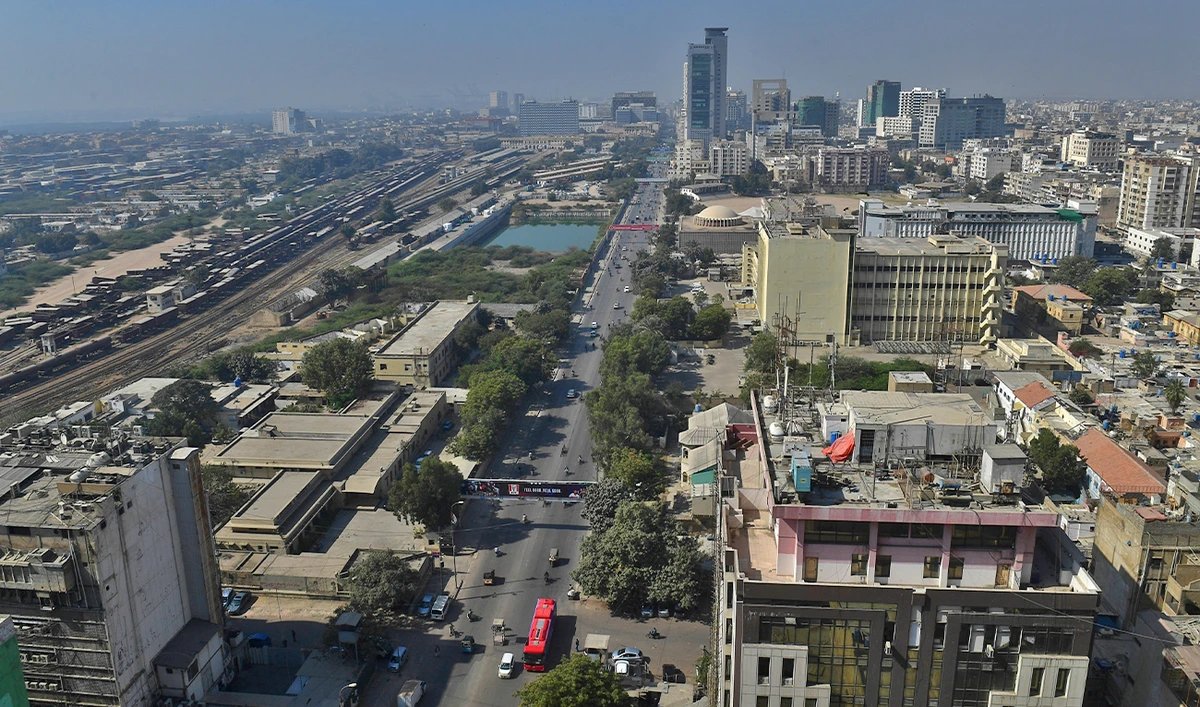
This general view shows the commercial district of Pakistan's port city of Karachi on February 3, 2023. (AFP/File)
Short Url
Updated 19 December 2023
Follow

Pakistan’s SIFC, launched to attract foreign investment mainly from Gulf states, introduces special visas

  • The SIFC will distribute visas ranging from six months to five years among people within a 24-hour span
  • The council says these travel permits will be extendable for two years with a processing time of two weeks

KARACHI: The Special Investment Facilitation Council (SIFC) of Pakistan on Tuesday launched a business- and investor-friendly visa service to facilitate international entrepreneurs seeking to operate in the country by making financial investments.
The SIFC is a civil-military hybrid body to fast-track decision-making and investment from foreign countries that was inaugurated in June with an aim to promote exciting business opportunities in various sectors that include agriculture, mining, information technology and defense.
The council was set up as Pakistan faced tough economic challenges amid dwindling forex reserves and rapidly depreciating national currency.
“SIFC proudly unveils the exclusive SIFC Visa,” it said in a social media post. “Designed with distinction, it caters to visionary investors and dynamic business leaders.”


The SIFC’s social media post was also accompanied by a short video that said the duration of visas varied between six months to five years.
The council promised to grant these travel permits within 24 hours to interested parties who had submitted passports, photographs and SIFC recommendation letters.
The video noted that those who wanted to establish or expand business in the country could choose between six-month, single-entry or five-year, multiple-entry business visas.
However, the individuals who were interested in investing in the country’s designated economic sectors could opt for three- or five-year multiple-entry investor visa.
The SIFC said these visas were extendable by two years, though the processing time for that would be two weeks.
The council’s recent move followed its executive committee meeting earlier this month. The meeting also focused on administrative issues related to setting up economic zones while discussing the privatization process in the country.
Saudi POS transactions see 20% surge to hit $4bn: SAMA

Updated 05 December 2025
Follow

Saudi POS transactions see 20% surge to hit $4bn: SAMA

RIYADH: Saudi Arabia’s total point-of-sale transactions surged by 20.4 percent in the week ending Nov. 29, to reach SR15.1 billion ($4 billion).

According to the latest data from the Saudi Central Bank, the number of POS transactions represented a 9.1 percent week-on-week increase to 240.25 million compared to 220.15 million the week before.

Most categories saw positive change across the period, with spending on laundry services registering the biggest uptick at 36 percent to SR65.1 million. Recreation followed, with a 35.3 percent increase to SR255.99 million. 

Expenditure on apparel and clothing saw an increase of 34.6 percent, followed by a 27.8 percent increase in spending on telecommunication. Jewelry outlays rose 5.6 percent to SR354.45 million.

Data revealed decreases across only three sectors, led by education, which saw the largest dip at 40.4 percent to reach SR62.26 million. 

Spending on airlines in Saudi Arabia fell by 25.2 percent, coinciding with major global flight disruptions. This followed an urgent Airbus recall of 6,000 A320-family aircraft after solar radiation was linked to potential flight-control data corruption. Saudi carriers moved swiftly to implement the mandatory fixes.

Flyadeal completed all updates and rebooked affected passengers, while flynas updated 20 aircraft with no schedule impact. Their rapid response contained the disruption, allowing operations to return to normal quickly.

Expenditure on food and beverages saw a 28.4 percent increase to SR2.31 billion, claiming the largest share of the POS. Spending on restaurants and cafes followed with an uptick of 22.3 percent to SR1.90 billion.

The Kingdom’s key urban centers mirrored the national decline. Riyadh, which accounted for the largest share of total POS spending, saw a 14.1 percent surge to SR5.08 billion, up from SR4.46 billion the previous week. The number of transactions in the capital reached 75.2 million, up 4.4 percent week-on-week.

In Jeddah, transaction values increased by 18.1 percent to SR2.03 billion, while Dammam reported a 14 percent surge to SR708.08 million.

POS data, tracked weekly by SAMA, provides an indicator of consumer spending trends and the ongoing growth of digital payments in Saudi Arabia. 

The data also highlights the expanding reach of POS infrastructure, extending beyond major retail hubs to smaller cities and service sectors, supporting broader digital inclusion initiatives. 

The growth of digital payment technologies aligns with the Kingdom’s Vision 2030 objectives, promoting electronic transactions and contributing to the nation’s broader digital economy.