

Riyadh Theater Festival honors works of Saudi playwright Mohammed Al-Othaim

1 / 3
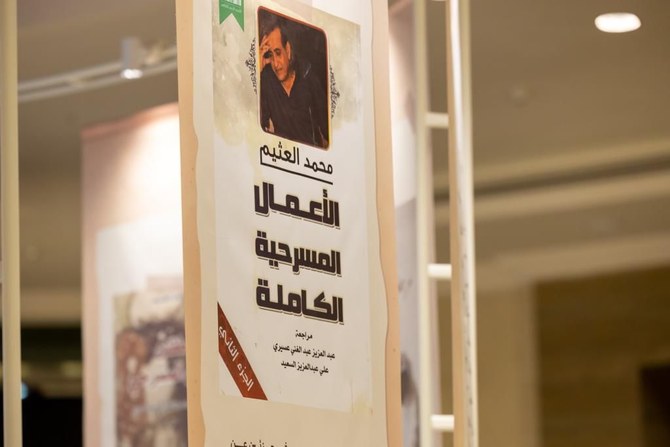
The Riyadh Theater Festival is commemorating the late Saudi playwright Mohammed Al-Othaim through one of his plays and an art exhibition dedicated to his career. (Supplied)
2 / 3
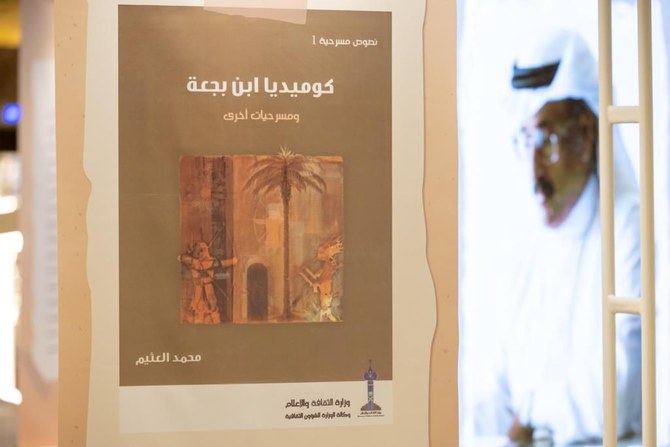
The Riyadh Theater Festival is commemorating the late Saudi playwright Mohammed Al-Othaim through one of his plays and an art exhibition dedicated to his career. (Supplied)
3 / 3
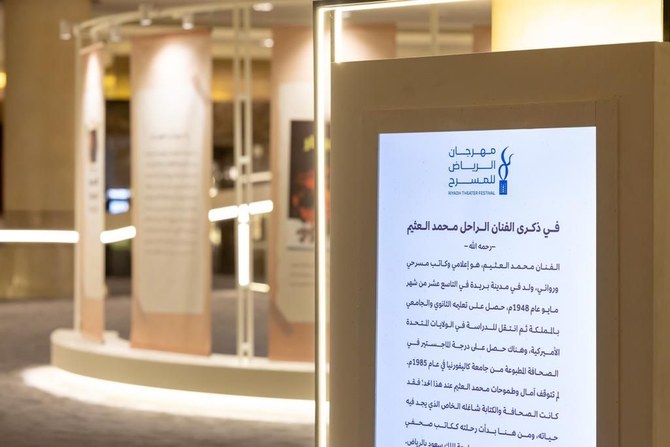
The Riyadh Theater Festival is commemorating the late Saudi playwright Mohammed Al-Othaim through one of his plays and an art exhibition dedicated to his career. (Supplied)
Short Url
Updated 17 December 2023
Follow

Riyadh Theater Festival honors works of Saudi playwright Mohammed Al-Othaim

RIYADH: The Riyadh Theater Festival is commemorating the late Saudi playwright Mohammed Al-Othaim for his pioneering theatrical contributions through one of his plays and an art exhibition dedicated to his career.

The exhibition includes a collection of Al-Othaim’s audio and written works and poems, in addition to the shields and certificates of honor that he obtained during his career.

The festival will also present a film that tells Al-Othaim’s biography and artistic history, during which his friends and colleagues present testimonies on his achievements, how he began his career and his passion for theater and writing.

During the past 50 years, Al-Othaim formed a unique cultural, artistic and intellectual movement in the Kingdom. His theatrical texts are distinguished by the inspiration they take from Arab, Islamic and Saudi heritage and myths.

During his artistic career, Al-Othaim was keen to present only the best works to the public, and he saw theater as a gateway to art through which he could display his creativity and artistic writings.

He devoted much of his time to theatrical writing, presenting 45 successful works over 33 years. He was the first to write a play for the inaugural Souk Okaz Festival.

Najla Al-Saleem, a plastic artist, told Arab News: “Honoring creative people, especially during their period in life, is considered a great support. For juniors, honoring seniors means support and encouragement for novice artists.

“The artist does not only present art, he presents culture and (is) considered as a beautiful ambassador to his country, so it is important to honor the artist during his life.”

She added the Ministry of Culture has contributed to honoring many innovators and pioneers in the fields of literature and theater, among others.

“As plastic artists, we are living in a beautiful golden phase supported by the Ministry of Culture and the government,” Al-Saleem said.

Riyadh Theater Festival was launched last week and is organized by the Theater and Performing Arts Commission.

The festival aims to stimulate and activate the Saudi theatrical movement through a package of performances to support local theater productions.

The festival, which runs until Dec. 24, is being held at the conference center at Princess Nourah University in Riyadh.

It will feature plays performed by theater groups from eight cities, as well as activities including seminars, critical reading sessions and workshops.

The festival aims to support Saudi talent by helping participants further their careers and create content that inspires audiences and enriches the Saudi theater scene.

Tunisia is also participating in the festival within the framework of the strong historical ties between the two countries.

The festival will also present awards in 11 categories including best theatrical script, best theatrical direction, and best theatrical music.

By organizing this festival, the commission aims to boost the theater sector in line with the National Strategy for Culture, part of the Kingdom’s Vision 2030.


Saudi language academy launches Arabic Language Month in Mexico

Updated 22 January 2026
Follow

Saudi language academy launches Arabic Language Month in Mexico

RIYADH: The King Salman Global Academy for Arabic Language has launched the Arabic Language Month program in Mexico, featuring a scientific program implemented as part of the academy’s international initiatives to teach Arabic to non-native speakers, the Saudi Press Agency reported. 

The initiative also aims to promote the language’s cultural and intellectual standing within international academic institutions.

KSGAAL Secretary-General Abdullah bin Saleh Al-Washmi stated that the Arabic Language Month program in Mexico reflects the academy’s ongoing commitment to introduce Arabic to diverse academic and cultural environments as a language of knowledge and communication.

He noted that the Arabic language plays a key role in enhancing cultural dialogue and building bridges of understanding between nations. Al-Washmi praised the support provided to the academy by Saudi Minister of Culture Prince Bader bin Farhan, and highlighted the fruitful cooperation with the Saudi Arabian Embassy in Mexico City, which helped facilitate the implementation of the program as part of the Kingdom’s efforts to serve the Arabic language globally.

Al-Washmi explained that the program focuses on teaching Arabic to non-native speakers at international academic institutions through scientific training initiatives based on partnership. These initiatives take into account the diversity of educational contexts and the needs of learners and researchers, thus strengthening the presence of the Arabic language in education and scientific research. This approach aligns with the objectives of the Human Capability Development Program under Saudi Vision 2030.

The opening ceremony was attended by the Saudi Ambassador to Mexico Fahad bin Ali Al-Manawer, along with a number of academic leaders and representatives of educational and cultural institutions. The ceremony also marked the launch of the first training courses and related activities.

The program will run throughout January, and features a series of scientific and educational events, including intensive training courses for teachers and learners, specialized programs for Arabic teachers to non-native speakers, and a seminar addressing the current state of Arabic language education in Mexico and the related challenges. The program also includes the Hamza Academic Test to assess Arabic language proficiency among learners, along with scientific and cultural visits.

The program is implemented in cooperation with several Mexican institutions, most notably Tecnologico de Monterrey, represented by the School of International Relations.