

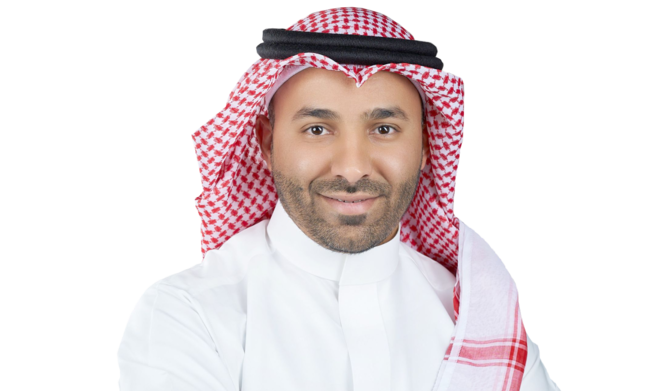
Who’s Who: Hussain Al-Dawood, cybersecurity innovation director at NEOM

Hussain Al-Dawood
Short Url
Updated 11 December 2023
Follow

Who’s Who: Hussain Al-Dawood, cybersecurity innovation director at NEOM

Hussain Al-Dawood has been a cybersecurity innovation director at NEOM since December 2022.

He spearheads this unit within the chief information security office and collaborates with diverse sectors and departments to implement cutting-edge processes and lead initiatives on cyber experimentation, resiliency, and cognitive analytics. He is at the forefront of shaping NEOM’s global standing in cybersecurity.

In 2021, Al-Dawood assumed the position of chief information security officer at Arabian Drilling, where he established the cybersecurity department and pioneered a best-in-class strategy. His introduction of unique practices has set industry benchmarks.

From 2019 to 2021, Al-Dawood served as the director of cybersecurity at GulfNet Solutions Co. Ltd. During this time, he provided consulting and advisory services, demonstrating adeptness in aligning security management strategy with business goals. This saw him supporting high-profile clients in navigating operational requirements. During this time, he served as a lecturer at the University of Newcastle, Australia.

Al-Dawood’s journey began at Saudi Aramco in 2010, where he rose through the ranks as a cybersecurity professional. He managed substantial cybersecurity budgets and steered the implementation of the corporate data protection program.

He represents the Global Centre for Cybersecurity at the World Economic Forum and chairs the Global Cybersecurity Forum Institute’s Knowledge Community on Cognitive and Smart Cities. His involvement with the International Telecommunication Union in developing security standards underscores his global influence.

Al-Dawood holds a bachelor’s degree in management information systems from the University of Arizona, a Master of Business Administration qualification from Florida Atlantic University, and a doctorate in cybersecurity and information systems from the University of Newcastle. He has pursued executive education at Harvard University, focusing on cybersecurity leadership and risk management.

He is also professionally certified by leading organizations including the Information Systems Audit and Control Association, the Project Management Institute, the Professional Evaluation and Certification Board, the Computing Technology Industry Association, and the International Council of E-Commerce Consultants.


NHC begins delivery of first 2,000 units at Al-Fursan development

Updated 8 sec ago
Follow

NHC begins delivery of first 2,000 units at Al-Fursan development

RIYADH: Saudi Arabia’s National Housing Company announced on Friday the first phase of delivery of more than 2,000 residential units at the Al-Fursan development northeast of Riyadh.

The new housing was completed ahead of schedule, the Saudi Press Agency reported.

There were 759 new housing units in the Nasaj Al-Fursan project, 827 in the Saraya Al-Fursan project and 625 in the Al-Athba project.

NHC said in a statement that the early delivery reflected its commitment to improving customer confidence.

The projects are ready to receive residents, NHC added, providing them with a modern lifestyle in a residential environment that includes a number of facilities and services.

Saudi Arabia’s National Housing Company announced on Friday the first phase of delivery of more than 2,000 residential units at the Al Fursan development northeast of Riyadh. (SPA)

Al-Fursan is one of the major urban developments implemented by NHC and is strategically located near the capital’s airport.

It is set to be one of Saudi Arabia’s largest mixed-use housing developments, spread over an area of more than 35 million sq. m.

Al-Fursan will eventually provide more than 69,000 housing units once complete, according to the SPA, housing a population of more than 250,000 residents.

The development is being built with sustainability in mind, and so far nearly 350,000 cubic meters of construction waste have been collected and recycled, supporting national goals to develop sustainable infrastructure, advance the circular economy and improve resource efficiency.

Once completed, it will include 13 shopping centers, 16 health centers, 59 educational facilities, 84 mosques, 4 government offices, 3 post offices, 7 security offices, 16 parks and 141 commercial facilities.

The communities will be linked by more than 69 km of footpaths and cycle paths, and more than 400,000 trees will be planted.

NHC said that it has a vision to develop integrated projects that improve quality of life in a sustainable environment.

It further aims to consolidate its position as the largest real-estate developer in the Middle East.
