

Saudi project clears 733 Houthi mines in Yemen in a week

1 / 2
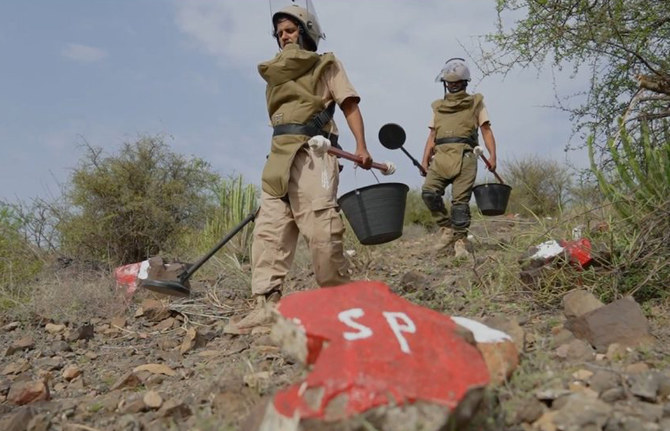
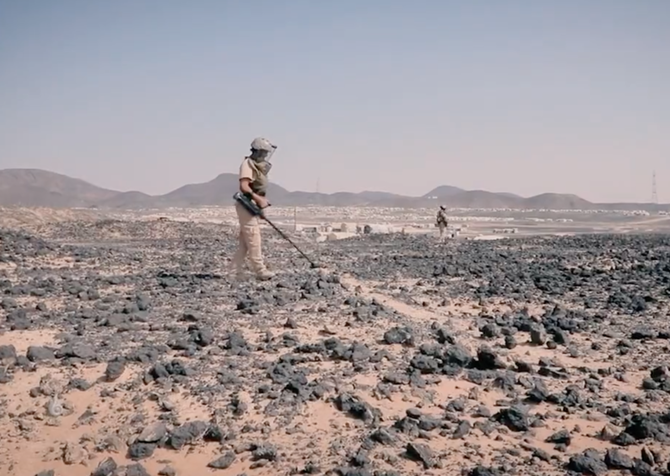
Masam special teams destroyed 618 unexploded ordnance, 110 anti-tank mines, four anti-personnel mines, and one explosive device. (Supplied)
2 / 2
Masam special teams destroyed 618 unexploded ordnance, 110 anti-tank mines, four anti-personnel mines, and one explosive device. (Supplied)
Short Url
Updated 11 December 2023
Follow

Saudi project clears 733 Houthi mines in Yemen in a week

  • 424,527 mines cleared since the start of the initiative in 2018

RIYADH: Project Masam, a Saudi initiative to clear land mines in Yemen, in the first week of December dismantled 733 mines planted by the Iran-backed Houthi militia.

Overseen by the Saudi aid agency KSrelief, the project’s special teams destroyed 618 unexploded ordnance, 110 anti-tank mines, four anti-personnel mines, and one explosive device.

The devices, which were planted indiscriminately by the Houthis across Yemen, posed a significant threat to the lives of innocent people, including children, women, and the elderly.

Project Masam is one of several initiatives undertaken by Saudi Arabia on the orders of King Salman to help the Yemeni people, clearing routes for humanitarian aid to reach the country’s citizens.

The demining operations took place in Marib, Aden, Jouf, Shabwa, Taiz, Hodeidah, Lahij, Sanaa, Al-Bayda, Al-Dhale, and Saada.

A total of 424,527 mines have been cleared since the start of the initiative in 2018, according to Ousama Algosaibi, the project’s managing director.

These include 267,958 items of unexploded ordnance, 142,223 anti-tank mines, 7,921 improvised explosive devices, and 6,425 anti-personnel mines.

The project trains local demining engineers and provides them with modern equipment. It also offers support to Yemenis injured by the devices.

Up to 5 million people are estimated to have been forced to flee their homes since the beginning of the conflict in Yemen, many of them displaced by the presence of land mines on their land.

Masam teams are tasked with clearing areas as an immediate humanitarian priority. They clear areas such as villages, roads and schools to facilitate the safe movement of civilians and the delivery of humanitarian goods and services.

The project’s contract was extended for another year in June at a cost of $33.29 million.


Al-Baha’s Nawan Dunes draws nature lovers, adventure seekers

Al-Baha’s Nawan Dunes, a winter destination promising adventure and nature, is offering visitors distinctive tourism experience.
Updated 08 January 2026
Follow

Al-Baha’s Nawan Dunes draws nature lovers, adventure seekers

  • Winter destination witnesses growing influx of visitors

RIYADH: Al-Baha’s Nawan Dunes, a winter destination promising adventure and nature, is offering visitors a distinctive tourism experience that blends tranquility with beauty.

The site, in Al-Makhwah Governorate, is among the most prominent natural attractions in the Al-Baha region and is distinguished by unique sand formations that stretch across vast areas, offering visitors a distinctive tourism experience.

The dunes are witnessing a growing influx of visitors, outdoor enthusiasts, and photography lovers, due to the region’s mild winter weather, the Saudi Press Agency reported.

The rolling golden sands provide an ideal destination for camping enthusiasts, desert adventures, and various outdoor recreational activities, particularly during twilight and sunset when the landscape takes on a striking aesthetic appeal.

The Nawan Dunes is now a breathtaking canvas of natural beauty. Recent rainfall has allowed wild plants to flourish spectacularly and this creates a stunning spectacle for all nature lovers.

As part of efforts to diversify tourism experiences, the Nawan Dunes has also hosted paragliding, attracting adventure seekers and aerial sports enthusiasts.

This has offered visitors a unique opportunity to view the desert landscape from the air and enjoy panoramic views of the dunes and surrounding nature, all within a well-organized framework that prioritizes safety and enhances the site’s appeal.

These events and initiatives form part of Al-Baha's winter program, which aims to diversify tourism options, invest in natural assets, and strengthen the area’s position as an attractive winter tourism destination in the Kingdom.

Fahd Muftah Al-Zahrani, the director general at the Ministry of Environment, Water and Agriculture in Al-Baha, said that two contracts had been signed to further ecotourism in the region.