

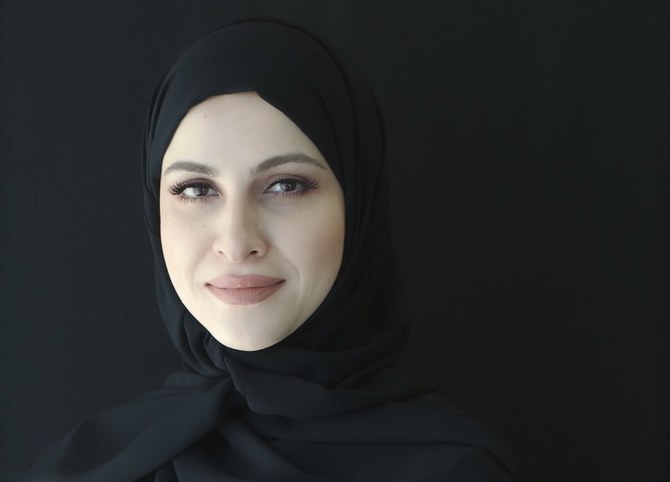

LONDON: Alanoud bint Hamad Al-Thani announced on Thursday that she has stepped down as deputy CEO of the Qatar Financial Center Authority after seven years at the organization.
Serving as Qatar’s financial ambassador, the former deputy chief represented her country in global forums. She played a pivotal role in realizing the QFC’s vision of transforming Doha into a leading global financial and commercial hub. Her contributions involved attracting foreign direct investment and fostering the development of a sustainable local economy.
“Sheikha Alanoud’s meteoric rise in the world of finance is indicative of her abilities to marry financial acumen, global perspective with her country’s needs,” said Muna Abu Sulayman, an international development expert, who knows Al-Thani through intersecting work on increasing employment across the Arab world.
“Her commitment to mentoring her team will ensure a smooth transition at such a sensitive intersection,” she told Arab News.

During Al-Thani's meeting with Johnny Chan, Chairman of the
Chinese General Chamber of Commerce, Hong Kong, in 2019. (QFC)
Julien Hawari, chief of the Dubai-based Web3 social media platform Million, recounted his first encounter with Al-Thani.
He said: “I met Alanoud a few years ago at a private lunch in Davos. She was working with an organization that empowers youth. What struck me was the energy and ambition that were driving her.
“She was and still is passionate about making changes, helping her country, and changing the world. She brings with her this contagious positive view and vibe.”
Al-Thani began her journey with QFC in 2016 as vice president of strategic alliances at the CEO’s office before being appointed managing director for business development in 2017. In 2021, she assumed the role of deputy CEO.
QFC managed assets totaling $8.5 billion, had 1,400 registered firms, and employed 8,500 people, as of the end of 2021, according to the World Economic Forum.
During her tenure, the number of firms that registered on the QFC platform in 2020 grew by 80 percent.

Signing of an MoU with QR Sports at the
St. Petersburg International Economic Forum in 2021. (QFC)
“Alanoud’s professionalism, dedication and her ability to add her personal touch to everything she does makes her absolutely Qatar’s most efficient, albeit unofficially, ambassador extraordinary,” said Faisal J. Abbas, editor-in-chief of Arab News.
“Be it speaking on behalf of her country at world events, connecting people or wearing any of her many hats, she has always been true to her word and delivered on her targets. It was an absolute pleasure working with her,” he added.
Al-Thani has also been vice chair of the Bedaya Center for Entrepreneurship and Career Guidance, held the position of Qatar chair for global dignity, and acted as a global ambassador for Qatar for Women’s Entrepreneurship Day.
Named by Forbes as one of the 100 Most Powerful Businesswomen in 2023, Al-Thani is the first woman and youngest person on QFC’s executive committee.
She also received the London Arabia Organization’s Arab Woman of the Year Award in 2022 and was recognized in 2021 as a WEF Young Global Leader.

Al-Thani at the WEF Annual Meeting 2023 in Davos-Klosters, Switzerland. (World Economic Forum/Sandra Blaser)
A development economist by education, she attended the London School of Economics, the University of Oxford, and HEC Paris.
Prior to joining QFC, Al-Thani served as Qatar country representative and director at Silatech, a Qatar-based social initiative that connects young people to employment opportunities across the Arab region.
Driven by her strong conviction in supporting Arab youth empowerment, Al-Thani significantly expanded Silatech’s operations in Qatar, contributing to economic development across the Middle East and North Africa region.
Her dedication stems from diverse roles held in UN agencies and international organizations, focusing on economic development, education, and youth employment.


