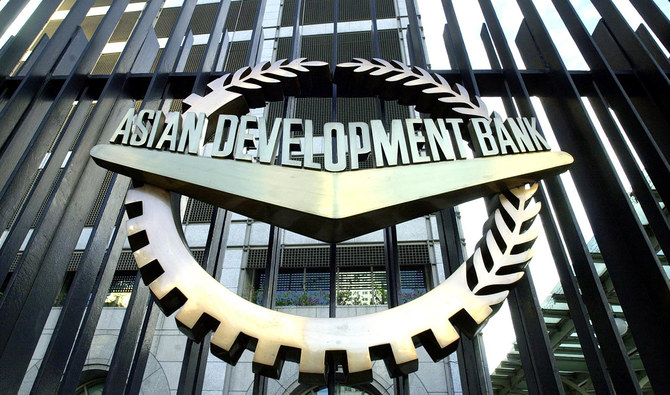
KARACHI: The Asian Development Bank (ADB) on Wednesday announced its decision to approve $659 million of financing to carry out development projects like rehabilitating schools damaged by the devastating August 2022 floods and enhancing agricultural productivity to improve food security in Pakistan.
Pakistan, a founding ADB member, has received more than $52 billion in public and private sector loans, grants, and other forms of financing from the bank to promote inclusive economic growth and improve the country’s infrastructure, energy security, transport networks and other social services.
The country has also grappled with major financial challenges in the last few years, with its current administration trying to revive the economy by seeking foreign direct investment in various sectors.
“This significant new wave of financing will help Pakistan recover from the impacts of last year’s cost-of-living crisis and super-floods and return to the path of long-term development that is sustainable and inclusive,” ADB Director General for Central and West Asia Yevgeniy Zhukov noted in a statement.
“This multifaceted approach is part of ADB’s strategic engagement in Pakistan and cohesively deploys our program lending and project investments to enhance support for Pakistan’s efforts to improve its economic situation and enhance the quality of life for its people,” he added.
The ADB statement hoped the new financing under the Improved Resource Mobilization and Utilization Reform Program will support Pakistan’s government to achieve economic growth that is sustainable, broad-based and inclusive.
“The $300 million policy-based loan will support the initiative’s first subprogram, which focuses on laying the foundation for reforms to policies, laws, and institutional capacity that will improve domestic resource mobilization and utilization,” the statement said. “The program is helping to transform tax administration, public expenditure management, and other institutional structures to strengthen resource mobilization including non-debt resources such as private investment and savings.”
It added that the ongoing Sindh Secondary Education Improvement Project would receive additional financing of $275 million emergency assistance loan that was part of ADB’s $1.5 billion pledge of support for Pakistan’s recovery from the devastating 2022 floods.
“The additional financing will help reconstruct up to 1,600 flood-damaged schools using disaster- and climate-resilient and gender-responsive designs,” it informed. “This will boost resilience and inclusivity in the education system in Pakistan, helping recovery of learning and earning losses especially for girls in the most disadvantaged and vulnerable districts of Sindh.”
It said a concessional loan of $80 million for the Khyber Pakhtunkhwa Food Security Support Project, which was also part of ADB’s $1.5 billion pledge of support for Pakistan’s recovery from the 2022 floods, would help address climate vulnerabilities, enhance food security, and boost the livelihoods of rural farm households in the most flood-damaged districts in the province.
“The project will provide essential agriculture inputs and training to smallholder farmers, including women, and improve household nutrition and women’s empowerment,” the statement noted. “It will also enhance digital access and availability, especially with regard to market opportunities and climate information.”

ADB approves $659 million to reconstruct flood-hit schools, improve Pakistan’s agricultural productivity
https://arab.news/jhg2r
ADB approves $659 million to reconstruct flood-hit schools, improve Pakistan’s agricultural productivity
- The bank says fresh financing will support sustainable, broad-based and inclusive economic growth in Pakistan
- It plans to rebuild up to 1,600 flood-damaged schools using disaster- and climate-resilient architectural designs
11 killed, at least 60 missing after huge Karachi shopping plaza blaze
- Videos showed flames rising as firefighters labored through Sunday night to stop fire that started on Saturday
- Firefighters said lack of ventilation in the mall caused the building to fill with smoke and slowed rescue efforts
ISLAMABAD: The provincial government of Sindh has ordered an official inquiry after a fire at a major shopping plaza in the port city of Karachi killed 11 people and destroyed more than 1,200 shops, officials said on Monday, dealing a severe blow to one of the city’s busiest commercial districts.
The blaze broke out late Saturday at Gul Plaza in Karachi’s Saddar business area and spread rapidly through multiple floors, according to emergency officials. Firefighters battled flames for hours to bring the fire under control, which was still blazing late into Sunday night.
Deadly fires in commercial buildings are a recurring problem in Karachi, a city of more than 20 million people, where overcrowding, outdated infrastructure and weak enforcement of fire safety regulations have repeatedly resulted in mass casualties and economic losses.
“Karachi fire death toll rises to 11,” said Chief Police Surgeon for Karachi Dr. Summaiya Syed Tariq.
“The fire has been extinguished but light smoke is still rising and the recovery of bodies has now begun,” says Muhamamd Amin, an official of Edhi present on the spot.
Taking notice of the incident, Chief Minister Murad Ali Shah on Sunday evening directed the Karachi commissioner to launch an immediate inquiry and examine whether safety failures or regulatory lapses contributed to the scale of the disaster.
“Fire safety arrangements in the building must be checked, and strict action should be taken against those responsible if negligence or carelessness is proven,” Shah said in a statement.
The cause of the fire has not yet been determined. Police said a formal investigation would begin once firefighting operations were fully completed.
Officials briefed the chief minister that more than 1,200 shops were gutted in the fire, wiping out inventories and investments built over decades.
Firefighting operations managed to bring 60 to 70 percent of the blaze under control, while rescue and cooling operations continued well into Sunday. One firefighter was among the six who died.
Speaking to reporters later on Sunday, Shah provided new details on the scale and timeline of the emergency response, saying municipal authorities acted within minutes of receiving the alert.
“The first fire tender reached the site at 10:27 p.m. and firefighting operations began immediately,” the chief minister said, adding that at least 26 fire tenders, four snorkel vehicles and 10 water bowzers were deployed, with additional support provided by the Pakistan Navy and the Civil Aviation Authority.
Shah said preliminary information indicated that 58 to 60 people were initially reported missing after the blaze, though rescue and cooling operations were still underway and authorities were continuing to verify the figures. He added that the fire occurred during the peak wedding shopping season, compounding losses for traders and shoppers in the area.
He said the intensity of the blaze and limited access points inside the building made it difficult for firefighters to enter quickly, contributing to the scale of damage.
$10 MILLION LOSSES
The fire tragedy has also triggered urgent concern within Karachi’s business community.
The Karachi Chamber of Commerce and Industry (KCCI) announced the formation of a dedicated committee to coordinate relief efforts, document losses and press the government for compensation and rehabilitation of affected traders.
KCCI said preliminary assessments showed that over 1,000 small and medium-sized businesses had been completely destroyed, leaving many families without income. The chamber appealed to both provincial and federal authorities to announce a special compensation package, citing precedents such as the 2009 Bolton Market arson, after which funds were approved to rebuild fire-hit markets and compensate nearly 2,000 affectees.
Ateeq Mir, a traders’ representative, estimated that losses to businesses from the fire would be over $10 million.
“There is no compensation for life but we will try our best that the small businessmen that have encountered losses here, we will try in a transparent manner … to compensate their losses,” Chief Minister Shah told reporters.
Separately, Prime Minister Shehbaz Sharif held a telephone conversation with Shah on Sunday evening, the premier’s office said, to offer full federal support to provincial authorities.
Sharif said a “coordinated and effective system is essential” to control fires quickly in densely populated urban areas and stressed the need for stronger preventive mechanisms to avert similar tragedies in the future. He said the federal government was prepared to work with provincial authorities to help establish an integrated fire-response and safety framework, adding that Islamabad stood with the affected families and the Sindh government during the crisis.
Battling large fires in Karachi’s dense commercial districts is notoriously difficult, reflecting a mix of urban congestion, weak regulation, and chronic enforcement failures. Many markets and plazas are built with narrow access points, encroachments and illegal extensions that block fire tenders and delay rescue operations, while buildings often lack functional fire exits, sprinklers or alarm systems.
Although safety regulations exist on paper, inspections are sporadic, and penalties rarely enforced, allowing hazardous electrical wiring, overloaded circuits and flammable materials to go unchecked. In such tightly packed areas, fires can spread rapidly from shop to shop and floor to floor, leaving firefighters little room to maneuver and sharply increasing the risk to both occupants and emergency crews.


