DUBAI: Saudi Arabia is poised to take a leadership role in global forums, leveraging its presence in the G20 and the Clean Energy Ministerial to spotlight regional knowledge and environmental concerns on the world stage, according to a senior executive.
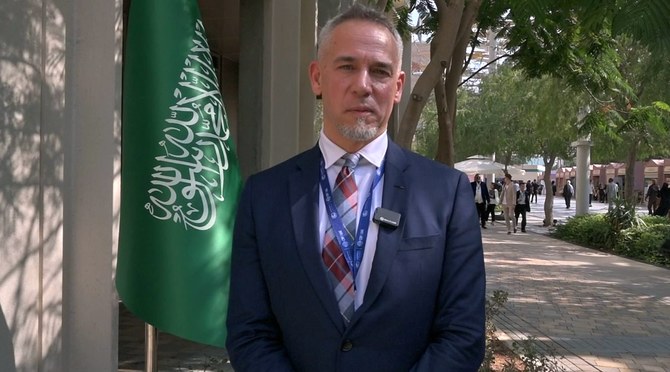
During the UN Climate Change Conference, COP28, in Dubai, Jean-François Gagne, head of the secretariat at the Clean Energy Ministerial, emphasized the significance of regional harmonization in advancing climate change ambitions.
“Saudi Arabia has the advantage of being at the G20 table, allowing it to play a leadership role in bringing regional knowledge and environmental concerns to the international table. This is crucial because we need all regions of the world to move forward together,” Gagne told Arab News.
He added: “When you have regional champions, it really helps making sure that there’s no one that gets left behind in terms of advancing our clean energy goals.”
Gagne also explained two ways in which regional collaboration can help accelerate ambitions related to climate change. The first involves creating higher demands for common products and technologies.
“We know there’s going to be a need for brand-new technologies to be able to be deployed more broadly. When you have industry and governments working together in terms of defining what these new technologies will be, you need to be able to show that there will be enough demand for the investment in terms of bringing these new technologies forward,” he said.
The second involves reducing the costs associated with deploying these technologies.
“Making sure that the markets between different countries don’t create hurdles to the deployment is going to be important. Regional harmonization plays a significant role in bringing down the cost of deploying those technologies. This, in turn, makes it much easier for policymakers to increase their climate ambition because they know that the technologies will be there at a cost that is reasonable,” he continued.
Underscoring the importance of harmonization and collaboration, Gagne explained ways in which the private sector could engage more with the public sector.
“First of all, they need to make sure that when they look at these questions, they don’t look only at their own individual companies’ benefits, but they look at this in terms of a sectoral approach to finding the right solutions,” he said.
Gagne added: “The second, they can engage in dialogue with governments in terms of what are the real feasible opportunities for governments to drive the demand for these new technologies.”
During a session discussing the crucial role of regional coordination, Steve Kukoda, vice president and executive director at the International Copper Association, stated that collaboration is crucial to advancing ambition.
“Regional harmonization really is critical to accelerating actual ambition, and we talked about the first cost barrier. This is a way to bring the cost down, but on multiple levels,” Kukoda said.
He added: “If you manufacture an air conditioner, you now can sell the same product in 10 countries. You don’t have to have different types of the same air conditioner just to meet the standards of individual countries. So that increases the scale of production and brings down costs.”
As part of Saudi Arabia’s Vision 2030’s prominent projects, Richard Bush, chief environment officer at NEOM, underlined the giga-project’s mission, as articulated by the chairman, Crown Prince Mohammed bin Salman. The mission is straightforward: to construct the world’s first sustainable and highly livable city.
“Every city we’ve built has created an unreasonable impact on the environment and an unacceptable level of pollution. And what I’d like to say about this project is that it’s completely transformed,” Bush said.
He added: “The way we think we’re going to design, live, and function into the future. There is nothing we do on a daily basis that resembles anything we’ve experienced before.”