ISLAMABAD: Pakistan’s Supreme Court began hearings on Friday on a petition by rights activists seeking to halt deportation of Afghan refugees, a lawyer said, as authorities are combing refugee settlements in an effort to find and send home thousands.
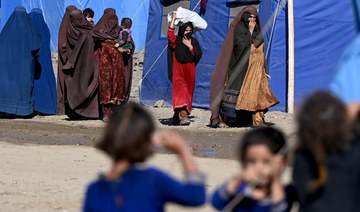
More than 370,000 Afghans have fled Pakistan since Oct. 1, after Pakistan vowed to expel more than a million undocumented refugees, mostly Afghans, amid a row with Kabul over charges that it harbors anti-Pakistan militants.
“Due to the urgency, as thousands of people are suffering on daily basis, I’ve requested the court to take up the case as early as next week,” said Umar Ijaz Gilani, the lawyer representing the rights activists.
The panel of three judges hearing the case has asked the government, the interior (home) and foreign ministries, as well as a panel of government and top military officials, to furnish an explanation in reply, the lawyer said.
Thousands of Afghans have gone underground in Pakistan to avoid deportation, fearing for their lives if they return to Taliban-ruled Afghanistan following a hasty and chaotic withdrawal of US-led Western forces in 2021.
Children born to Afghan families in Pakistan could not be sent back due to their birthright, Gilani said.
Friday’s petition is separate from another focused exclusively on seeking Pakistani citizenship for such children, as guaranteed by the South Asian nation’s constitution, he said.
Pakistan is home to more than 4 million Afghan migrants and refugees, about 1.7 million of whom are undocumented.
Many arrived after the Taliban retook Afghanistan in 2021, joining a large number living there since the Soviet invasion of the neighboring nation in 1979.
Pakistani police have searched door-to-door in refugee settlements for any who have not left voluntarily, starting from the southern port city of Karachi, where hundreds of thousands of Afghans live. Any remaining are being forced to leave.
Islamabad has not heeded calls from international bodies and refugee agencies to reconsider its deportation plans.


Pakistan’s top court begins hearing challenge to expulsion of Afghans

https://arab.news/r5xdc
Pakistan’s top court begins hearing challenge to expulsion of Afghans

- More than 370,000 Afghans have fled Pakistan since Oct. 1, after Pakistan vowed to expel undocumented refugees
- Pakistan is home to more than 4 million Afghan migrants and refugees, about 1.7 million of whom are undocumented


Syrian president ‘no longer attending’ Davos, sources confirm
- Participants were keen to listen to Ahmed Al-Sharaa, but understand domestic challenges back home
DAVOS: Syrian President Ahmed Al-Sharaa has canceled plans to attend the World Economic Forum’s annual meeting in Davos this week, according to a senior member of the WEF.
Many attendees Arab News spoke to at the Congress Centre were disappointed with the decision as his participation in high-level diplomacy and economic sessions would have been a milestone that marked the first attendance by a Syrian head of state at the forum.
Many had hoped to listen to the president speak first hand about the impressive reforms and investments opportunities in Syria but understood there are domestic challenges back in Damascus.
“With everything going on in recent weeks in the Middle East, it was expected that Al-Sharaa will probably not make it,” one participant told Arab News.
Syrian government forces have intensified operations against the Syrian Democratic Forces (SDF) across multiple governorates — including Aleppo, Raqqa and Hasakah — with frequent exchanges of fire reported even as temporary truces are brokered.
Last year, Syria’s freshly-appointed foreign minister Asaad Al-Shibani flew into Davos as part of efforts by the forum to reintegrate Syria into global political and economic conversations following years of isolation under the Assad regime.
Al-Sharaa’s cancelled Davos trip follows weeks of diplomatic and military pressures. His transitional government, which took power after overthrowing long-time leader Bashar al-Assad in late 2024, has actively sought international recognition, winning incremental sanctions relief and engaging Western partners.


