


JEDDAH: Saudi director Hassan Saeed is set to unveil his short film “Antidote” at the Red Sea International Film Festival in Jeddah and spoke to Arab News ahead of the screening to explain the themes he explores and why he chose to tell this story.
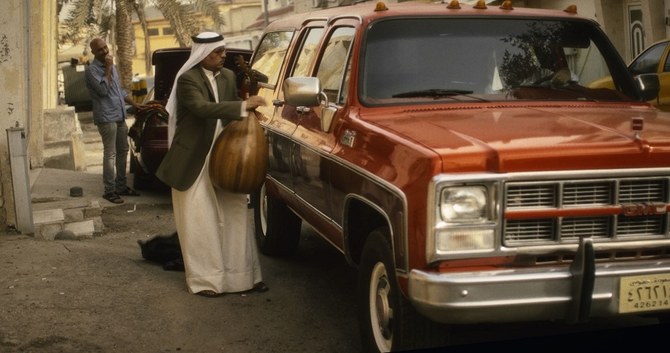
The 20-minute film tells the story of a young boy, Ali, who sets out with his father’s tape recorder to record a folk singer named Abu Hussain.
However, Abu Hussain loses his voice after undergoing throat surgery, and Ali reconnects with him through a previous recording. The deliberate use of silence surrounding Abu Hussain serves as a powerful motif, symbolizing his enduring struggle and passion for music, set against the challenges faced by Saudi musicians in the past.
Saeed said that he drew inspiration for “Antidote” from his formative years in the Eastern Province of Saudi Arabia.
“Having grown up in a society where musicians and music were not widely embraced, my goal was to portray the challenges encountered by underground musicians in the 1990s. The film intertwines a personal narrative with a broader cultural context, showcasing the unwavering determination and commitment of artists in the face of adversity,” he said.

Saudi director Hassan Saeed on set. (Supplied)
The director is excited about showing his work to global audiences at the festival, which attracts participation from international industry figures.
“I firmly believe that our stories possess a unique quality, and through ‘Antidote,’ we can offer a fresh and captivating perspective to audiences worldwide. I anticipate the film resonating deeply with viewers, sparking meaningful conversations, and bridging cultural gaps,” he said.
“I am thrilled about the prospect of presenting ‘Antidote’ at the Red Sea Film Festival, as it offers an ideal setting to connect with international directors and producers who share a profound passion for cinema.”
Reflecting on his career as a filmmaker, Saeed said that growing up in a conservative society with limited access to cinema, his fascination with the art form began with a VHS camcorder in the late 1980s. This early exposure to capturing moments on film sparked his love for observing the world through a lens.

The film's poster. (Supplied)
Saeed’s hope is that “Antidote” will allow audiences to connect with the characters and their struggles, and also spark an appreciation for local stories.
“The characters and their journeys are not limited to a specific culture or region; they represent universal experiences that can resonate with people from different backgrounds,” he said.
“Through my work, I hope to bridge cultural gaps and foster a deeper understanding and appreciation of Saudi culture.”
With its unique storytelling and cinematic style, “Antidote” stands out, particularly as a period piece set in the 1990s.
The film was made in collaboration with German director of photography Christoph Schumann, and has garnered widespread recognition, including two Golden Palm awards for best short film and best cinematography at the 2023 Saudi Film Festival.
Saeed said that through “Antidote” and future projects, he hopes to contribute to a “more comprehensive and accurate understanding of Saudi culture on a global scale.”
He added: “Film has the power to transcend boundaries and bring people together, and it is my mission to use this medium to tell meaningful and impactful stories.”


