


Saudi specialists launch aid convoy into Gaza

1 / 6
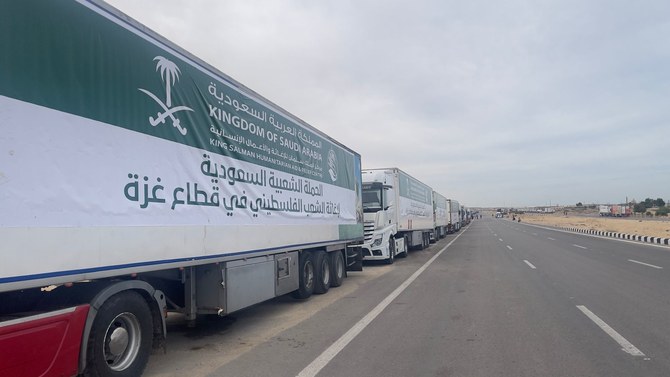
The KSrelief chief inspected warehouses, examined the operation of the Saudi aid trucks and oversaw cooperation with the authorities responsible for delivering the aid to the enclave. (AN photo/Mohammed Alsulami)
2 / 6
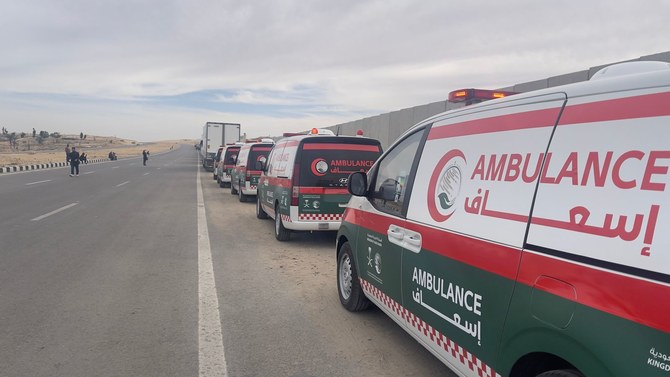
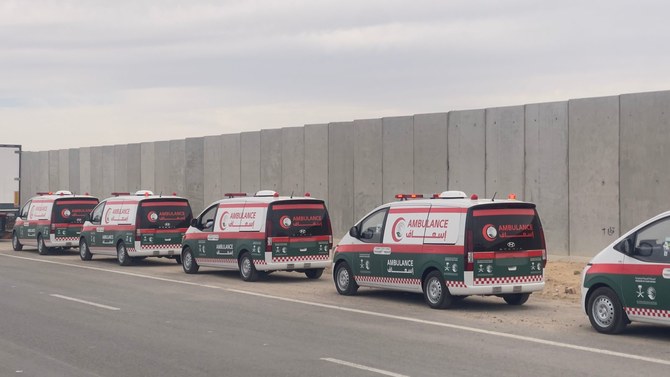
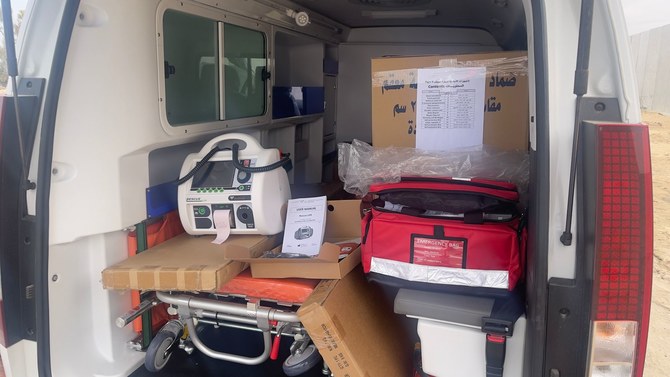
Saudi specialists and officials led by the chief of KSrelief have launched the Kingdom’s first aid convoy from Egypt to Gaza. (AN photo/Mohammed Alsulami)
3 / 6
Saudi specialists and officials led by the chief of KSrelief have launched the Kingdom’s first aid convoy from Egypt to Gaza. (AN photo/Mohammed Alsulami)
4 / 6
Saudi specialists and officials led by the chief of KSrelief have launched the Kingdom’s first aid convoy from Egypt to Gaza. (AN photo/Mohammed Alsulami)
5 / 6
Saudi specialists and officials led by the chief of KSrelief have launched the Kingdom’s first aid convoy from Egypt to Gaza. (AN photo/Mohammed Alsulami)
6 / 6
Saudi specialists and officials led by the chief of KSrelief have launched the Kingdom’s first aid convoy from Egypt to Gaza. (AN photo/Mohammed Alsulami)
Short Url
Updated 23 November 2023
Follow

Saudi specialists launch aid convoy into Gaza

  • The KSrelief chief inspected warehouses, examined the operation of the Saudi aid trucks
  • The Saudi aid effort was launched following a directive from King Salman and Crown Prince Mohammed bin Salman

RAFAH: Saudi specialists and officials led by the chief of KSrelief have launched the Kingdom’s first aid convoy from Egypt to Gaza.
Dr. Abdullah Al-Rabeeah, supervisor general of the King Salman Humanitarian Aid and Relief Center, along with Osama Nugali, Saudi ambassador to Egypt, a KSrelief team, and representatives from the Egyptian Red Crescent and the Palestine Red Crescent Society, gathered in Egypt on Wednesday to launch the aid through the Rafah crossing for delivery to Palestinians in the Gaza Strip.

Dr. Al-Rabeeah on Thursday signed a cooperation agreement with the Egyptian Red Crescent, the International Red Cross, UNRWA, the World Health Organization, and the World Food Programme at a total cost of $40 million.
The KSrelief chief inspected warehouses, examined the operation of the Saudi aid trucks and oversaw cooperation with the authorities responsible for delivering the aid to the enclave.
The Saudi aid effort was launched following a directive from King Salman and Crown Prince Mohammed bin Salman.


Al-Rabeeah told Arab News: “We are kicking off this campaign today as a gift and a small contribution to our brothers in Gaza. The convoy includes 30 aid trucks loaded with food, medicines and shelter supplies, in addition to 14 ambulances fully equipped with aid devices, respirators and oxygen, and everything needed by our brothers in Palestine.”
The Kingdom has also launched a 15-plane air bridge and a sea bridge, which will bring more aid and 20 ambulances, he added.
Al-Rabeeh said that KSrelief aims to save the lives of Palestinians in Gaza, with children and elderly in the enclave in urgent need of food and medicine.
The closure of the Rafah crossing by Israel had hindered the arrival of aid, he added.
Nugali praised the coordination between KSrelief and the Egyptian Red Crescent, as well as the assistance provided by Egypt’s government.


He told Arab News: “I would like to thank the Egyptian government for its fruitful efforts to facilitate the tasks of KSrelief.
“We are not facing any challenges to deliver the aid, except the restrictions imposed by the Israeli side, which has led to only 50 trucks entering Gaza in one day despite hundreds of aid trucks awaiting permission. We hope that the cease-fire which started today will result in the entry of more aid awaited by our brothers in Gaza,” he added.
Al-Rabeeah and his delegation also visited the Rafah crossing and examined humanitarian operations.
Arab News met a displaced Palestinian lawyer, Fatima Ashour, who fled from Gaza to Deir Al-Balah, then Khan Younis, before arriving in Egypt. She was forced to leave her brothers and sisters in Gaza.
Ashour warned that Gaza’s “tragic” situation included the spread of disease at UNRWA schools and a lack of water for bathing and cleaning, which had forced her to cut her hair.
The health situation in the enclave is “terrible,” she added, warning of a major food shortage. Many people, including her siblings, are unable to leave because they lack Palestinian passports, Ashour said.
Israel and Hamas on Wednesday agreed on a cease-fire in Gaza for at least four days.
Hamas’ raids on Israel on Oct. 7 killed about 1,200 people. Militants seized about 240 hostages who are believed to be held in Gaza.
Israel’s punishing air and ground campaign on Hamas-run Gaza has killed 14,100 people, mostly women and children, according to Gaza’s Health Ministry.


AI, automation creating new jobs and displacing traditional roles: Saudi HR minister

Updated 15 sec ago
Follow

AI, automation creating new jobs and displacing traditional roles: Saudi HR minister

  • Ahmad Al-Rajhi: Expect significant growth in tech-centric jobs like AI specialists and data analysts, while roles such as data entry and administrative assistants may decline
  • Al-Rajhi: Rising living costs and economic slowdowns will shape which skills are most valued, like resilience, flexibility and creative thinking

RIYADH: Artificial intelligence, robotics and automation are creating new opportunities while displacing traditional roles, Saudi Arabia’s Minister of Human Resources and Social Development Ahmad Al-Rajhi said in his opening remarks at a conference in Riyadh on Monday.

Al-Rajhi was speaking during the opening of the third Global Labor Market Conference, which is being held under the theme “Future in Progress” and brings together decision-makers, thought leaders and experts from around the world.

“Expect significant growth in tech-centric jobs like AI specialists and data analysts, while roles such as data entry and administrative assistants may decline,” he said.

Al-Rajhi added that the green transition is driving demand for renewable energy engineers and environmental specialists.

“We will see a surge in green jobs as industries adapt to climate goals,” he said.

The minister also pointed to broader economic and geopolitical pressures shaping labor markets globally, including rising living costs and slowing growth.

“Rising living costs and economic slowdowns will shape which skills are most valued, like resilience, flexibility and creative thinking,” he said.

Al-Rajhi added that demographic shifts, including aging populations in some regions and expanding working-age populations in others, will continue to influence labor supply and demand, increasing the need for healthcare, training and inclusive job creation.

Turning to the global youth employment challenge, he said international trends highlight the urgency of coordinated action.

“More than 262 million young people worldwide are not in employment, education or training in many regions, and job creation is not keeping pace with population growth, while other countries are facing the pressure of aging workforces and rising dependency ratios,” Al-Rajhi said, citing international estimates.

He added that rapid technological change is outpacing education and training systems, making continuous upskilling essential across both advanced and emerging economies.

“These pressures differ by region, but they are too complex for countries to address in isolation,” he said.

Highlighting Saudi Arabia’s domestic workforce transformation, Al-Rajhi said more than 2.5 million Saudis have joined the private sector since 2020, describing young men and women as a growing national asset driving new fields and skills development.

“These indicators, among others, show an economy movement for people who are investing in themselves, learning, competing and shaping the future with confidence,” he said.

During the event, Saudi Minister of Industry and Mineral Resources Bandar Al-Khorayef announced the launch of an occupations and skills framework for the mining and industrial sectors, aimed at clarifying job roles and workforce requirements.

He said the framework will cover more than 500 occupations and outline the skills, job descriptions and titles needed across the sectors, helping private companies, educators and training providers to align workforce development with industry demand.

“This is an important framework to allow different players in the ecosystem, from private sector who will actually need (those) kinds of jobs, but it will allow, I think, most importantly, training and the training ecosystem,” Al-Khorayef said

Saudi Minister of Tourism Ahmed Al-Khateeb added global travel is expected to continue rising over the next decade, driving demand for tourism workers as the Kingdom expands new destinations and cities.

He said the global tourism sector is expected to create 91 million jobs by 2035, while facing a projected shortfall of 43 million workers.

“(This is) good news for the job market in Saudi Arabia. We’re projecting to create an additional 400,000 jobs to 600,000 jobs in the next five to six years, just to fill the new destinations, the new cities that we are building today.”

Al-Khateeb added that tourism does not require highly specialized skills in the same way as sectors such as engineering or medicine, but instead builds soft skills that can deliver positive outcomes.

He said that employment in the tourism sector has risen sharply since the Kingdom launched its tourism strategy in 2019, contributing to job creation and lower unemployment, and underscoring the importance of training and workforce development.

“When we launched tourism back in 2019, we used to have 750,000 people working in the sector. Last year, we surpassed 1 million,” he said.

He added that tourism has become one of the most impactful sectors for reducing unemployment and creating jobs, with an emphasis on ensuring that workers entering the industry are well trained.

Saudi Minister of Transport and Logistics Services Saleh Al-Jasser said infrastructure investment plays a key role in driving economic growth, development and job creation, citing its strong multiplier effect across sectors.

Al-Jasser also cited a recent World Bank statement at the World Economic Forum in Davos on the scale of the labor market challenge ahead.

“There would be 1.2 billion (entering) the labor market in the next 10 years … but only 400 million jobs will be opening up,” he said.

He added that the growing global focus on job creation will be decisive in determining whether development succeeds or falls short in the years ahead.

The event will run from Jan. 26–27 and will focus on six key pillars: trade changes and employment; informal economies; the new global skills landscape; the real impact of artificial intelligence on jobs and productivity; building resilient labor markets in times of crisis; and improving job quality, with particular attention to youth as the foundation of the future economy.