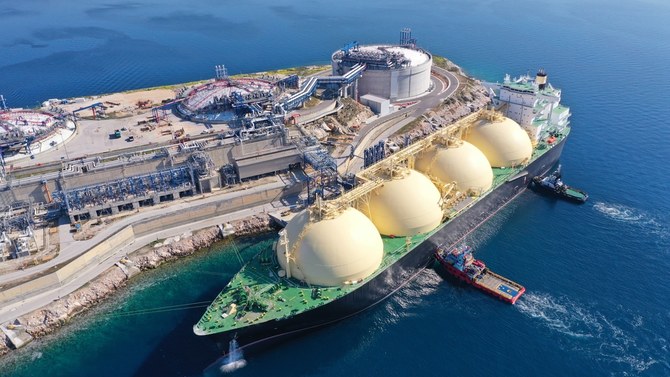

RIYADH: The global liquefied natural gas industry is set to grow by 25 percent in the next five years, with new market importers driven by the increasing adoption of the fuel, according to a new report.
Analysis produced by the International Energy Forum and SynMax, a satellite data analytics company suggests the worldwide trade in LNG is set to reach an annual volume of 500 million tons by 2028.
Furthermore, Southeast Asia, including Singapore, Vietnam, and the Philippines, is anticipated to emerge as the next significant hotspot for the fuel, with demand expected to double by the end of the decade.
“Ten new importers are expected to join the market in the next two years alone. Growth will be driven by adopting LNG for cooking and power generation,” the report said.
China has overtaken Japan as the world’s foremost LNG importer, with its share of global contracts expected to rise to nearly 25 percent by 2030.
The US, the top LNG exporter in 2023, is expected to continue leading in supply growth, with an anticipated 17 percent increase by 2025, followed by an additional 43 percent by 2028, per IEF forecasts.
Joseph McMonigle, secretary general of the IEF, said: “LNG is in greater demand than ever before and continues to drive economic growth and enhance energy security across the world.”
He added: “The versatility of LNG saved Europe from an energy crisis and in Asia, LNG is a vital part of the energy mix. It has helped to lift millions of people out of energy poverty.”
LNG, distinguished by its supercooled state for transport on specialized tankers, currently constitutes approximately 15 percent of the global gas supply.
Its flexibility to traverse large distances, respond swiftly to demand shifts, and trade on the open market has rendered it particularly valuable during economic disruptions.
The report identified geopolitics as a significant factor in reshaping LNG trade flows and investments. The 2022 Russian invasion of Ukraine resulted in a dramatic transformation of energy markets, with Russian gas production plummeting by 21 percent in the last two years.
Faced with the decline in pipeline gas supply, European nations turned to LNG, propelling global prices to unprecedented levels and causing supply challenges for emerging economies.
In Europe, LNG’s share of gas demand has surged from 12 percent a decade ago to over 50 percent, with regasification capacity expected to increase by 48 percent by 2030.
IEF emphasized that LNG has become integral to Europe’s energy mix, acting as a baseload and replacing the role of Russian pipeline gas.
The report underscored the fragility of LNG markets due to robust demand amid increasing geopolitical risks. Supply disruptions and volatile prices could have far-reaching effects on emerging economies, as seen in South Asia, where LNG purchases were slashed by 16 percent last year.
In light of the recent energy crisis, IEF stressed the importance of governments investing in diverse energy sources and technologies, including gas and LNG infrastructure.
However, European governments remain cautious about committing to gas infrastructure, with demand expected to decline as countries progress towards net-zero goals.
The report suggests that Europe could potentially source approximately 70 percent of its LNG from the spot market by 2030.