LONDON: The ancient Saudi city of AlUla is rapidly becoming one of the Kingdom’s top destinations for local and international travelers, officials say, but mass tourism is not their top priority.
“We are growing, and we are growing very fast (but) part of our mission is to respond to sustainable and responsible tourism,” Rami Al-Moallim, vice president of the destination management and marketing office at Royal Commission for AlUla, told Arab News. “We are not yet open for mass tourism, and it is not the focus.
“We need people to experience AlUla, to feel AlUla, to enjoy AlUla, to have unforgettable memories in AlUla, so we’re growing responsibly.”
In terms of targets, he said the aim this year was to attract 250,000 visitors, which is already being achieved, and 292,000 next year.
“We believe this steady growth will be reached very soon (and) we are (targeting) around 1.2 million visitors by 2030,” Al-Moallim said. “We are growing steadily year over year (and providing) very good experiences for people to enjoy.”
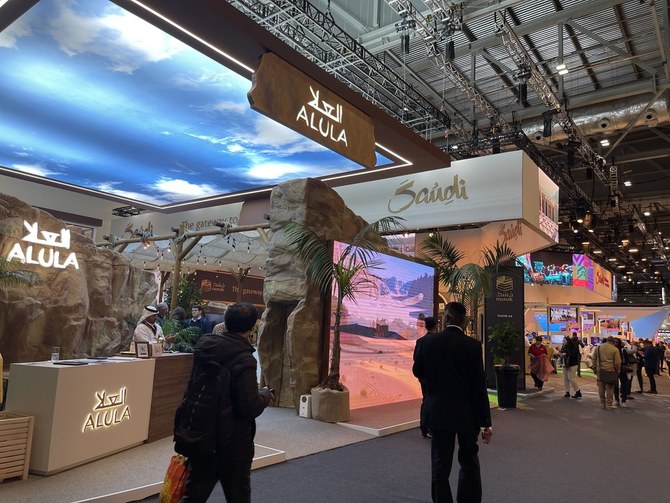
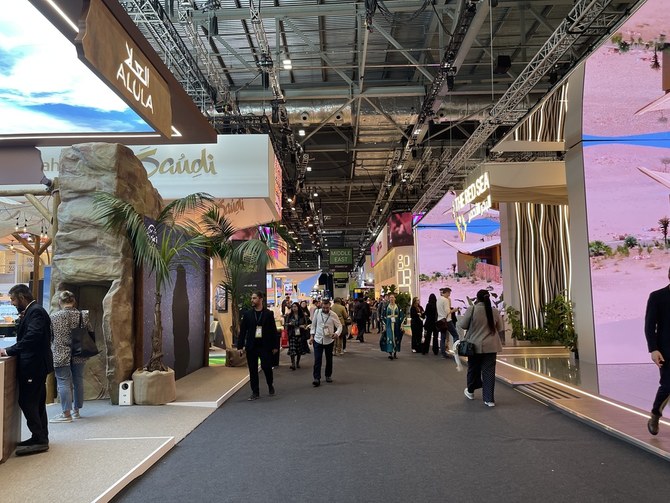
The commission took part in the World Travel Market in London last week. It was the second time it has participated in the annual event under the banner of the Saudi Tourism Authority but the first in which it had a separate booth within the Kingdom’s pavilion.
According to Al-Moallim, the decision to expand its presence at the event this year was made because of the growing interest in AlUla in the international travel market, its increased tourism capacities, higher direct investments from travel partners, including hotel operators and activity providers, and greater numbers of partners who want to showcase what they offer.
The commission’s booth, which was larger than the entire presence of some countries at the event, showcased eight partners in particular, including hotel companies; Live Nation, which manages the Maraya concert hall; and tours and tourism operators Hero Adventure Experiences, Pangea Club and Warrior for Adventures.
The main established hospitality partners in AlUla, which is in Madinah province, currently include Habitas, Banyan Tree, Shaden and Cloud7, Al-Moallim said, but in London the commission also showcased new collaborators, including Dar Tantoura, an eco-friendly boutique hotel with 30 rooms. As plans for hospitality and accommodation in AlUla continue to expand, more will follow soon, he added.
“Dar Tantora will be followed by Hegra Heritage Boutique Hotel, which is another 30-room hotel, in Hegra, then Autograph Collection is also coming in 2025, followed by Six Senses in 2026,” Al-Moallim said.
“In addition to that, Cloud7 is (working on) an expansion currently to double the room capacity by this year-end.”
From an environmental perspective, the four pillars of sustainability — social, human, economic and environmental — are at the heart of the commission’s operations, he added, and it has adopted several initiatives under the banner of the Saudi Green Initiative.
“The newest project that we have, which is the Experiential Tram, is a low-carbon-emission tramway (covering a distance) of 22 kilometers,” Al-Moallim said. “It has 17 stations, so it takes you from the north to the south of AlUla, visiting the whole Journey Through Time master plan.”
On the social and economic fronts, he added, the Madrasat Addeera initiative offers workshops on handicrafts, art and education, with the aim of preserving and reviving local culture, heritage and traditions.
“Looking at the numbers and the key source markets, of course (Saudi Arabia) and the GCC (Gulf Cooperation Council) markets are the key for us” he said, adding that 72 percent of tourists who visited only AlUla in the Kingdom in 2022 came from these areas.
The rest of the world therefore accounted for 28 percent of visitors last year, with 11 percent from Europe alone, Al-Moallim said. The UK was a major source market, followed by France, Italy and Germany. Places outside of Europe, including the US and China, were lower on the list.
Antony Doucet, chief experience officer at Kerten Hospitality, participated in the World Travel Market, where he represented AlUla’s Dar Tantora House Hotel and the Cloud7 Residence. The latter opened in December last year and is set to increase its capacity to 300 rooms, which will make it the largest hotel in AlUla, while the former is set to open on Jan. 15, with 30 keys, he said.
“We don’t like to call (Dar Tantora) a hotel, rather a ‘hospitality experience’ because we’re inviting people to slow down and go back through different times of AlUla,” he said.
It will have a community and cultural manager, Doucet said, who can suggest activities inside and outside the hotel for visitors during their stay, culinary experiences that offer a chance to try traditional Saudi cuisine with a modern twist, and a spa that explores Arabian beauty secrets using natural ingredients from the area, including Peregrina oil.
“It’s also a very personalized and custom-made experience,” he added, as guest will be contacted a week before arrival to help staff better understand the purposes of their stay, their personalities, and their tastes in music and literature.
“It’s also important to note that we have limited electricity,” said Doucet. “We will have only two electric plugs per room, no air conditioning but natural ventilation, and we will be, I think, the first hotel to have drinkable water from the tap,” which will be purified on site.
This reflects the hotel’s commitment to sustainable tourism in AlUla and to the protection of the UNESCO World Heritage Site, he added.
Art will also play an important role at Dar Tantora, where a unique art collection, including bespoke pieces currently being created, will be on display. In addition, it will offer about 10 retail spaces.
Husaak Adventures was one of the tour operators promoting its activities in AlUla during the event in London where, for a second year, it was part of the Kingdom’s pavilion.
The company is an “activator” that works with the Royal Commission and other Saudi government entities to create a range of experiences and services, said Nikki McDonnell, its director of sales and marketing. These include hiking and mountain-biking trails, “glamping” resorts, visitor centers, accommodation solutions, stargazing events, and other adventures and cultural experiences designed to appeal to local and international visitors.
The Saudi-registered business was founded about 10 years ago when there were relatively few tourists or any significant adventure-tourism sector in the region, she said, but now the Kingdom has become a “pioneer” in the field, and the growth and “development they have had in the last couple of years is amazing, and there’s so much opportunity to develop further jewels of Saudi Arabia.”
She added: “We have since developed, and now we offer, over 14 different daily experiences for visitors, as well as the glamping and accommodation solutions that offer affordable accommodation within what is known as a luxury destination.”
AlUla has incredible history, McDonnell said, and one of its key tourist attractions is the ancient Incense Road in Hegra, also known as Mada’in Saleh.
“There’s a big misconception that Saudi Arabia is very hot and it’s only a seasonal destination — it’s not,” she said. The climate and landscape are so diverse that travelers can visit all year round to explore the country’s “rich heritage,” she added.
McDonnell said part of Husaak’s focus is on increasing consumer awareness of AlUla, so while it works with other destination-management and travel companies to package its experiences and programs for visitors, it also carries out a lot of digital marketing in its own right.
“We are on Tripadvisor, our glamping is on Booking.com, we invest in Google heavily to target visitors before they come into the country, (we are) on social media to drive our traffic, and we also advertise annually with National Geographic,” she said.
“Can we develop more experiences, more unforgettable experiences? Yes, and that’s our goal as a company, just to continue to drive and build those experiences and build a legacy for visitors.”
Imad Sulaiman, the general manager of Athaar Arabia, a pioneering destination-management company in the Kingdom, said: “Despite the COVID years, Saudi Arabia is an amazing destination, and with Vision 2030 announcing the (introduction of the) tourist visa, (the country) has strongly found its way onto the tourist map around the world, so this has been a very good achievement over the past three years.
“We are lucky because everybody is talking about Saudi Arabia; the gigaprojects, sports activities and other huge efforts which the Saudi Tourism Authority is doing with other stakeholders … to show Saudi Arabia to the world. They went beyond our expectations.”
Tourism Minister Ahmed Al-Khateeb announced at the Future Investment Initiative forum in Riyadh this month an increased target of attracting 150 million tourists a year by 2030. Sulaiman said it is a target that can “be achieved because Saudi Arabia is a new destination to travelers” and is attracting a lot of interest due to the massive development projects that are helping to support businesses in the tourism sector.
“I call Saudi Arabia a hidden jewel because it’s not shown to the world,” he said, but now “we have a huge demand from different tour operators requesting different types of business or traveler packages to their clients,” from high-end experiences to adventure holidays.
Thanks to the “good news” about the Kingdom’s potential and in-progress bids to host World Expo 2030, the 2034 FIFA World Cup and the Winter Olympics, together with the major sporting events it already hosts, including Formula One and Formula E, “all these projects give us big power to work hard to be able to achieve this target,” Sulaiman said.
He added that he is “proud of all these things” because he worked in the sector in the days before Vision 2030, and all the developments that have followed since it was announced in 2016 have been “beyond our expectation — it’s amazing.”


![]()
![]()

Ancient Saudi city of AlUla focusing on sustainability not mass tourism, officials say
Short Url
https://arab.news/pnkcm
Ancient Saudi city of AlUla focusing on sustainability not mass tourism, officials say
- The UNESCO World Heritage Site is becoming one of the Kingdom’s top tourist destinations but a top Royal Commission for AlUla official tells Arab News ‘We’re growing responsibly’
- The commission took part in the World Travel Market in London last week where, for the first time, it had its own booth within the Kingdom’s pavilion at the event


Latest updates


Recommended


© 2026 SAUDI RESEARCH & PUBLISHING COMPANY, All Rights Reserved And subject to Terms of Use Agreement.