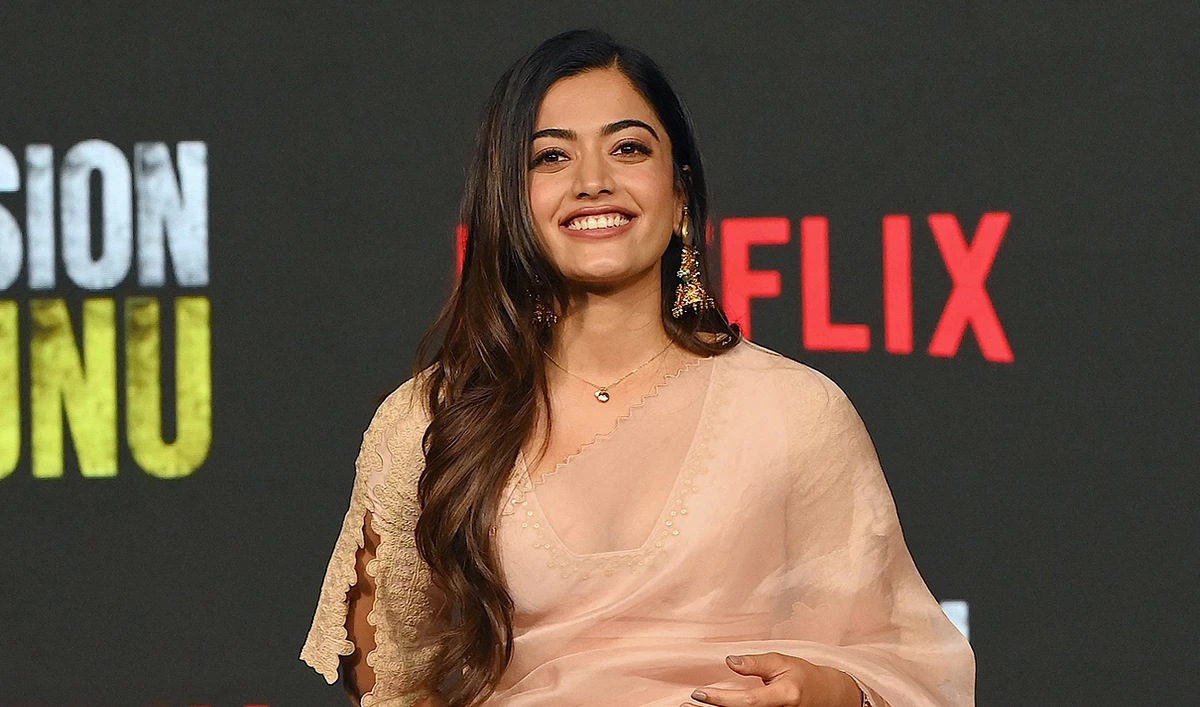
- A manipulated video of Indian actress Rashmika Mandanna was widely circulated on social media in recent days
- Inflammatory social media posts peddling lies in India have stoked political divides and incited deadly religious riots
NEW DELHI: A fake video of a Bollywood actor purporting to show her wearing a low-cut top has triggered calls for AI regulation in India, where past false social media posts have stoked sectarian divisions.
Rashmika Mandanna told her 4.7 million followers on X, formerly Twitter, that she was “really hurt” after a manipulated video showing her face on the body of another woman was widely circulated on social media, sparking outrage from government and fellow Bollywood stars.
“We need to address this as a community and with urgency before more of us are affected by such identity theft,” Mandanna wrote, calling it “extremely scary” how vulnerable all are to technology being misused.
Social media is hugely popular in India, the world’s largest democracy, but inflammatory posts peddling lies have stoked political divides and have been accused of inciting deadly religious riots.
In 2018, a prominent female journalist and critic of Prime Minister Narendra Modi was harassed when edited videos of her face placed on top of naked women were widely circulated.
Like much of the world, artificial intelligence is not regulated in India and the government has put the onus of blocking online misinformation on social media platforms.
Staged videos peddling disinformation and fanning sectarian tensions garner millions of views in India, which has seen rising Hindu radicalization under Modi’s government.
Rajeev Chandrasekhar, India’s information technology minister, wrote on X on Monday that such deep fake videos were “dangerous and damaging” forms of misinformation, but warned that they must “be dealt with by platforms.”
Bollywood superstar Amitabh Bachchan called it a “strong case” for action.
Mandanna added that she was thankful for “my family, friends and well-wishers who are my protection and support system.”
“But if this happened to me when I was in school or college, I genuinely can’t imagine how could I ever tackle this.”
Videos with manipulated images have proliferated online worldwide, damaging reputations.
Some 96 percent of deep fake videos online are non-consensual pornography, and most of them depict women, according to a 2019 study by the Dutch AI company Sensity.
British-Indian Instagram influencer Zara Patel, whose body was featured in the fake video with Mandanna’s face, said she was not involved in its creation and was also “deeply disturbed and upset” by it.
“I worry about the future of women and girls who now have to fear even more about putting themselves on social media,” Patel said in a post to her 450,000 fans.