Saudi Arabia announces 700 fully funded scholarships for Pakistani students

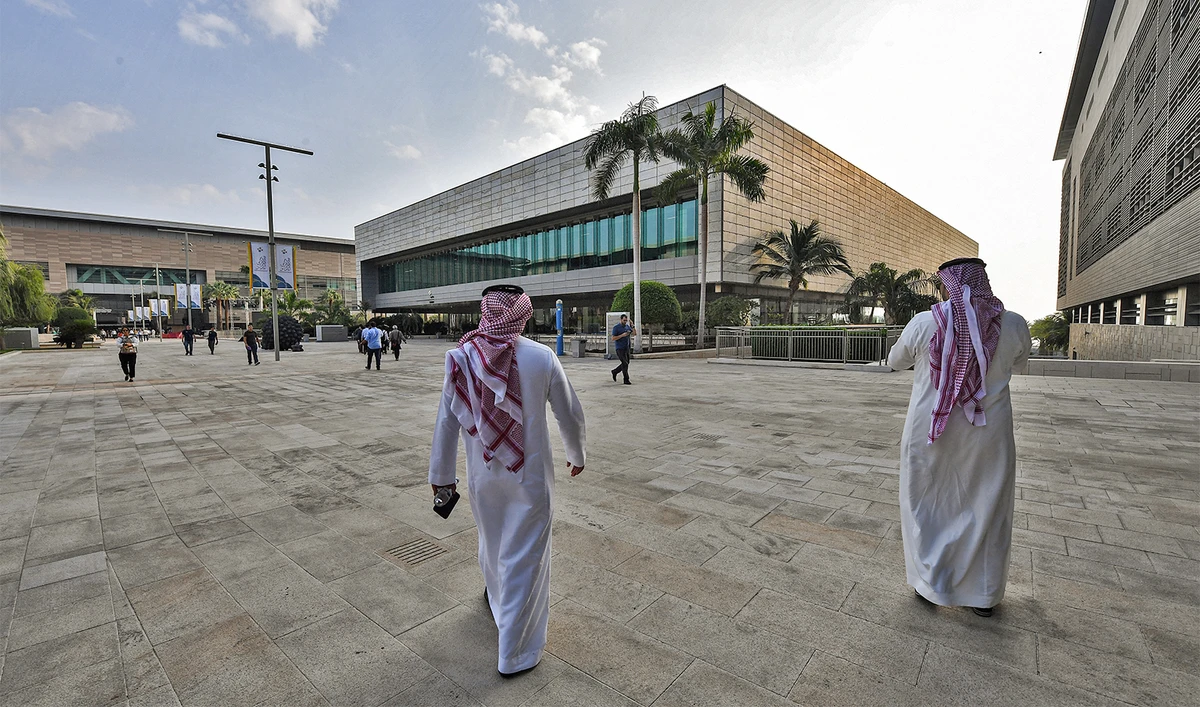
Students walk at the campus of the King Abdullah University of Science and Technology (KAUST), in Saudi Arabia's western Red Sea town of Thuwal, about 80 kilometres north of Jeddah, on December 12, 2019. (AFP/File)
Short Url
Updated 07 November 2023
Follow

Saudi Arabia announces 700 fully funded scholarships for Pakistani students

  • Saudi Arabia increases the number of fully funded scholarships from 600 last year to 700 this year 
  • Pakistani students to study in kingdom’s universities for Diploma, Bachelors, Masters and PhD degrees 

ISLAMABAD: Saudi Arabia has announced 700 fully funded scholarships for Pakistani students, enabling them to study in the top 25 universities across the kingdom, the state-run Associated Press of Pakistan (APP) said on Monday.  

The embassy of Riyadh announced in a notification that the kingdom would provide 700 fully funded scholarships for Pakistani students to study for Diploma, Bachelors, Masters, and PhD programs in 25 universities across Saudi Arabia.  

“Previously the number of scholarships was 600, which has now been increased to 700,” the embassy statement said in a notification, according to the APP. 

The APP said both categories of students who are in Pakistan or legally staying in Saudi Arabia can apply for the scholarships through the online portal: https://studyinsaudi.moe.gov.sa/

“It is to mention here that 75 percent of students will be awarded scholarships from Pakistan, whereas 25 percent scholarships will be given to Pakistani students residing in the Kingdom,” the APP said.  

Prospective candidates can learn about the process and how to apply for the scholarships by visiting: https://studyinsaudi.moe.gov.sa/

The kingdom also offered fully funded scholarships to 600 Pakistani students last year. The program covered tuition fees, a monthly stipend, lodging facility, return tickets, a three-month furnishing allowance for married students, medical care, and a monthly stipend of between 850 and 900 riyals. 


Over 50 feared dead in Karachi shopping plaza fire, officials say

Updated 5 sec ago
Follow

Over 50 feared dead in Karachi shopping plaza fire, officials say

  • Search teams recover 14 bodies as officials warn toll may rise sharply
  • Traders seek urgent compensation after 1,200 shops destroyed in blaze

ISLAMABAD: Pakistani authorities warned on Monday the death toll from a massive fire at a shopping plaza in Karachi could exceed 50, as recovery operations continued a day after the blaze destroyed over 1,200 shops in one of the city’s busiest commercial districts.

The fire broke out late Saturday at Gul Plaza in Karachi’s Saddar business area and spread rapidly through multiple floors. Firefighters battled for more than 24 hours to bring the blaze under control, which was fully extinguished by Monday, officials said, with cooling and debris removal now underway.

Deadly fires in commercial buildings are a recurring problem in Karachi, a city of more than 20 million people, where overcrowding, outdated infrastructure and weak enforcement of fire safety regulations have repeatedly resulted in mass casualties and economic losses.

During a meeting at the Chief Minister’s House on Monday, officials briefed Sindh Chief Minister Murad Ali Shah that 14 bodies had so far been recovered from the site, while the overall death toll could climb significantly as debris is cleared.

“Estimated fatalities could exceed 50,” the Sindh chief minister’s office said in a statement, quoting officials who briefed Shah on the scale of the disaster.

Shah was told that the shopping plaza, built over roughly 8,000 square yards, housed around 1,200 shops, leaving an equal number of traders suddenly without livelihoods. Shah said all affected shopkeepers would be rehabilitated and announced the formation of a committee to recommend compensation amounts and a recovery plan.

“The Gul Plaza building will be rebuilt, and we want to decide how the affected traders can be given shops immediately so their businesses can resume,” Shah said, according to the statement.

Officials said firefighting operations involved 16 fire tenders and water bowzers, with 50 to 60 firefighters taking part. The Karachi Water Board supplied more than 431,000 gallons of water during the operation, while Rescue 1122 ambulances reached the site within minutes of the first alert.

Authorities said access constraints inside the building, along with intense smoke, hampered rescue efforts in the early stages of the fire. A firefighter was among those killed, officials said, noting that his father had also died in the line of duty years earlier.

The provincial government ordered an immediate forensic investigation to determine the cause of the blaze, directing the chief secretary to notify a fact-finding committee. Shah also instructed that debris removal begin without delay so recovery teams could continue searching for victims.

The tragedy has also heightened anxiety within Karachi’s business community. 

The Karachi Chamber of Commerce and Industry (KCCI) has formed a dedicated committee to document losses, coordinate relief and press the government for compensation, saying preliminary assessments indicate more than 1,000 small and medium-sized businesses were completely destroyed.

Ateeq Mir, a traders’ representative, has estimated losses from the fire at over $10 million.

“There is no compensation for life, but we will try our best that the small businessmen who have suffered losses here are compensated in a transparent manner,” Shah told reporters on Sunday night.

Prime Minister Shehbaz Sharif has offered full federal support to provincial authorities, stressing the need for a “coordinated and effective system” to control fires quickly in densely populated urban areas and prevent similar tragedies in the future.

Battling large fires in Karachi’s congested commercial districts remains notoriously difficult. Many markets and plazas are built with narrow access points, encroachments and illegal extensions that block fire tenders, while buildings often lack functioning fire exits, alarms or sprinkler systems. 

Although safety regulations exist, enforcement is sporadic, allowing hazardous wiring and flammable materials to go unchecked — conditions that enable fires to spread rapidly and magnify human and economic losses.