

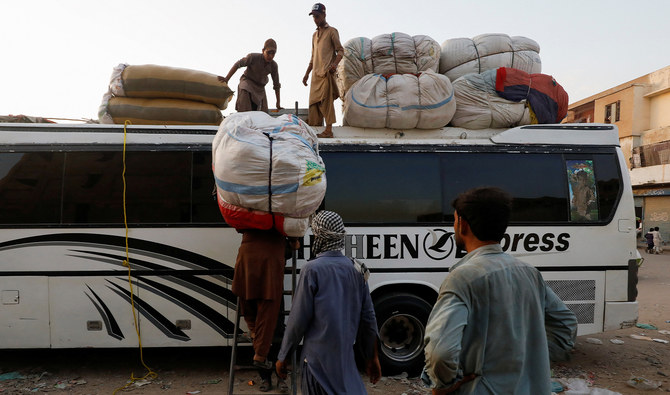

KARACHI: As the clock ticked down to the Nov. 1 deadline for undocumented migrants to leave Pakistan, 56-year-old Shaista Gul frantically darted around a crowded bus stop on Monday with her two grandchildren to board a bus from Karachi to the Afghan border.
Gul is among about 1.7 million Afghans who are undocumented and have been cramming into trucks and buses this past month, heading to the border to return home before the expiration of a Pakistani government deadline for those who are in the country illegally to leave or face forcible expulsion or arrest. Pakistan is home to over 4 million Afghan migrants and refugees, about 1.7 million of whom do not have valid documents, with at least 600,000 of them entering Pakistan after the Taliban takeover in 2021.
The expulsion campaign has drawn widespread criticism from UN agencies, rights groups and the Taliban-led administration in Afghanistan. Pakistan says the deadline is part of a new anti-migrant crackdown that targets all undocumented or unregistered foreigners and is not directed at Afghans alone. Cash-strapped Pakistan, navigating record inflation and a tough International Monetary Fund bailout program, also says undocumented migrants have drained its resources for decades.
“I am a widow, my daughter is a widow, and my one son-in-law has gone missing [in Afghanistan],” Gul told Arab News at the main bus stop in Karachi’s Sohrab Goth neighborhood, detailing persecution of her family under Afghan Taliban rule.
“We are searching for him, but there are no leads … So, we should be given refuge instead of being sent back.”
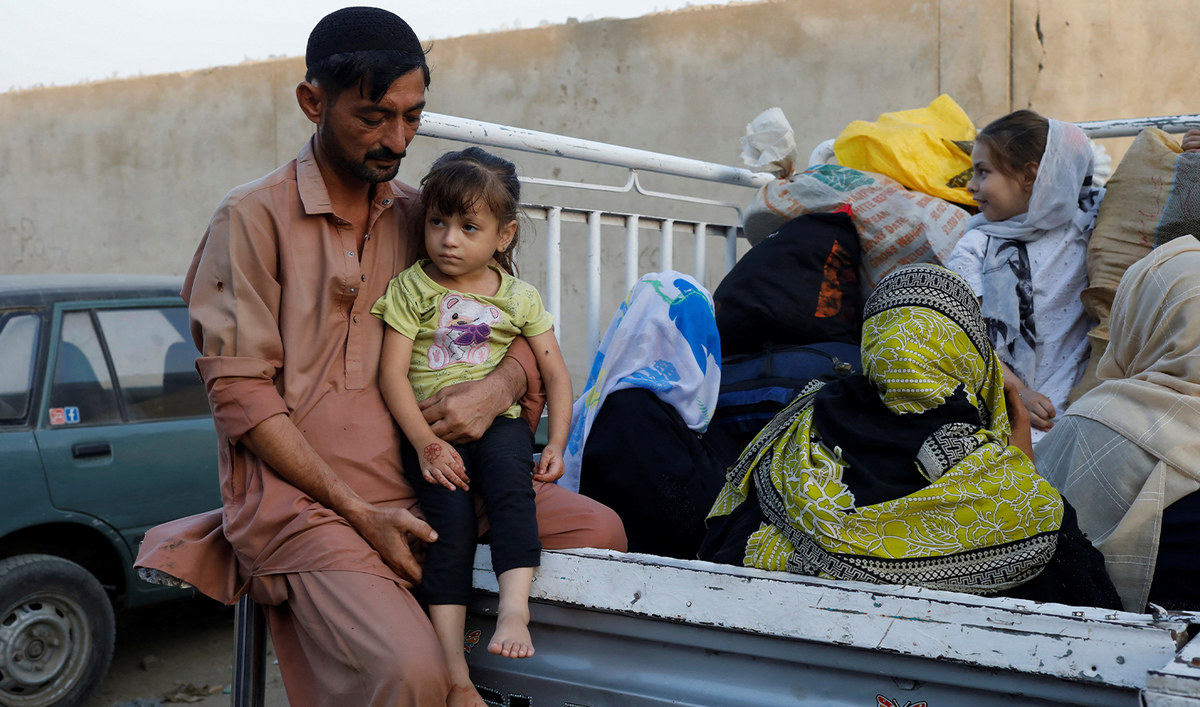
Muhammad Rahim, 35, a driver and father of two, who was born in Karachi in an Afghan family, sits with his family in a pickup van as they prepare to return home, after Pakistan gave the last warning to undocumented migrants to leave, at a bus stop in Karachi, Pakistan on October 29, 2023. (REUTERS)
Gul said she feared for her safety in Afghanistan as she had worked as a government employee with a security role in Kabul before the Taliban takeover and entered Pakistan unlawfully with her family, including her widowed daughter and grandchildren, about two years ago.
“Our lives became extremely difficult [in Afghanistan] due to enmity. They [Taliban] are not willing to spare us because we worked with the government and our lives are under threat.”
In past weeks, mosques across Karachi made loudspeaker announcements warning residents against harboring Afghans. Many Afghans complained of harassment by authorities ahead of the deadline, with many saying they had no job or life prospects in Afghanistan.
“There is no home in Afghanistan,” Muhammad Qasim, an illegal immigrant who has been selling metal boxes for the last seven years, said. “What can we do? We feel forced. Who would willingly go back [in these circumstances]?”
Qasim has frantically tried to sell his belongings in the past few weeks but at drastically reduced prices.
“People are offering Rs200 for a fan,” Qasim said as he walked toward a bus that would take him to the Afghan border, from where he would travel onwards to Kunduz. “Its actual price is Rs3,000, but they want to buy it for Rs200? Would anyone willingly sell their valuables like this? Isn’t this a clear result of compulsion?”
Speaking to Arab News on Sunday, Sindh’s caretaker home minister Brig. (r) Haris Nawaz said after the passing of the Nov. 1 deadline, illegal foreigners would be kept at holding centers in different cities of the province before being sent to their respective countries.
“Those who have documents issued by the National Database Registration Authority and are registered as refugees will remain here as our guests and will not be disturbed,” he added.
Hajji Abdullah, head of the Afghan Refugee Council in Sindh, said that even those with Proof of Registration (PoR) and Afghan Citizen Cards (ACC) were leaving out of fear of arrest and harassment.
“It’s been a week now, with 3,500 people leaving on an almost daily basis, and this even includes those who have PoR and ACC,” he told Arab News, adding that local police had initiated the process of documenting registered Afghan refugees.
“Currently, Afghanistan is experiencing cold weather and snowfall,” he added. “The way they feel disgraced here [in Pakistan], they are choosing to return to their homeland, even in the midst of harsh winter.”
Jamal Khan Baghlani, a bus operator, said on Tuesday though today was the last day for foreign nationals illegally residing in Pakistan to leave, many Afghans were trying to book seats for the coming week.
“Many people have been coming over here and asking, ‘Can we secure seats for the 2nd or 3rd November,’” he said. “I tell them they can only secure their seats until November 1. After that, the booking will be closed.


