JLL among global businesses moving their regional HQs to Riyadh, reveals KAFD CEO 

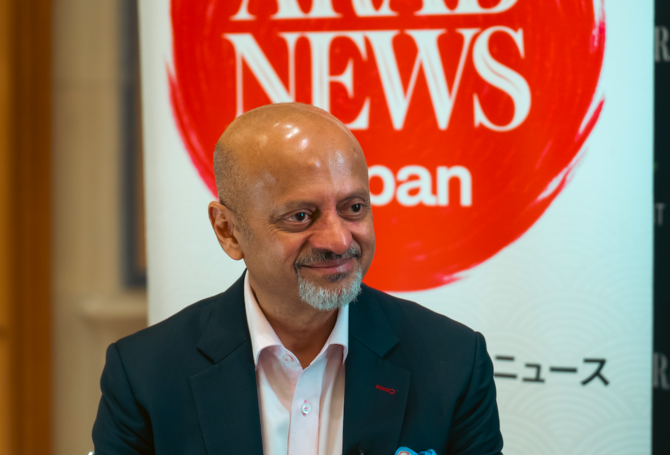
KAFD DMC CEO Gautam Sashittal speaking to Arab News.
Short Url
Updated 27 October 2023
Follow

JLL among global businesses moving their regional HQs to Riyadh, reveals KAFD CEO 

RIYADH: Saudi Arabia’s program to attract regional headquarters of international companies is producing results, with the King Abdullah Financial District Development & Management Co. signing up some big names in business. 

Speaking to Arab News on the sidelines of the Future Investments Initiative, KAFD DMC CEO Gautam Sashittal confirmed that global real estate services firm Jones Lang LaSalle will be relocating its regional headquarters to the district. 

The announcement came close on the heels of global professional services firm Deloitte planning to open a new regional headquarters in Riyadh to widen its presence in the Kingdom and the Middle East. 

 “Yesterday, we announced that Deloitte is moving their regional headquarters into KAFD and today, JLL is moving in,” said Sashittal. 

Set in the heart of Riyadh, KAFD is one of the biggest financial districts in the Middle East and is also home to 1.6 million sq. meters of office, venues and retail spaces. 

“We are seeing that momentum of multinational companies, ministries, government organizations, locally owned companies all coming into KAFD, creating a business ecosystem that feeds on itself,” he added. 

Last month, the company became the first development in the Europe, Middle East and Africa region to secure SmartScore Neighbourhood pre-certification – a benchmark for intelligent systems at the district level. 

The certification is a global standard for smart buildings and assesses the technology implementation in cybersecurity, governance, and building systems, as well as data sharing, landlord integration networks and tenant digital connectivity. 

“Why do we need that certification? The reason for that is we are creating that smart district that uses AI (artificial intelligence) and data analytics to improve the experience of our customer base,” said Sashittal. 

The company aims to create an ecosystem of smart city solutions to build  a “cognitive city.” 

He added: “That means you use the data, you analyze the data, and you use that to better the experience all the time.”

The city will employ smart parking that can be pre-reserved, face recognition and number plate identification to ensure safety and efficiency.  

KAFD has also leaped into the sustainability space by introducing various technologies for eco-friendly cooling, water irrigation systems, and automated waste collection in its master plan. 

“We have planted a lot of greenery in our public spaces, almost 5,000 trees last year. We want to recycle water and use the recycled water for all of our irrigation,” added Sachittal. 

He said that the focus on sustainable practices in the city has allowed it to become the world’s largest district with neighborhood Leadership in Energy and Environmental Design Platinum certification. The community has over 40 towers with gold or silver rating. 

LEED is the rating system used by the US Green Building Council to measure a building’s sustainability and resource efficiency. 


Free trade negotiations between GCC, India mark new phase of partnership, says sec-gen

Updated 24 February 2026
Follow

Free trade negotiations between GCC, India mark new phase of partnership, says sec-gen

RIYADH: The Gulf Cooperation Council’s secretary-general affirmed that the negotiations for a free trade agreement between the GCC and India, and the signing of the joint statement, represents a new phase of strategic partnership.

Jasem Mohamed Al-Budaiwi said that this contributes to enhancing close cooperation and strengthening economic and trade ties, according to the Saudi Press Agency.

This came during the signing ceremony of the joint statement on launching the free trade agreement negotiations between the Al-Budaiwi and India’s Minister of Commerce and Industry, Piyush Goyal, which took place in New Delhi, on Tuesday.

During the signing ceremony, Al-Budaiwi said that the Terms of Reference, signed on Feb. 5, provide a comprehensive and clear framework for these negotiations. The two nations agreed to discuss enhancing cooperation in vital strategic areas, including trade in goods, customs procedures, and services.

Additionally, the framework covers Sanitary and Phytosanitary measures, intellectual property rights, cooperation on Micro, Small, and Medium Enterprises, along with other topics of mutual interest. This reflects the comprehensive nature of the agreement and its ability to keep pace with the future economy.

Al-Budaiwi expressed hope that these negotiations would lead to a comprehensive and ambitious free trade agreement that works to remove customs and non-customs barriers, enhance the flow of quality investments in both directions, and achieve further liberalization in trade and investment cooperation between the GCC and India for mutual benefit. 

This would provide a stimulating economic environment and an investment climate that opens broad horizons for the business sector, supports supply chains, and accelerates the pace of economic growth in line with the ambitious developmental visions of the GCC states. 

The top official affirmed the full readiness of the General Secretariat to host the first round of negotiations at its headquarters in Riyadh during the second half of this year.

The two sides held a meeting during which they reviewed the existing cooperation relations between the GCC and India and discussed ways to develop and elevate them to broader horizons, serving mutual interests and enhancing opportunities for strategic partnership between the two sides, particularly in the economic, investment, and trade fields.

They praised the role undertaken by the negotiating teams from both sides, appreciating the efforts contributing to reaching a comprehensive agreement that enhances economic integration and supports the smooth flow of trade between the two nations.