World’s largest sustainable farm is key to Saudi Arabia’s agricultural goals

1 / 5
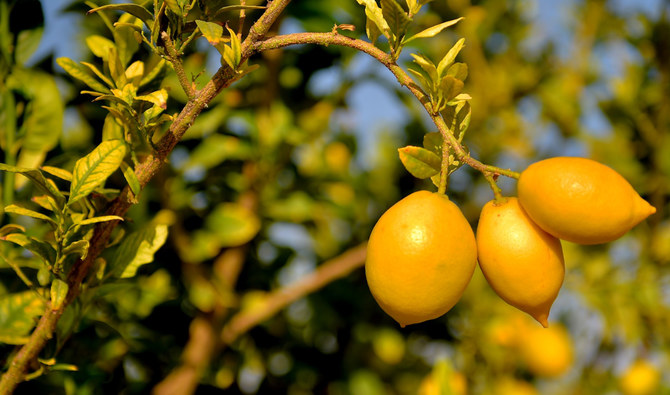
The sustainable farm was recently recognized by the Guinness World Records as the largest in the world. (Supplied)
2 / 5
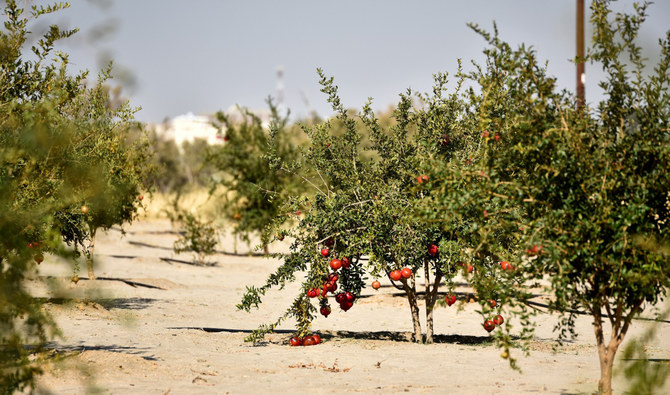
The sustainable farm was recently recognized by the Guinness World Records as the largest in the world. (Supplied)
3 / 5
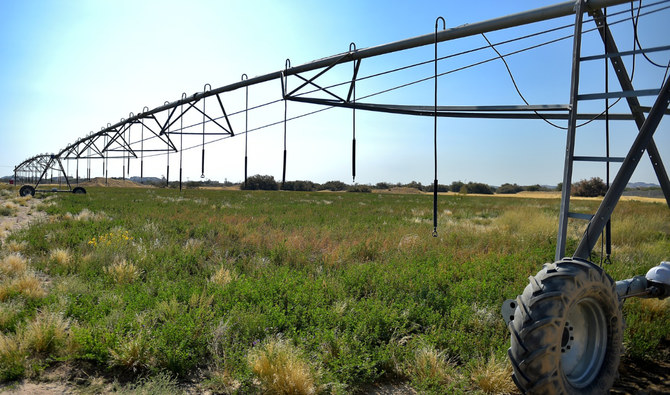
The sustainable farm was recently recognized by the Guinness World Records as the largest in the world. (Supplied)
4 / 5
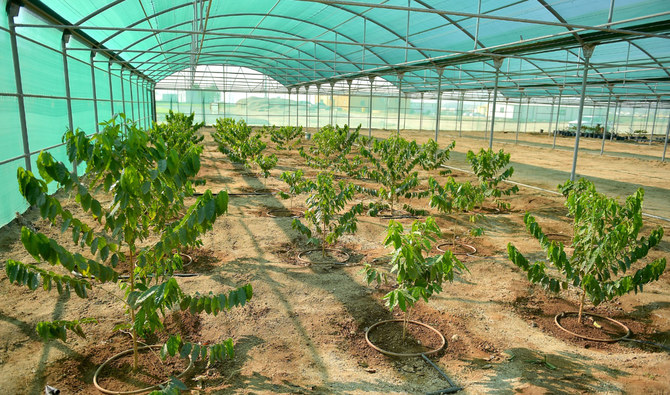
The sustainable farm was recently recognized by the Guinness World Records as the largest in the world. (Supplied)
5 / 5
The sustainable farm was recently recognized by the Guinness World Records as the largest in the world. (Supplied)
Short Url
Updated 24 October 2023
Follow

World’s largest sustainable farm is key to Saudi Arabia’s agricultural goals

JEDDAH: Saudi Arabia imports about 80 percent of its fruit. But a sustainable farm in Wadi bin Hashbal, in the southwest Asir region, is setting out to reduce that figure by producing up to 60 tons of fruit, field crops and fodder each year.

The sustainable farm, recently recognized by the Guinness World Records as the largest in the world, uses treated water to irrigate crops planted across a 3.2 million square meter area.

Irrigation operations are overseen by specialists and carried out in several stages, minimizing the impact on freshwater resources, and promoting responsible water management practices.

This approach aligns with the Kingdom’s efforts to address water scarcity and ensure the long-term viability of agricultural activities.

The model farm has more than 14,000 trees and houses five air-conditioned greenhouses along with several other structures. It also includes 50 fields designated for growing fruit trees, in addition to plans to reclaim and cultivate 20 additional fields in the future.

A wide range of crops and fruit trees, including lemons, oranges, tangerines, pomegranates, grapes and figs, highlight the Kingdom’s agricultural diversity.

Speaking to Arab News, Ahmed bin Mohammed Al-Mujthal, director-general of the Ministry of Environment and Water’s Asir branch, described the research farm as “a new achievement in the name of the nation.”

“It marks a significant milestone in Saudi Arabia toward sustainable farming. This remarkable achievement also showcases the Kingdom’s commitment to agriculture and environmental conservation,” he said.

The farm also shows that “with the right combination of innovation and commitment, a sustainable future is within our reach.”

Al-Mujthal added: “When you’re talking about something this large, the economics work out well. So, it turns out to be a very profitable farm.”

Model farms display modern irrigation systems, as well as the latest cultivation and animal-rearing techniques, acquainting farmers in the region with the best agricultural practices, he said.

The approach is important to provide food for local communities and reduce reliance on imported products.

“Food security is a matter of national security,” he said.

Al-Mujthal said that the sustainable farm expects to produce 10,700 kg of lemons, 3,500 kg of tangerines, 4,200 kg of oranges and 16,000 kg of pomegranate, among other crops.

According to World Wide Fund for Nature, agriculture is the world’s largest industry, employing more than 1 billion people and generating over $1.3 trillion of food annually. Pasture and cropland occupy about half of the planet’s habitable land, and provide habitat and food for a host of species.

Food security is a priority in Saudi Arabia and sustainable agriculture is gaining widespread attention.

Agricultural operations that are sustainably managed can preserve and restore critical habitats, help protect watersheds, and improve soil health and water quality, while unsustainable practices can have serious impacts on people and the environment.

Sustainable development that aims to capitalize on renewable natural resources is one of Saudi Arabia’s main objectives. The Kingdom also seeks to maintain a stable balance of natural resources through safe and effective management methods.

Resource management is becoming more important as the Saudi population grows, driving up demand for agricultural commodities.

As part of Vision 2030, the Kingdom has formulated plans to increase the use of technology, promote organic farming and increase the use of water-saving methods.


SDAIA Academy opens registration for quantum computing boot camp

Updated 05 January 2026
Follow

SDAIA Academy opens registration for quantum computing boot camp

  • 5 hours of daily training offered, from Jan. 11-15

RIYADH: The SDAIA Academy has opened registration for a five-day quantum computing boot camp aimed at building national capabilities in one of the world’s most advanced and complex computing fields.

The boot camp will run from Jan. 11 to 15, offering five hours of daily training, according to the Saudi Press Agency.

It is organized by the Saudi Data and AI Authority, in collaboration with the King Fahd University of Petroleum and Minerals, and targets professionals and specialists in computer science and related disciplines.

According to the SDAIA, the program is designed to equip participants with a foundational understanding of quantum computing and its potential applications, as Saudi Arabia steps up investments in advanced and emerging technologies, aligned with Vision 2030.

Quantum computing differs fundamentally from classical computing by relying on quantum mechanics rather than binary logic.

While still an emerging field, it is widely expected to reshape areas such as cybersecurity, optimization, advanced simulation and data-intensive research.

The boot camp will introduce participants to the physical and mathematical principles that underpin quantum computing, including the behavior of qubits, quantum superposition and entanglement.

It will also examine how quantum systems differ from traditional computing architectures and where quantum approaches may offer advantages.

In addition to theory, the program places a strong emphasis on applied training.

Participants will receive hands-on exposure to designing and running quantum algorithms using industry-recognized tools and platforms, including Qiskit and CUDA-Q.

These tools are currently used in research and early-stage development environments worldwide.

Organizers say the practical component aims to prepare participants to engage with real-world quantum computing workflows rather than limiting training to conceptual knowledge.

The goal is to build early-stage technical readiness among Saudi professionals, as global interest in quantum technologies accelerates.

The collaboration with King Fahd University of Petroleum and Minerals reflects a broader push to link national digital initiatives with academic and research expertise.

KFUPM has played a central role in developing technical talent in engineering, computing and applied sciences, fields closely connected to quantum research.

The SDAIA has increasingly focused on capability-building programs that support Saudi Arabia’s long-term digital and data strategy.

Training initiatives in artificial intelligence, advanced analytics and emerging technologies are viewed as essential in reducing reliance on external expertise and strengthening local innovation ecosystems.

Officials say the quantum computing boot camp forms part of this wider effort to develop specialized skills that may not yet be widespread in the local labor market but are expected to become strategically important in the coming decade.

The program also aligns with the objectives of Vision 2030 related to human capital development and the transition toward a knowledge-based economy, particularly in high-value technology sectors.

Registration for the boot camp is open until Jan. 6. Applicants can register through the SDAIA’s official training platform.