


WASHINGTON: With tensions spiking in the Middle East, US forces in the region are facing increasing threats, as a Navy warship shot down missiles appearing to head toward Israel Thursday and American bases in Iraq and Syria were repeatedly targeted by drone attacks.
The USS Carney, a Navy destroyer in the northern Red Sea, intercepted three land attack cruise missiles and several drones that were launched by Houthi forces in Yemen. The action by the Carney potentially represented the first shots by the US military in the defense of Israel in this conflict.
Brig. Gen. Pat Ryder, Pentagon press secretary, told reporters the missiles were “potentially” headed toward Israel but said the US hasn’t finished its assessment of what they were targeting.
A US official said they don’t believe the missiles — which were shot down over the water — were aimed at the US warship. The official spoke on condition of anonymity to discuss military operations that had not yet been announced.
But an array of other drone attacks over the past three days did target US bases, including one in southern Syria on Thursday that caused minor injuries.
The rash of violence comes in the wake of an explosion at a Gaza hospital that killed hundreds of people, triggering protests in a number of Muslim nations. The Israeli military has relentlessly attacked Gaza in retaliation for the devastating Hamas rampage in southern Israel almost two weeks ago, but Israel has denied responsibility for the Al-Ahli hospital blast and the US has said its intelligence assessment found that Tel Aviv was not to blame.
In recent days, however, a number of militant groups across the region — from Hezbollah to the Houthis — have expressed support for the Palestinians and threatened Israel. Since Tuesday, militants have launched at least four drone attacks on US military installations in Iraq and Syria where US troops train local defense forces and support the mission to counter the Daesh group.
The attacks fuel escalating worries in the US and the West that the war in Israel could expand into a larger regional conflict.
“That’s exactly what we are trying to prevent,” Ryder said.
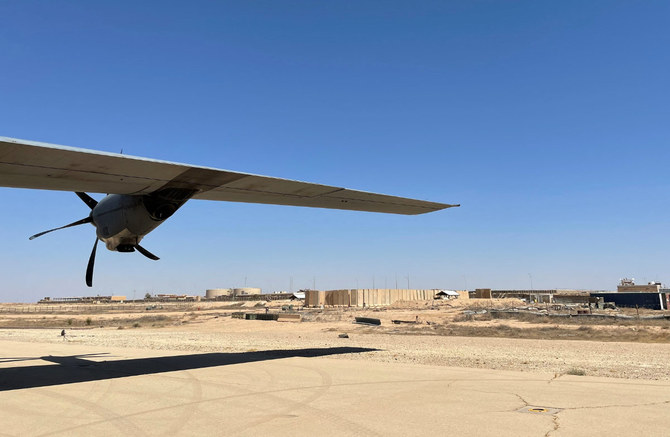
The most recent drone attack was Thursday at Al-Asad Air Base in western Iraq. The Islamic Resistance in Iraq posted a statement claiming responsibility for the attack, saying they had fired a salvo of rockets at the base and “they hit their targets directly and precisely.” A US official confirmed the latest attack but said it was too early to assess any impact.

Also Thursday, the Al-Tanf garrison in southeastern Syria was struck by drones. US troops have maintained a presence at the base for a number of years to train Syrian allies and monitor Islamic State militant activity.
The Pentagon said one drone was shot down, but another hit the base and caused minor injuries.
The garrison is located on a vital road that often used by Iranian-backed militants to ferry weapons to Hezbollah in southern Lebanon — and Israel’s doorstep.
Syrian opposition activists also said there was a separate drone attack on an oil facility in eastern Syria that houses American troops. Omar Abu Layla, a Europe-based activist who heads the Deir Ezzor 24 media outlet, said three drones with explosives struck the Conoco gas field in the eastern province of Deir Ezzor that borders Iraq. The Britain-based Syrian Observatory for Human Rights, an opposition war monitor, also confirmed explosions at the site.
On Tuesday, militants launched three drones against two Iraq bases that the US uses to train forces and conduct operations against the Islamic States. During the spate of launches, one warning turned out to be a false alarm at Al-Asad, but it sent personnel rushing into bunkers. During that incident, a contractor suffered a cardiac arrest and died, Ryder said.
He said the Pentagon does not yet have confirmation on who launched the drone attacks but said the US ”will take all necessary actions to defend US and coalition forces against any threat.” He said any military response would come “at a time and a manner of our choosing.”
On the intercepts by the Carney, Ryder said the strikes were done because the Houthi missiles “posed a potential threat” based on their flight profile. He added that the US is prepared to do whatever is needed “to protect our partners and our interests in this important region.” He said the US is still assessing what the target was, but said no US forces or civilians on the ground were injured.
Iranian-backed Houthi rebels have expressed support for the Palestinians and threatened Israel. Last week, in Yemen’s Sanaa, which is held by the Houthi rebels still at war with a Saudi-led coalition, demonstrators crowded the streets waving Yemeni and Palestinian flags. The rebels’ slogan long has been, “God is the greatest; death to America; death to Israel; curse of the Jews; victory to Islam.”
Last week, Abdel-Malek Al-Houthi, the rebel group’s leader, warned the United States against intervening in the ongoing conflict between Israel and Hamas, threatening that his forces would retaliate by firing drones and missiles.
When approached Thursday, two Houthi officials declined to comment on the incident. One said he was unaware of the incident, while the second said he did not have the authority to speak about it.


