

Four key India-Pakistan battles at World Cup 

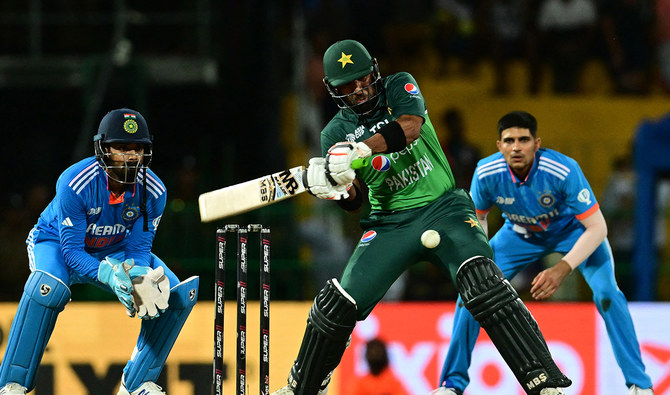
Pakistan's Iftikhar Ahmed (C) plays a shot during the Asia Cup 2023 super four one-day international (ODI) cricket match between India and Pakistan at the R. Premadasa Stadium in Colombo on September 11, 2023. (AFP/File)
Short Url
Updated 12 October 2023
Follow

Four key India-Pakistan battles at World Cup 

  • Arch-rivals India and Pakistan meet in a blockbuster clash at the World Cup on Saturday
  • India skipper Rohit Sharma has struggled against Shaheen Shah Afridi’s left-arm pace 

AHMEDABAD, India: Arch-rivals India and Pakistan meet in a blockbuster clash at the World Cup on Saturday. 

AFP Sport takes a look at four key battles that could decide the eagerly-awaited contest at the world’s biggest cricket stadium in Ahmedabad. 

India skipper Rohit Sharma has struggled against Shaheen Shah Afridi’s left-arm pace in the few outings the two teams have had in recent times. 

Shaheen rattled Rohit’s off stump in their first Asia Cup match in Pallekele last month when the opener’s lack of footwork saw him bowled for 11. 
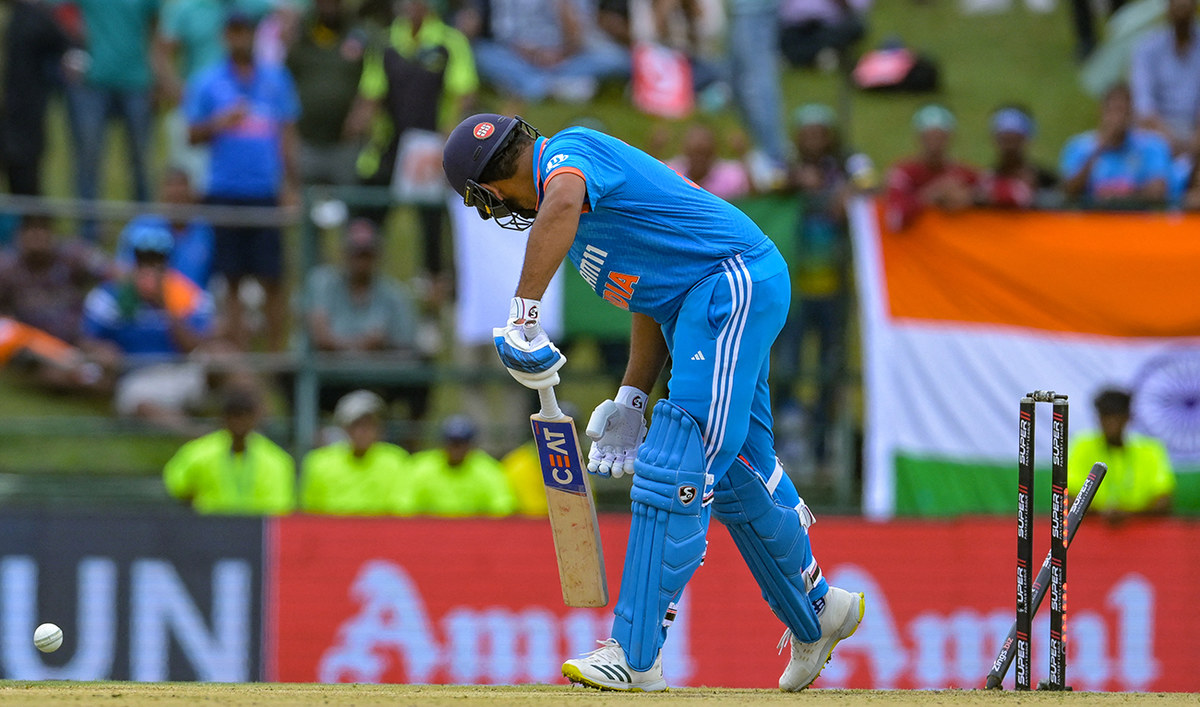


India's captain Rohit Sharma is clean bowled by Pakistan's Shaheen Shah Afridi (not pictured) during the Asia Cup 2023 one-day international (ODI) cricket match between India and Pakistan at the Pallekele International Cricket Stadium in Kandy on September 2, 2023. (AFP)

The duel began at the T20 World Cup in 2021 when Shaheen trapped Rohit lbw for a duck in the first over in Dubai with his pace and swing. 

But Rohit came back prepared when the rivals next met in Colombo and remained cautious against the quick despite hitting a six off his first over. 

The stakes were high when Virat Kohli came up against Haris Rauf in a challenging chase at the T20 World Cup in Melbourne last year. 

India needed 31 off the last 18 balls while chasing 160 when Kohli held his nerve to smash Rauf for two sixes to bring the house down at a packed MCG. 
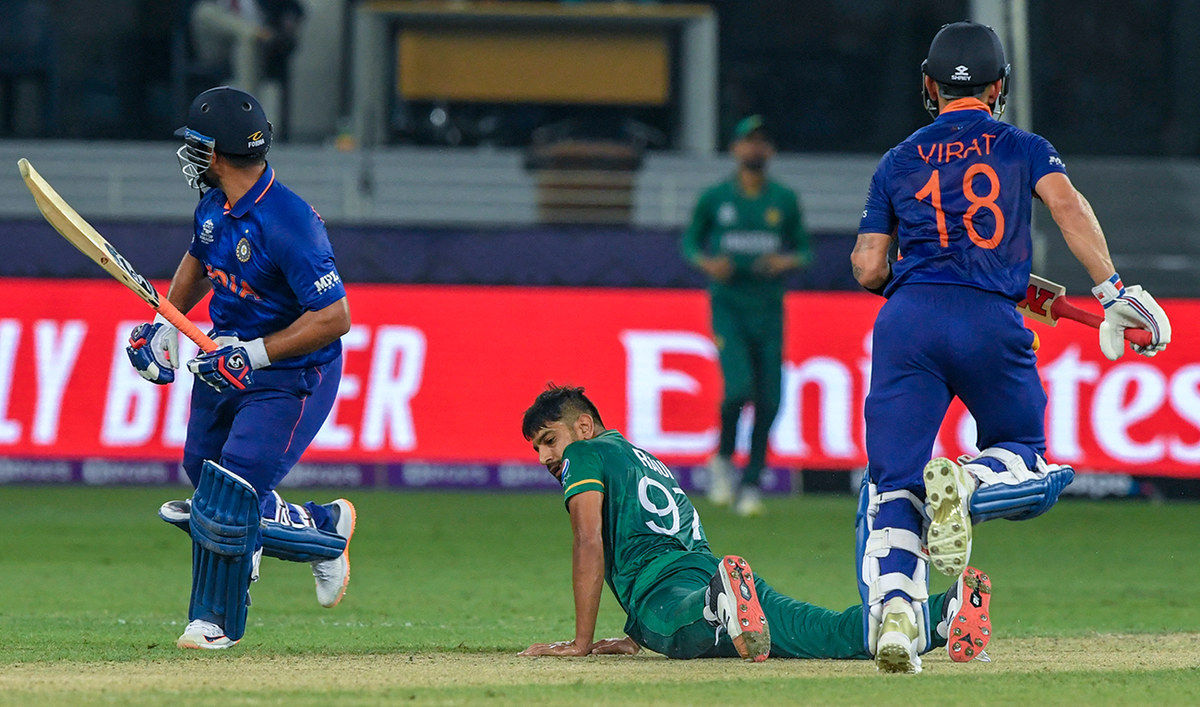


Pakistan's Haris Rauf (C) dives to field the ball as India's captain Virat Kohli (R) and his teammate Rishabh Pant take a run during the ICC men’s Twenty20 World Cup cricket match between India and Pakistan at the Dubai International Cricket Stadium in Dubai on October 24, 2021. (AFP)

The first was a length ball which Kohli dispatched straight down the ground and he flicked the next to over fine-leg en route to victory. 

Kohli later said the sixes were “instinctive,” but it began a great battle with the Pakistan quick which awaits another showdown in Ahmedabad. 

Jasprit Bumrah experienced the Pakistan captain’s ability at the 2021 T20 World Cup in the United Arab Emirates. 

Azam took on the Indian attack including Bumrah, a yorker king, with ease as he and Mohammad Rizwan steered the team to a 10-wicket victory in Dubai. 
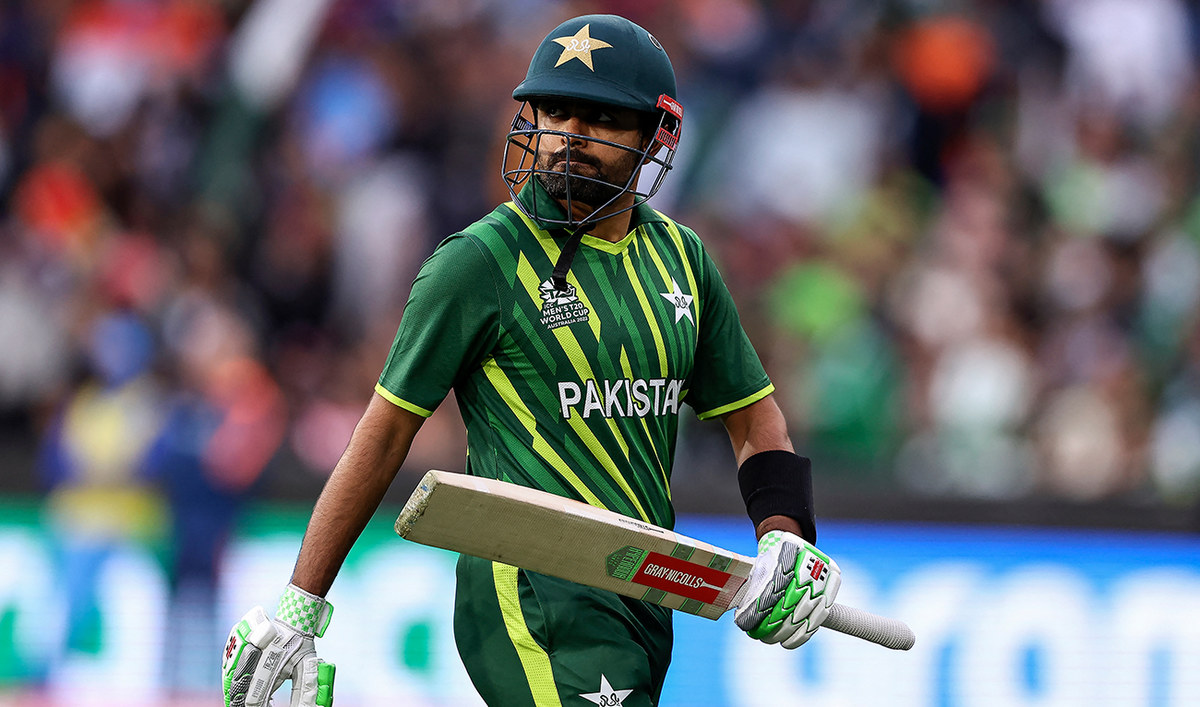


Pakistan's Babar Azam leaves the field after being dismissed during the ICC men's Twenty20 World Cup 2022 cricket match between India and Pakistan at Melbourne Cricket Ground (MCG) in Melbourne on October 23, 2022. (AFP/File)

But two years later Bumrah and company seemed to have learnt their lessons when they bowled out Pakistan for 128 in a crushing 228-run win in an Asia Cup Super Four clash. 

Bumrah beat the bat of Azam on a few occasions in Colombo before Hardik Pandya got the prized wicket. 

Iftikhar Ahmed is a middle-order batsman who can play anchor or go after the bowling with equal ease but at the Asia Cup last month, India spinner Kuldeep Yadav cut short the batsman’s knock, taking a smart catch off his own bowling. 
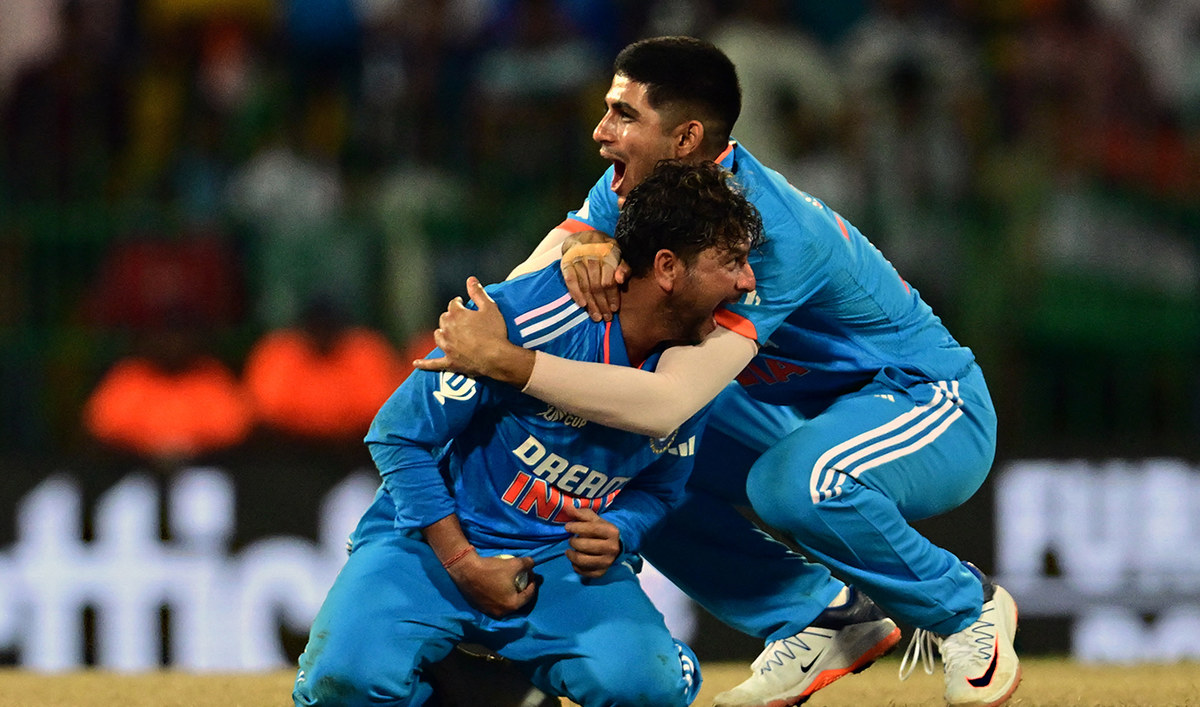


India's Kuldeep Yadav (L) and Shubman Gill celebrates after taking the wicket of Pakistan's Iftikhar Ahmed (not pictured) during the Asia Cup 2023 super four one-day international (ODI) cricket match between India and Pakistan at the R. Premadasa Stadium in Colombo on September 11, 2023. (AFP/File)

Kuldeep, a left-arm wrist spinner, claimed 5-25 in that game as India claimed a 228-run win. 

Iftikhar’s task on Saturday will be to tackle the spinners in the middle overs and also accelerate the scoring. 


Pakistan rules out talks with Afghanistan, says over 330 Afghan fighters killed in clashes

Updated 3 min 19 sec ago
Follow

Pakistan rules out talks with Afghanistan, says over 330 Afghan fighters killed in clashes

  • Clashes between the neighbors erupted after Pakistan’s airstrikes on Afghan territory last weekend
  • US voices support for Pakistan, Information Minister Attaullah Tarar says they aim to make Pakistan safe

ISLAMABAD: Pakistan has ruled out any talks with Afghanistan until an end to “terrorism” emanating from the Afghan soil, officials said on Friday, following the killing of more than 330 Afghan fighters in cross-border clashes this week.

The latest clashes between the neighbors erupted after Pakistan’s airstrikes on Afghan territory last weekend triggered Afghan retaliatory attacks along the border on Thursday, escalating long‑simmering tensions over Pakistan’s claim that Afghanistan shelters Pakistani Taliban militants. Afghanistan denies this and argues Pakistan is deflecting blame for its own security failures.

Pakistani Information Minister Attaullah Tarar said they had killed 331 Afghan fighters, destroyed over 100 posts and targeted 37 military locations across Afghanistan. Afghan officials have said that more than 50 Pakistani soldiers have been killed and several Pakistan posts have been captured by their forces. None of the casualty figures or battlefield claims from either side could be independently verified.

Meanwhile, Mosharraf Zaidi, Prime Minister Shehbaz Sharif’s spokesperson for foreign media, ruled out any talks with Afghanistan until Kabul addresses the issue as the United States (US) expressed his support for what it called Pakistan’s “right to defend itself” against attacks from Afghanistan’s Taliban rulers.

“There won’t be any talks, there is nothing to talk about... Terrorism from Afghanistan has to end,” Zaidi told Pakistani state media, saying Islamabad would continue to target militant havens inside Afghanistan.

“Pakistan’s responsibility is to protect its citizens. If we know that there is a terrorist in point A and we know that there is a terrorist enabler at point A, we will find a weapon to land at point A and eliminate the threat.”

Zaidi said he didn’t expect Pakistan to deviate from this position and that the government had clearly conveyed what it was doing.

“We have clearly articulated what we are doing and what we plan on continuing to do and what it will take for us to stop doing what we are doing,” Zaidi said.

“And we will expect that both the international community and the regime in question, the Afghan Taliban, will come to their senses and will help reduce instability and disorder in this region.”

Pakistan is a major non-NATO ally of Washington, while the US considers the Afghan Taliban to be a “terrorist” group.

“The United States supports Pakistan’s right to defend itself against attacks from the Taliban, a Specially Designated Global Terrorist group,” Reuters quoted a State Department spokesperson as saying. US diplomat Allison Hooker said on X she spoke on Friday with Pakistan Foreign Secretary Amna Baloch.

The State Department spokesperson said Washington was aware of the escalation in tensions and “outbreak of fighting between Pakistan and the Afghan Taliban,” adding the US was “saddened by the loss of life.”

“The Taliban have consistently failed to uphold their counterterrorism commitments,” the State Department said, adding that “terrorist groups use Afghanistan as a launching pad for their heinous attacks.”

Meanwhile, Afghan Taliban spokesperson Zabihullah Mujahid called for talks to resolve the crisis.

“We have always emphasized peaceful resolution, and now too we want the issue to be resolved through dialogue,” he said on Friday afternoon.

Asked what Pakistan desired, Information Minister Tarar said: “Neutralizing the threat and ensuring that Pakistan is safe.”

“Because for us, we’ve been good neighbors, we’ve been very friendly neighbors, we’ve been very, very generous neighbors. Our generosity, unfortunately, has often been seen as our weakness,” he told state media.

“So the objective, aim is to neutralize the threat and make Pakistan safe.”

To a question about a ceasefire, Tarar said it was “too early” to comment on that as it was an evolving situation.