

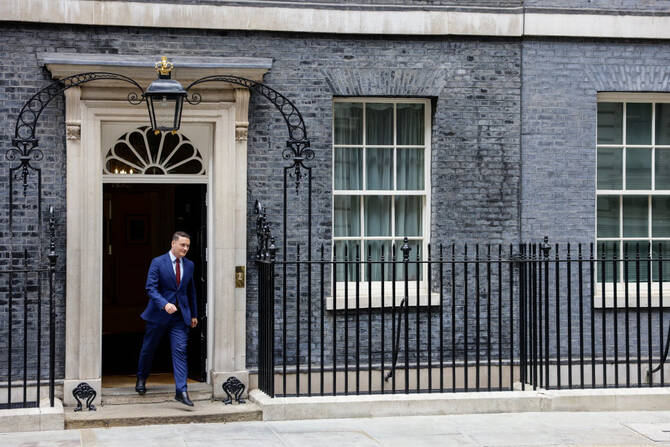
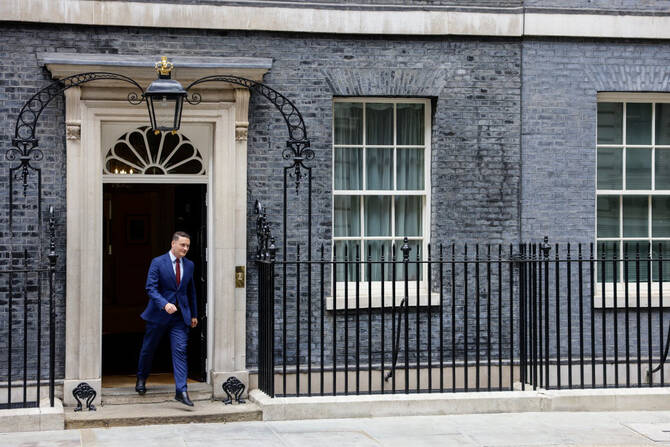
LONDON: A former senior UK minister said attempts to raise within Prime Minister Keir Starmer’s government the issue of Israeli atrocities against Gaza were like “hitting up against a brick wall.”
Wes Streeting, who quit his Cabinet post as health secretary last month, told The Guardian newspaper on Tuesday that when he and other colleagues pushed for tough action against Israel over the conflict, “our concerns and motives were dismissed.”
Starmer has faced widespread criticism within his party for failing to take a stronger stance on the war in Gaza, which has killed more than 72,000 Palestinians since October 2023.
Divisions among senior Labour Party figures over the issue were further highlighted this week when private messages from Peter Mandelson were published on Monday as part of the release of documents relating to his appointment as the UK’s ambassador to Washington in December 2024.
They include a message he sent in July 2025 to senior Cabinet member Pat McFadden in which Mandelson bemoaned Streeting’s attempts to lobby the government over Gaza.
In the message, Mandelson, who was sacked from his post in Washington in September last year after new details emerged about his association with sex offender Jeffrey Epstein, said he had received “a wild long hysterical message from Wes about Israel.”
He added: “I pushed back. I can forward but reflects pretty badly on his maturity in my view.”
Several days later, McFadden told Mandelson that Streeting had sent testimonies from three doctors describing their experiences of working in Gaza to Cabinet members, The Guardian reported.
The testimonies included graphic images of Palestinian children with acute malnutrition and amputated limbs. The doctors said that in all their years of working in war zones they had never seen such extensive trauma in young people. One of them had operated on up to a dozen children each day.
Mandelson dismissed Streeting’s efforts as “pathetic,” and suggested he was “experiencing an early mid-life crisis.”
Streeting told The Guardian he was “horrified by the war in Gaza.” He continued: “In government, I did everything I could behind the scenes to get the government to act with the moral urgency the conflict demands. That included sharing the eyewitness testimony of doctors on the ground in Gaza, whose accounts needed to be heard at the highest levels of government to ensure that what was happening in Gaza wasn’t a war without witnesses.
“I wasn’t by any means the only Cabinet minister pushing for action but we often felt like we were hitting up against a brick wall. Our concerns and motives were dismissed.”
Streeting said that while he was proud to have been part of the British government that finally officially recognized a Palestinian state, in September last year, “we took far too long to get there.”
Another senior Labour Party figure also this week criticized the government’s handling of the conflict in Gaza.
Emily Thornberry, who chairs the House of Commons Foreign Affairs Select Committee, told a conference on Monday that the UK had let down Palestinian people, and her government had lacked ambition in its efforts to deal with the crisis.


