IMF forecasts 2.5% economic growth for Pakistan amid global inflation concerns

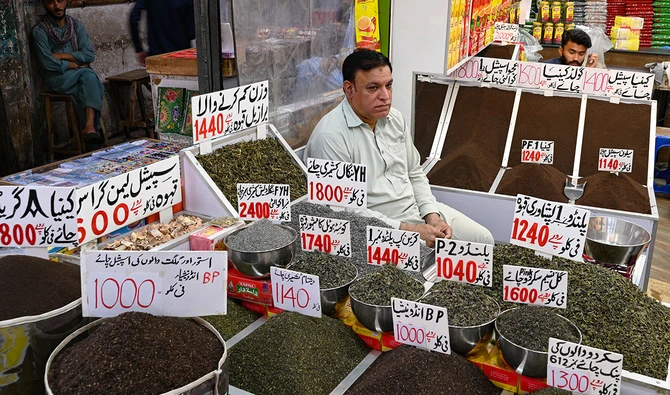
A tea seller waits for customers at his shop in a market in Rawalpindi on June 1, 2023. (AFP/File)
Short Url
Updated 11 October 2023
Follow

IMF forecasts 2.5% economic growth for Pakistan amid global inflation concerns

  • According to the latest World Economic Outlook report, Pakistan’s unemployment rate will remain 8.5 percent this year
  • Inflation is projected to reach 29.4 percent in 2023, although it’s expected to ease to 17.5 percent the following year

ISLAMABAD: The International Monetary Fund (IMF) announced on Tuesday Pakistan’s economic growth is projected to hit 2.5 percent this fiscal year, citing global factors such as high inflation and sluggish recovery in its latest World Economic Outlook report.

In recent years, Pakistan has faced severe economic challenges that have been exacerbated by the COVID-19 pandemic and last year’s monsoon floods that led to losses exceeding $30 billion in destroyed homes, farmlands, and public infrastructure.

Additionally, the country saw a significant decline in its foreign currency reserves and a depreciation of its national currency.

To avert the high likelihood of a sovereign debt default, Pakistan secured a crucial nine-month, $3 billion agreement with the IMF in July. However, this deal led to spikes in inflation due to the stringent economic reforms recommended by the international lender.

“Monetary policy actions and frameworks are key at the current juncture to keep inflation expectations anchored,” the IMF noted in its report.

Data presented in the report indicated a significant economic growth jump from -0.5 percent to 2.5 percent in Pakistan this fiscal year, with projections increasing to 5 percent by 2028.

The IMF also expects an unemployment rate of 8.5 percent this year, decreasing to 8 percent by 2024.

Inflation is projected to reach 29.4 percent in 2023, although it’s expected to ease to 17.5 percent the following year.

“The global recovery from the COVID-19 pandemic and Russia’s invasion of Ukraine remains slow and uneven,” the report said at the outset. “Despite economic resilience earlier this year, with a reopening rebound and progress in reducing inflation from last year’s peaks, it is too soon to take comfort.”
Pakistan organizes second phase of Hajj training for 2026 pilgrims in Islamabad

Updated 4 sec ago
Follow

Pakistan organizes second phase of Hajj training for 2026 pilgrims in Islamabad

  • Training sessions held to inform pilgrims of various stages of Hajj, precautionary measures, obligatory acts, says state media 
  • Pilgrims told to improve their physical fitness, keep essential travel documents and vaccination cards ready ahead of Hajj 2026

ISLAMABAD: Pakistan’s Ministry of Religious Affairs organized the second phase of Hajj training for 2026 pilgrims in Islamabad today, Sunday, state media reported. 

Pakistan’s religion ministry kicked off the first phase of the mandatory Hajj trainings last Sunday in Islamabad and other cities. The ministry said the trainings were made mandatory to ensure that intending pilgrims are fully aware of Hajj rituals and administrative procedures. 

“Ministry of Religious Affairs and Interfaith Harmony organized second phase of Hajj training session for pilgrims in Islamabad today,” state broadcaster Radio Pakistan reported. 

It said the primary objective of the program was to provide awareness about the various stages of the pilgrimage, necessary precautionary measures and the obligatory acts of both Hajj and Umrah.

“Pilgrims were advised to improve their physical fitness by walking 2 to 3 kilometers daily and keep essential travel documents including original passport, CNIC, flight ticket, visa copies and vaccination cards ready,” the state media said. 

Intending pilgrims were strictly warned against carrying prohibited items such as narcotics, naswar (smokeless tobacco), cigarettes and unverified medicines.

Saudi Arabia has allocated Pakistan a quota of 179,210 pilgrims for Hajj 2026, of which around 118,000 seats have been reserved under the government scheme while the remainder will be allocated to private tour operators.

Under Pakistan’s Hajj scheme, the estimated cost of the government package ranges from Rs1,150,000 to Rs1,250,000 ($4,049.93 to $4,236), subject to final agreements with service providers.