Dubai attracts 511 greenfield FDI projects in H1, maintains top global ranking

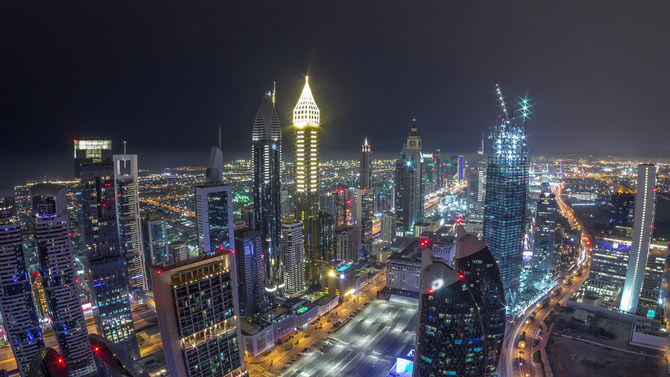
The listing aligns with Dubai’s goal of internationally raising its competitiveness and business environment. Shutterstock
Short Url
Updated 09 October 2023
Follow

Dubai attracts 511 greenfield FDI projects in H1, maintains top global ranking

RIYADH: Dubai has topped a global ranking for attracting greenfield foreign direct investment, securing a total of 511 projects in the first half of 2023. 

The emirate’s global share stood at 6.58 percent during the first six months of 2023, up from the 3.83 percent recorded in the corresponding period last year, according to an online database based on Financial Times “fDi” Markets’ data. 

This establishes the city as a new global benchmark for investment destinations, surpassing Singapore, which holds the second position by a margin of 325 projects, Emirates News Agency, or WAM, reported. 

Moreover, the listing aligns with Dubai’s goal of internationally raising its competitiveness and business environment. 

“Dubai’s ability to maintain its top ranking in attracting greenfield FDI projects reflects the city’s ability to create unparalleled growth opportunities and value for global investors,” said Dubai Crown Prince Sheikh Hamdan bin Mohammed bin Rashid Al-Maktoum, who is also chairman of the Dubai Executive Council.

He added: “This commitment, coupled with the adoption of advanced technologies, is shaping a future filled with endless opportunities for progress and prosperity.”  

The crown prince underscored the city’s commitment to the growth roadmap outlined in the Dubai Economic Agenda D33, which will continue to create an investment environment that attracts global investors and encourages their participation in the emirate’s transformation.  

Additionally, between January and June, the emirate managed to unveil 880 investment projects, marking a 70 percent year-on-year surge, according to new data released by the Dubai FDI Monitor at the Department of Economy and Tourism.  

The recently released report also revealed that greenfield FDI projects account for a significant 65 percent of the total announced investment projects. 

Furthermore, reinvestment FDIs saw a year-on-year increase, rising from 3 percent in the first half of 2022 to reach 4.4 percent in the same period of 2023.   

“As we work to enhance the city’s competitiveness and business environment internationally, these strong increases in announced FDI projects for H1 2023 drive home how our progressive policy enablers and diverse attraction programs are resonating with global investors and decision makers alike,” Director General of Dubai’s Department of Economy and Tourism Helal Saeed Al-Marri explained. 


GCC debt markets poised for major growth in 2026, led by record sukuk issuance: Fitch

Updated 21 January 2026
Follow

GCC debt markets poised for major growth in 2026, led by record sukuk issuance: Fitch

RIYADH: The Gulf Cooperation Council's debt capital market is set to exceed $1.25 trillion in 2026 as project funding and government initiatives fuel a 13.6 percent expansion, according to Fitch Ratings.

The region is set to remain one of the largest sources of US dollar debt and sukuk issuance among emerging markets , according to the agency, which also flagged cross-sector economic diversification, refinancing needs, and funding for deficits as drivers behind the growth.

The Gulf’s debt capital markets — which stood at $1.1 trillion at the end of the third quarter of 2025 — have evolved from primarily sovereign funding tools into increasingly sophisticated financing means, serving governments, banks, and corporates alike.

As diversification agendas accelerate and refinancing cycles intensify, regional issuers have become regular participants in global debt markets, strengthening the GCC’s role in emerging-market capital flows.

The report noted that the market is expected to be further supported by forecasted lower oil prices, averaging $63 per barrel in 2026 and 2027, and anticipated US Federal Reserve rate cuts to 3.25 percent and 3 percent in those respective years.

Bashar Al-Natoor, Fitch’s global head of Islamic Finance, highlighted the market’s resilience and the rising dominance of sukuk. “Most GCC issuers continued to maintain strong market access in 2025 and so far in 2026 despite global and regional shocks,” he stated, adding: “Sukuk funding share in the GCC DCM outstanding expanded to over 40 percent, the highest to date.”

The analysis noted the high credit quality of the region’s Islamic debt. “About 84 percent of Fitch-rated GCC sukuk are investment-grade, and 90 percent of issuers are on Stable Outlooks,” Al-Natoor added. “While there were no defaults or falling angels, there were rising stars with many Omani sukuk upgraded following the sovereign upgrade.”

In 2025, GCC nations accounted for 35 percent of all emerging market US dollar debt issuance, excluding China. Growth in US dollar sukuk issuance notably outpaced that of conventional bonds. The region’s total outstanding DCM grew by over 14 percent year on year to $1.1 trillion.

The market remains fragmented, with Saudi Arabia and the UAE hosting the most developed ecosystems.

Notably, Kuwait issued $11.25 billion in sovereign bonds, its first such issuance in eight years, while Oman’s DCM is expected to grow more conservatively as the country focuses on deleveraging. “Digitally native notes emerged in Qatar and the UAE,” the report said.

Fitch identified several risks to the outlook, including exposure to oil-price and interest-rate volatility, geopolitical tensions, and evolving Shariah compliance requirements for sukuk. 

Despite this, issuers are increasingly diversifying their funding through private credit, syndicated financing, and certificates of deposit.