Afghans involved in 75 percent suicide bombings in Pakistan this year — provincial police chief

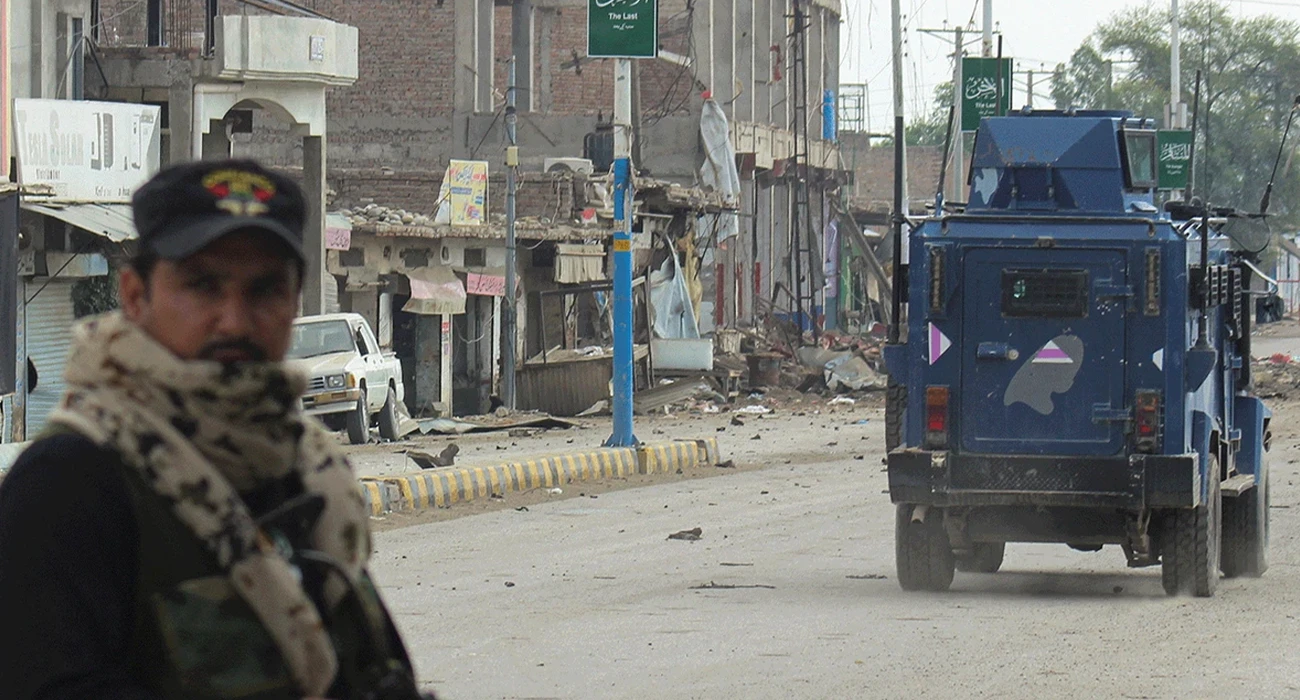
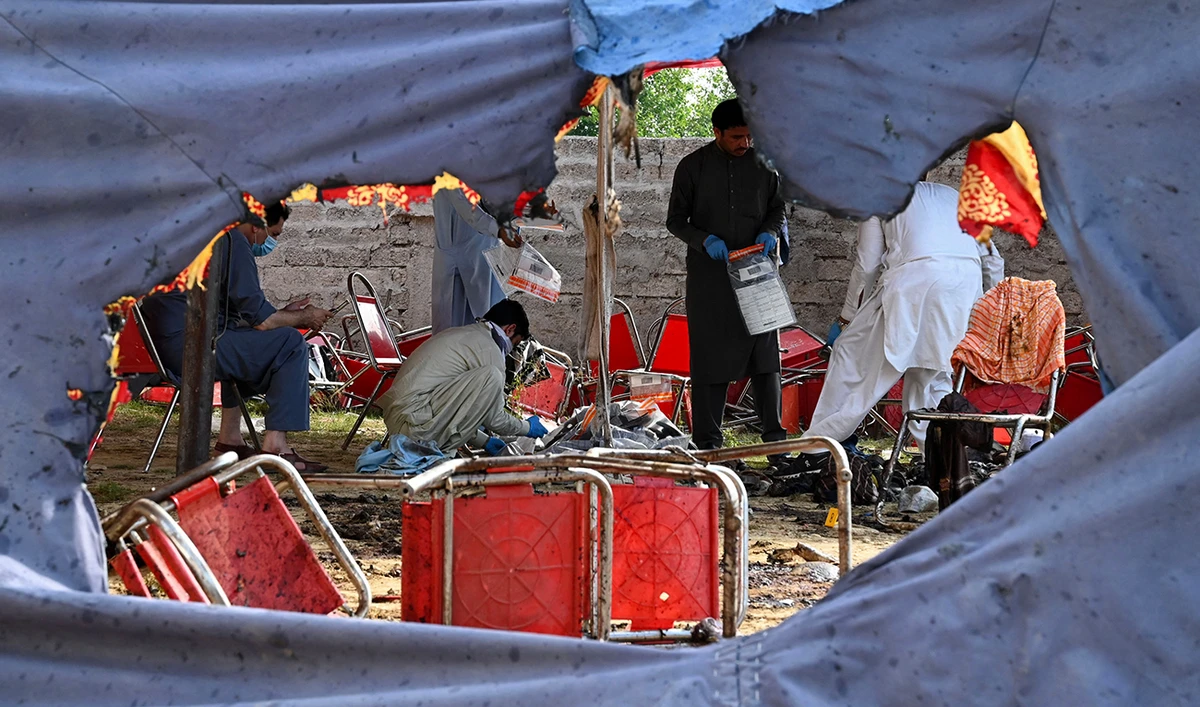
Police officials examine the site of a bomb blast in Bajaur district of Khyber-Pakhtunkhwa province on July 31, 2023. (AFP/File)
Short Url
Updated 05 October 2023
Follow

Afghans involved in 75 percent suicide bombings in Pakistan this year — provincial police chief

  • Inspector General of Police Khyber Pakhtunkhwa says forensics collected in attacks this year revealed Afghan involvement
  • Grappling with sharp rise in terror attacks, Pakistan’s government is increasingly anxious about Afghans in the country

ISLAMABAD: Akhtar Hayat Khan, the Inspector General of Police (IGP) for the northwestern Khyber Pakhtunkhwa, has said this week suicide bombers in up to 75 percent of attacks in Pakistan this year were Afghan nationals.

Grappling with an economic crisis of its own and a sharp rise in terror attacks, Pakistan’s government is increasingly anxious about the presence of Afghans in the country.

Estimating that there were 1.73 million Afghan immigrants living in Pakistan without legal status, Pakistan’s caretaker government on Tuesday set a Nov. 1 deadline for them to leave or face forcible expulsion.

The Taliban government in Kabul has called Islamabad’s threat to expel Afghans “unacceptable,” saying they were not to blame for Pakistan’s security problems.

In an interview to Geo News, KP IGP Khan said forensics collected for suicide attacks this year had revealed Afghan involvement in a majority of cases, saying 49 out of 76 cases had been solved.

“The cases of suicide bombers, out of them, in 70-75 percent cases the suicide bomber turned out to be an Afghan,” Khan said, adding that authorities had arrested both Afghan and local suspects.

Officials say hundreds of thousands of Afghans have traveled to Pakistan since foreign forces left Afghanistan and the Taliban took over Kabul in 2021. Even before then, Pakistan hosted some 1.5 million registered refugees, one of the largest such populations in the world, according to the United Nations refugee agency. More than a million others are estimated to live in Pakistan unregistered.

Police last month launched a crackdown against those they say are living in Pakistan without legal documents, arresting hundreds of Afghans.

“Illegal citizens, illegal immigrants that are staying in Pakistan via illegal means, we have given them a deadline of November 1,” Interior Minister Sarfaraz Bugti told reporters at a briefing after a meeting chaired by the prime minister on Tuesday.

The meeting was held days after suicide bombers separately hit two mosques last week in Mastung and Hangu, killing 65 people.

“They [illegal immigrants] should return to their respective countries by November 1 voluntarily and if they don’t, the state’s law enforcement, whether they be provincial governments or federal government institutions, we will deport them via this enforcement.”

Pakistan’s crackdown against illegal foreigners takes place in the backdrop of a rise in militant attacks, especially since the Afghan Taliban took over Kabul in August 2021. Islamabad says the Pakistani Taliban have become emboldened with the Taliban in power and launch attacks against Pakistan from Afghan soil.

Afghanistan says it does not allow its soil to be used by militants.

Pakistan to launch AI screening in January to target fake visas, agent networks

Updated 05 December 2025
Follow

Pakistan to launch AI screening in January to target fake visas, agent networks

  • New system to flag forged-document travelers before boarding and pre-verify eligibility
  • Move comes amid increasing concern over fake visas, fraudulent agents, forged papers

ISLAMABAD: Pakistan will roll out an AI-based immigration screening system in Islamabad from January to detect forged documents and prevent illegal overseas travel, the government said on Thursday. 

The move comes amid increasing concern over fake visas, fraudulent agents and forged papers, with officials warning that such activity has contributed to deportations, human smuggling and reputational damage abroad. Pakistan has also faced scrutiny over irregular migration flows and labor-market vulnerability, particularly in the Gulf region, prompting calls for more reliable pre-departure checks and digital verification.

The reforms include plans to make the protector-stamp system — the clearance required for Pakistani citizens seeking overseas employment — “foolproof”, tighten labor-visa documentation, and cancel the passports of deportees to prevent them from securing visas again. The government has sought final recommendations within seven days, signalling a rapid enforcement timeline.

“To stop illegal immigration, an AI-based app pilot project is being launched in Islamabad from January,” Interior Minister Mohsin Naqvi said following a high-level meeting chaired by him and Minister for Overseas Pakistanis Chaudhry Salik Hussain.

Naqvi said the new screening technology is intended to determine travelers’ eligibility in advance, reducing airport off-loads and closing loopholes exploited by traffickers and unregistered agents.

The interior minister added that Pakistan remains in contact with foreign governments to improve the global perception and ranking of the green passport, while a uniform international driving license will be issued through the National Police Bureau.

The meeting also approved zero-tolerance measures against fraudulent visa brokers, while the Overseas Pakistanis Ministry pledged full cooperation to streamline the emigration workflow. Minister Hussain said transparency in the protector process has become a “basic requirement,” particularly for labor-migration cases.

Pakistan’s current immigration system has long struggled with document fraud, with repeated cases of passengers grounded at airports due to forged papers or agent-facilitated travel. The launch of an AI screening layer, if implemented effectively, could shift the burden from manual counters to pre-flight verification, allowing authorities to identify risk profiles before departure rather than after arrival abroad.

The reforms also come at a moment when labor mobility is tightening globally. Gulf states have begun demanding greater documentation assurance for imported labor, while European and Asian destinations have increased scrutiny following trafficking arrests and irregular-entry routes from South Asia. For Pakistan, preventing fraudulent departures is increasingly linked to protecting genuine workers, reducing deportation cycles and stabilizing the country’s overseas employment footprint.