

Netflix set to release new collection of Saudi short films

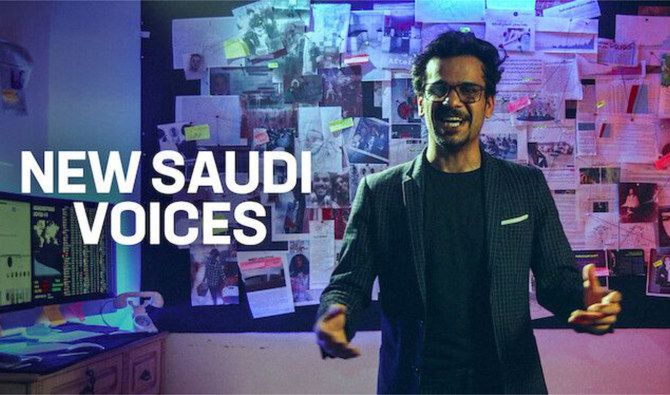
Netflix’s second volume of its “New Saudi Voices” collection includes 14 short films. (Supplied)
Short Url
Updated 02 October 2023
Follow

Netflix set to release new collection of Saudi short films

  • Offering includes productions shown at Red Sea International Film Festival

RIYADH: Netflix’s second volume of its “New Saudi Voices” film collection will be released on Friday.

The collection comprises 14 short films that featured at the Red Sea International Film Festival, including the winners of the 48-hour Filmmaking Challenge.

These include the dramas “Old Phone Number” by Ali Saeed and “Zabarjad” by Hussain Almutliq, which explore the themes of character growth while clinging to one’s past.

“Last Chance to Fall in Love” by award-winning writer Faisal Buhaishi follows the story of an old man reuniting with his first love after 50 years.

Movies from the fantasy genre include “A Swing” by Raneem and Dana Almohandes, which follows a 10-year-old girl’s journey through the woods to find a magical swing her father used to tell her about.

“Lucky You’re Mine” by Nora Abu Shusha reveals the unspoken challenges of married life, while “Tea Leaf” by Mohammed Baqer looks at the pain and regret that come with failed relationships.

Other films in the collection include “Requiem for Silence” by Majed Z. Samman, “Forward” by Fahad Alotaibi and “Othman” by Khaled Zeidan.

“The second volume is not just a collection of short films, it is a celebration of untold stories and a testament to the creative prowess of the emerging filmmakers,” said Nuha El-Tayeb, Netflix’s content director for Turkey, the Middle East and Africa.

The films “transcend borders and allow viewers to experience the beauty and dynamism of Saudi culture. We believe great stories can come from anywhere and be loved by anyone,” she said.


Israel arrests 2 Turkish CNN journalists over live broadcast outside IDF HQ

Updated 03 March 2026
Follow

Israel arrests 2 Turkish CNN journalists over live broadcast outside IDF HQ

  • Police said reporter Emrah Cakmak and cameraman Halil Kahraman were detained on suspicion of filming a sensitive security facility
  • Since the Gaza war began, restrictions have expanded significantly, including tighter limits on filming soldiers on duty and sensitive or strategic sites

LONDON: Israeli police have arrested two Turkish CNN journalists who were broadcasting live outside the Israel Defense Forces’ headquarters in Tel Aviv.

Police said the pair were detained on suspicion of filming a sensitive security facility, according to the Israel Police Spokesperson’s Unit.

Reporter Emrah Cakmak and cameraman Halil Kahraman, from the network’s Turkish-language channel, had been reporting near the IDF’s Kirya military headquarters on Tuesday after Iran launched another missile barrage at Tel Aviv and other parts of central Israel.

During the live broadcast, two men believed to be soldiers approached the crew and seized the reporter’s phone, according to initial reports and a video circulating online that could not be independently verified.

Police said officers were dispatched after receiving reports of two people carrying cameras and allegedly broadcasting in real time for a foreign outlet.

Israel’s long-standing military censorship system, overseen by the IDF Military Censor, has long barred journalists and civilians from publishing material deemed harmful to national security.

Since the Gaza war began, restrictions have expanded significantly, including tighter limits on filming soldiers on duty and sensitive or strategic sites.

After a series of similar incidents involving foreign media — most of them Palestinian citizens of Israel working for Arab-language and international media, along with foreign journalists — during the 12-Day War, Israeli police halted live international broadcasts from missile impact sites, citing concerns that exact locations were being revealed.

The Government Press Office later imposed a blanket ban on live coverage from crash and impact areas.

Communications Minister Shlomo Karhi and National Security Minister Itamar Ben-Gvir subsequently ordered that all foreign journalists obtain prior written approval from the military censor before broadcasting — live or recorded — from combat zones or missile strike locations.

Police said that when officers asked the CNN Turk crew to identify themselves, they presented expired press cards and were taken in for questioning.

Burhanettin Duran, head of Turkiye’s Directorate of Communications, condemned the arrests as an attack on the press and said Ankara is working to secure the journalists’ release.