S&P upgrades Oman’s credit rating to BB+ with stable outlook  

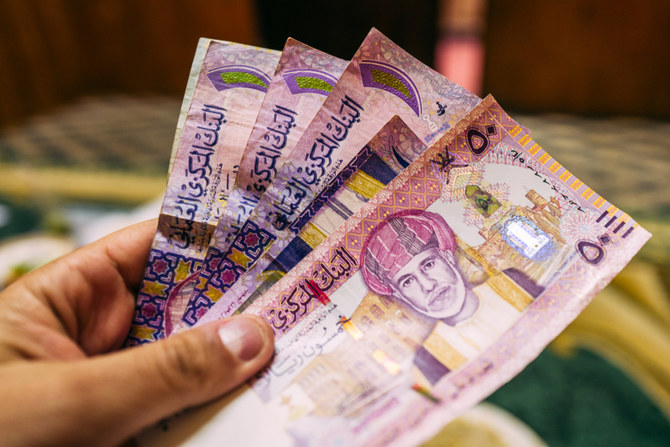
S&P’s assessment underscores a transformation in Oman’s non-oil sector. Photo/Shutterstock
Short Url
Updated 01 October 2023
Follow

S&P upgrades Oman’s credit rating to BB+ with stable outlook  

RIYADH: In a new development signaling a shift in Oman’s economic landscape, global credit rating agency Standard & Poor has upgraded the nation’s long-term credit rating from “BB” to “BB+.” 

S&P Global’s assessment underscores a transformation in Oman’s non-oil sector, promising substantial growth in the years ahead, particularly between 2023 and 2026. This shift is expected to play a pivotal role in enhancing the country’s financial prosperity. 

Furthermore, government fiscal and economic momentum is set to continue until 2026, forecasting an average of 2 percent year-on-year growth in the country’s gross domestic product, according to the agency. 

“Oman’s economy depends on the oil sector, which accounts for about 30 percent of GDP, 60 percent of goods exports, and 70 percent of government fiscal receipts. This dependence weighs on our assessment of its fiscal and external resilience, and we reflect this in the rating,” the report stated. 

The agency predicts a deceleration in economic growth by 1 percent in 2023, mainly attributed to reductions in oil production.   

Nonetheless, the dip in oil output is anticipated to be counterbalanced by a surge in condensate and gas. 

In the non-hydrocarbon sector, Oman is projected to witness a 2 percent increase in 2023, with hydrocarbon manufacturing expected to rally in 2024 and 2025. 

Moreover, the banking sector witnessed a marked boost in credit balance, registering a growth of 5.3 percent in July 2023 compared to the same month the previous year. 

Data from the nation’s central bank indicates that credit extended to the private sector surged by 5.2 percent by the end of July 2023, totaling 20.2 billion Omani rials ($52.41 million). 

Highlighting another significant sector, Oman’s tourism industry is poised for expansion over the upcoming years. Its contribution to the GDP is projected to rise to 2.75 percent, up from 2.4 percent in 2023, according to Oman’s Minister of Heritage and Tourism. 

In a statement to Oman News Agency, Salim Al-Mahrouqi detailed that the tourism industry was responsible for 1.07 billion Omani rials of the comprehensive 1.9 billion Omani rials revenue in 2022. 


Egypt signs energy MoUs with Syria, expanding regional supply role 

Updated 5 sec ago
Follow

Egypt signs energy MoUs with Syria, expanding regional supply role 

JEDDAH: Egypt has signed two memorandums of understanding with Syria to supply natural gas for electricity generation and provide petroleum products, as Cairo moves to strengthen its position as a regional energy transit hub.

According to Egypt’s petroleum ministry, the agreements were signed during talks between its Minister of Petroleum and Mineral Resources Karim Badawi and a Syrian delegation led by Deputy Minister of Energy for Oil Affairs Ghiath Diab.

The deals were formalized by Diab and Mohamed El-Bagoury, head of legal affairs at the Egyptian ministry. 

The agreements come as Egypt seeks to capitalize on its liquefied natural gas plants, pipelines and floating regasification units to position itself as a regional energy hub. 

Syria’s energy sector has been severely weakened by years of conflict and damaged infrastructure, prompting redevelopment efforts and regional cooperation which underscores the importance of external partnerships in rebuilding the country’s power and oil networks. 

“The meeting reflects Egypt’s role as a regional logistics hub for all types of energy, both fossil and non-fossil,” the ministry said in a statement, reaffirming its readiness to provide technical expertise and support to Syria’s energy sector as part of efforts to assist the Syrian people. 

Under the first MoU, Egypt will cooperate in supplying gas to Syria for power generation, using its existing infrastructure, including regasification vessels and transmission networks. 

The second agreement relates to meeting the country’s needs for petroleum products. 

The meeting also discussed opportunities to rehabilitate Syria’s oil and gas infrastructure and benefit from Egyptian expertise in the sector. 

The deals with follow recent energy cooperation with Lebanon and earlier arrangements with Cyprus aimed at routing Eastern Mediterranean gas through Egypt’s facilities. 

Speaking at the ADIPEC conference in Abu Dhabi in November, Badawi highlighted Egypt’s growing role as a regional hub for energy transit and trade, supported by fully integrated and ready infrastructure. 

He said this demonstrated the country’s ability to provide a fast, cost-effective and reliable route for delivering East Mediterranean gas resources to global markets at competitive prices. 

Badawi cited plans to connect Cyprus’s Cronos gas field to Egypt’s network as a key step toward deeper regional integration, allowing current and future Cypriot discoveries to be processed through Egyptian liquefaction and export facilities.