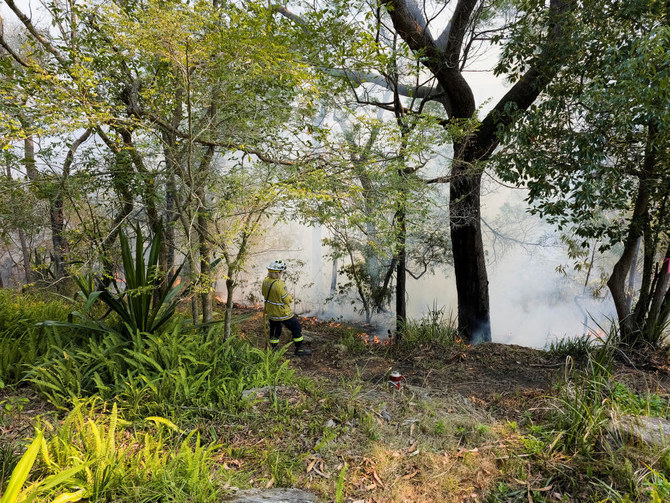
SYDNEY: Australia’s southeast on Sunday sweltered in a heat wave that raised the risk of bushfires and led authorities to issue fire bans for large swathes of New South Wales state.
The nation’s weather forecaster said temperatures would be up to 12 degrees Celsius (53.6 degrees Fahrenheit) above average in some areas, with Sydney, the capital of Australia’s most populous state New South Wales, set to hit 36 C (96.8 F).
At Sydney’s Kingsford Smith Airport, the temperature was 34.6 C (94.3 F) at 2 p.m. (0300 GMT), more than 11 degrees above the October mean maximum temperature, according to forecaster data.
Australia faces a high-risk bushfire season following the onset of an El Nino weather event, recently announced, which is typically associated with extreme events such as wildfires, cyclones and droughts.
State Emergency Services Minister Jihad Dib announced the start of an official bushfire danger period, with the “scorching” heat lifting the risk for the week ahead.
“Not only is it hot, it’s dry and it’s windy and those conditions combined are the perfect storm,” Dib said.
Fire authorities on Sunday issued nine total fire bans for parts of the state to reduce the chance of bushfires.
Further south in Victoria state, authorities issued an emergency evacuation order for a rural area in the Gippsland region, about 320 kilometers (198 miles) east of the state capital Melbourne, due to an out-of-control bushfire.
Australia’s last two fire seasons have been quiet compared with the catastrophic 2019-2020 “Black Summer” of bushfires that destroyed an area the size of Turkiye and killed 33 people. In Sydney, local resident Sandy Chapman said she was worried about the mix of extreme heat and wind.
“It doesn’t take long to start a fire and have it burning and it’s very scary,” Chapman said.
Sydneysider Katie Kell hoped there would be no repeat of bushfires on the same scale as 2019-20.
“I don’t know, with how hot it’s been since the start of spring, I’m not too confident,” Kell said.


![]()

Australia swelters through ‘scorching’ heat lifting bushfire risk
Short Url
https://arab.news/b7k69
Australia swelters through ‘scorching’ heat lifting bushfire risk
- Australia faces a high-risk bushfire season following the onset of an El Nino weather event
- Australia’s last two fire seasons have been quiet compared with the catastrophic 2019-2020 ‘Black Summer’ of bushfires


Latest updates


Recommended


© 2026 SAUDI RESEARCH & PUBLISHING COMPANY, All Rights Reserved And subject to Terms of Use Agreement.