

Lion cubs, rare eagle in illegal shipment seized in Lebanon

1 / 4
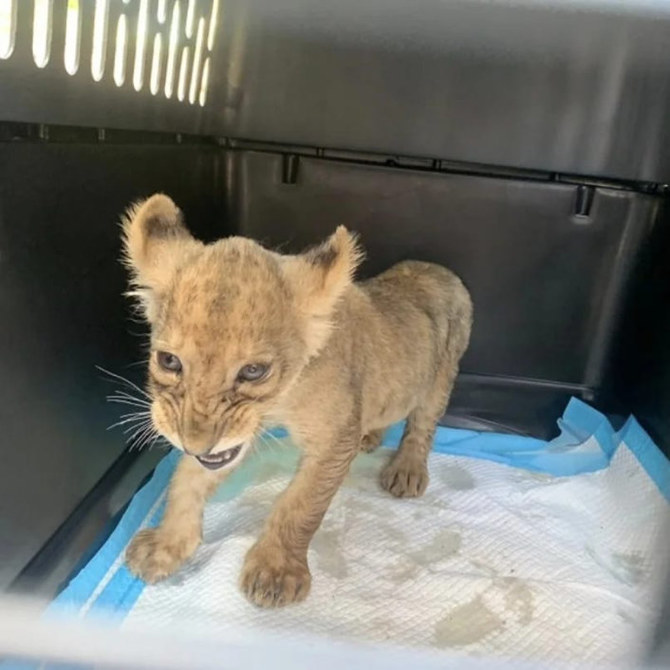
Lebanon has pledged to crack down on trafficking in wild animals following the seizure of an illegal shipment. (Supplied)
2 / 4
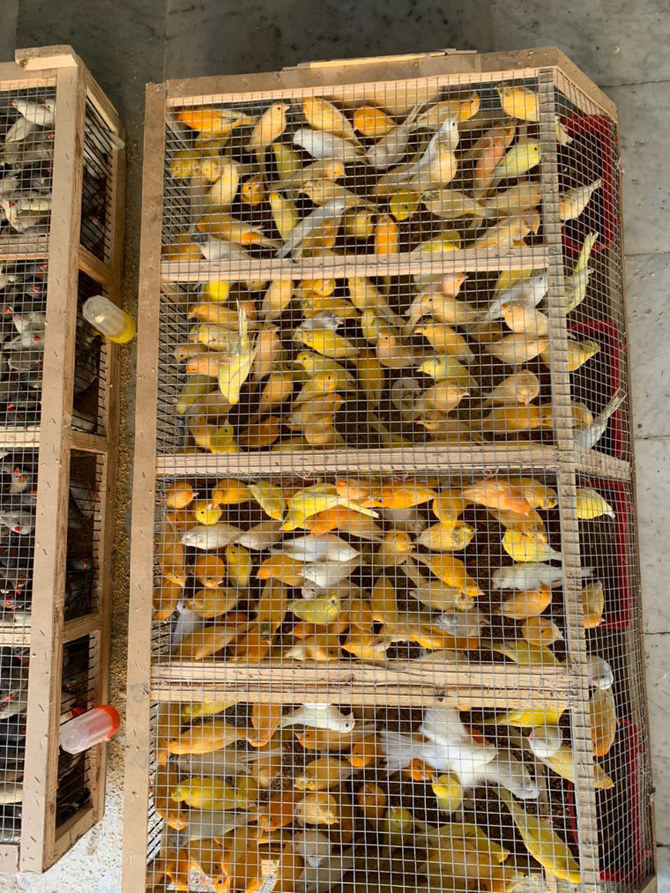
Lebanon has pledged to crack down on trafficking in wild animals following the seizure of an illegal shipment. (Supplied)
3 / 4
Lebanon has pledged to crack down on trafficking in wild animals following the seizure of an illegal shipment. (Supplied)
4 / 4
Lebanon has pledged to crack down on trafficking in wild animals following the seizure of an illegal shipment. (Supplied)
Short Url
Updated 01 October 2023
Follow

Lion cubs, rare eagle in illegal shipment seized in Lebanon

  • Smuggled animals in ‘terrible’ condition after being found hidden in cages, boxes
  • Minister pledges crackdown under global agreements to curb wildlife trafficking

BEIRUT: Lebanon has pledged to crack down on trafficking in wild animals following the seizure of an illegal shipment that included two lion cubs and a rare eagle near the border with Syria.

Agriculture Minister Abbas Hajj Hassan said on Saturday that Lebanon will adhere to international agreements to prevent smuggling of wildlife, and convicted smugglers will be punished. 

Lebanese troops on Friday found two lion cubs, an eastern imperial eagle, 350 goldfinches and more than 1,350 ornamental birds of various types hidden in wooden cages and cardboard boxes on a truck after a routine search at a checkpoint in Batroun on the Tripoli-Beirut highway, 50 km north of Beirut.

The truck driver was arrested, and the smuggled animals were confiscated.

Internal Security Forces are now investigating the shipment, one of the largest in years and believed to have been destined for a well-known Beirut businessman.

Environment Minister Nasser Yassin said the confiscated animals were in “terrible” condition.

“We do not know how many days they had been kept in cages without food or water to be smuggled across the border, or the circumstances surrounding the smuggling operation,” he said.

The two lion cubs were treated and some of the birds released. However, the eagle was in poor condition and might not survive, the minister added.

Yassin said the businessman is likely to face prosecution.

“Out of concern with the issue of wild animals, we will sue everyone behind this operation,” he said.

“We are committed to the global CITES — Convention on International Trade in Endangered Species of Wild Fauna and Flora — the agreement that regulates this trade.”

Smuggling is a growing problem on the Lebanese-Syrian border amid widespread chaos in the region.

Most operations involve human trafficking, mainly Syrians who want to work in Lebanon or travel through the country illegally en route to Europe.

Smugglers also move medicine, fuel and illegal drugs. However, seizures of wildlife are rarely reported.

Hajj Hassan, the agriculture minister, also said: “It is not the first time that animals have been smuggled and it will not be the last. However, this is the largest shipment that has been confiscated.”

Animal rights activist Ghina Nahfawi told Arab News that the animals were destined for a businessman “known for this type of trade.”

The merchant sells animals in the Al-Awza’i neighborhood in the southern suburbs of Beirut, according to Nahfawi.

Rare and exotic creatures are sold to wealthy people, who boast about having them in their gardens, she said.

The confiscated animals were inspected by the Department of Livestock in North Lebanon and either released or given further treatment.

The eastern imperial eagle is being cared for by the Lebanese Association for Migratory Birds, while the two lion cubs were deposited with the welfare group Animals Lebanon.

Lebanon PM says IMF wants rescue plan changes as crisis deepens

Updated 4 sec ago
Follow

Lebanon PM says IMF wants rescue plan changes as crisis deepens

  • “We want to engage with the IMF. We want to improve. This is a draft law,” Salam said
  • “They wanted the hierarchy of claims to be clearer. The talks are all positive”

DAVOS, Switzerland: The International Monetary Fund has demanded amendments to a draft rescue law aimed at hauling Lebanon out of its worst financial crisis on record and giving depositors access to savings frozen for six years, Prime Minister Nawaf Salam said.
The “financial gap” law is part of a series of reform measures required by the IMF in order to access its funding and aims to allocate the losses from Lebanon’s 2019 crash between the state, the central bank, commercial banks and depositors.
Salam told Reuters the IMF wants clearer provisions in the hierarchy of claims, which is a core element of the draft legislation designed to determine how losses are allocated.
“We want to engage with the IMF. We want to improve. This is a draft law,” Salam said in an interview at the World Economic Forum annual meeting in ⁠the Swiss mountain resort of Davos.
“They wanted the hierarchy of claims to be clearer. The talks are all positive,” Salam added.
In 2022, the government put losses from the financial crisis at about $70 billion, a figure that analysts and economists forecast is now likely to be higher.
Salam stressed that Lebanon is still pushing for a long-delayed IMF program, but warned the clock is ticking as the country has already been placed on a financial ‘grey list’ and risks falling onto the ‘blacklist’ if reforms stall further.
“We want an IMF program and we want to continue our discussions until we get there,” he said, adding: “International pressure is real ... The longer we delay, the more people’s money will evaporate.”
The draft law, which was passed by Salam’s government in December, is under parliamentary review. It aims to give depositors a guaranteed path to recovering their funds, restart bank lending, and end a financial crisis that has left nearly a million accounts frozen and confidence in the system shattered.
The roadmap would repay depositors up to $100,000 over four years, starting with smaller accounts, while launching forensic audits to determine losses and responsibility.
Lebanon’s Finance Minister Yassine Jaber, who is driving the reform push with Salam, told Reuters it was ⁠essential to salvage a hollowed-out banking system, and to stop the country from sliding deeper into its cash-only, paralyzed economy.
The aim, Jaber said, is to give depositors clarity after years of uncertainty and to end a system that has crippled Lebanon’s international standing.
He framed the law as part of a broader reckoning: the first time a Lebanese government has confronted a combined collapse of the banking sector, the central bank and the state treasury.
Financial reforms have been repeatedly derailed by political and private vested interests over the last six years and Jaber said the responsibility now lies with lawmakers.
Failure to act, he said, would leave Lebanon trapped in “a deep, dark tunnel” with no way back to a functioning system.
“Lebanon has become a cash economy, and the real question is whether we want to stay on the grey list, or sleepwalk into a blacklist,” Jaber added.