

Pakistan says hospitals used drug without regulatory approval, causing vision loss

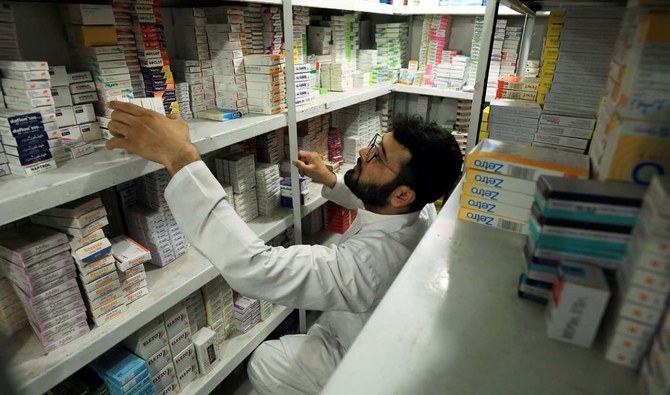
A man sorts and arranges medicine packs at a pharmacy store in Peshawar on March 28, 2019. (REUTERS/File)
Short Url
Updated 27 September 2023
Follow

Pakistan says hospitals used drug without regulatory approval, causing vision loss

  • Nearly 70 patients of diabetes across Punjab province suffered vision loss after being administered Avastin medicine
  • The drug is employed to treat cancer, but its off-label use for diabetic retinopathy-related edema is common in Pakistan

ISLAMABAD: Punjab’s interim health minister Dr. Javed Akram announced on Tuesday an experimental medication suspected of causing vision loss among dozens of diabetics across the province was administered by hospitals without seeking prior approval from the Drug Regulatory Authority of Pakistan (DRAP).

Nearly 70 patients from various districts in Punjab reported eye infections leading to blindness in recent weeks after receiving doses of injectable medicine called Avastin. The medication is primarily used to treat cancer but is also prescribed off-label in Pakistan for diabetic retinopathy-related edema.

Pakistan imposed a temporary ban on the drug earlier this week and initiated an inquiry to assign responsibility after patients began losing their vision.

“The ocular use of this medicine has not been approved by anyone,” said the provincial health minister. “It has not been approved by the [US] FDA [Food and Drug Administration], DRAP, Indian authorities or claimed by [the manufacturer] Roche itself.”

“This was an off-label use,” he continued. “It is mandatory in such cases to seek permission from DRAP ... which did not happen. Moreover, the good clinical practice of securing informed consent [from patients in such cases] was also not followed.”

Dr. Akram emphasized that it was necessary to seek a patient’s consent “in the local language when administering an experimental drug.”

He disclosed that the government had now decided to require audiovisual recordings from hospital authorities, demonstrating that patients had been clearly informed of the benefits and risks associated with off-label medication use.

The minister reiterated the government’s commitment to bringing those responsible for this criminal negligence to justice and confirmed that Avastin would be available only for cancer treatment while the inquiry continued.


Pakistan leaders wish Saudi King Salman well after hospital admission for tests

Updated 16 January 2026
Follow

Pakistan leaders wish Saudi King Salman well after hospital admission for tests

  • Pakistani PM and President express concern, pray for the King's swift recovery
  • The official Saudi media has not shared the nature of the King’s visit to the hospital

ISLAMABAD: Pakistan’s prime minister and president on Friday expressed concern over the health of Saudi Arabia’s King Salman bin Abdulaziz, offering prayers and well wishes after state media said he had been admitted to hospital in Riyadh for medical examinations.

The Saudi Press Agency reported the King was undergoing medical tests at King Faisal Specialist Hospital in Riyadh, with no further information regarding the nature of the visit or his medical condition.

In a post on X, Prime Minister Shehbaz Sharif said Pakistanis held the Saudi King in high regard and were praying for his recovery.

“Deeply concerned by the news that Custodian of The Two Holy Mosques His Majesty King Salman bin Abdulaziz Al Saud is admitted in hospital for medical tests,” he said. “The people of Pakistan hold His Majesty in the highest esteem. We join our Saudi brothers and sisters in praying for His Majesty’s swift and complete recovery.”

President Asif Ali Zardari also conveyed his wishes, saying the entire Pakistani nation was praying for the Saudi King’s health and well-being, according to a statement issued by the presidency.

Pakistan has longstanding diplomatic and institutional ties with Saudi Arabia, and its leadership has consistently expressed deep respect for the Saudi royal family, particularly in view of the Kingdom’s religious significance and its role in the Muslim world.