

Pakistan announces ‘important amendments’ to anti-money laundering, terror financing regulations

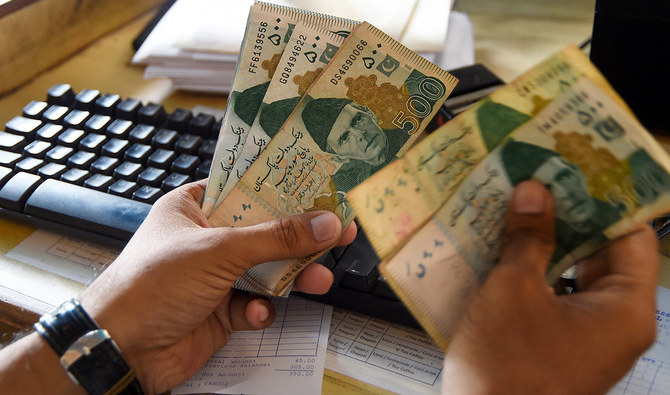
In this file photo, taken on May 16, 2019, a Pakistani man counts local currency at his shop in Karachi. (AFP/File)
Short Url
Updated 26 September 2023
Follow

Pakistan announces ‘important amendments’ to anti-money laundering, terror financing regulations

  • Amendments empower third parties to conduct customer due diligence
  • Pakistan remained on the FATF’s ‘grey list’ from 2018 till October 2022

ISLAMABAD: Pakistan’s top financial regulator said on Tuesday it had amended the country’s anti-money laundering and counter-terrorism financing regulations to effectively curb crimes and strengthen its financial system.

International watchdog Financial Action Task Force (FATF) removed Pakistan from its “grey list” after four years in October 2022. The list is composed of countries with a high risk of money laundering and terrorism financing but which have formally committed to working with the task force to make changes.

The decision was taken after the South Asian country took stringent measures to comply with the FATF’s demands by acting against those linked to money laundering and terror financing. Being on the Paris-based watchdog’s grey list can scare away investors and creditors, hurting exports, output and consumption. It also can make global banks wary of doing business with a country.

“The Securities and Exchange Commission of Pakistan (SECP) has introduced important amendments to the Anti-Money Laundering and Countering Financing of Terrorism (AML/CFT) Regulations, 2020,” the SECP said in a press release.

“The notified amendments aim to enhance the scope of regulations to effectively combat financial crimes, control money laundering, and combat the financing of terrorism (CFT) while ensuring the integrity of its financial system.”

The SECP said the amendments were an outcome of a self-assessment of its AML/CFT framework conducted by the commission this year. It added that the assessment was made against the criteria used in the FATF Assessment Methodology for assessing Technical Compliance of its AML/CFT regulatory framework.

According to a notification, the amendments empower a “regulated person” or a financial entity, to engage a third party to carry out a series of checks to ensure a customer’s identity, or Customer Due Diligence (CDD) and also verify the identity of beneficial owners.

“Provided that despite the third party reliance, the regulated person shall remain liable for any failure to apply the indicated CDD measures,” the SECP said.

The amendments also make it mandatory for the financial institution to ensure that their foreign branches and majority-owned subsidiaries in countries which do not sufficiently apply the FATF’s recommendations, apply Pakistan’s AML & CFT measures “to the extent that host country laws and regulations permit.”

“If the foreign country does not permit the proper implementation of AML/CFT measures consistent with that of Pakistan requirements, financial groups should apply appropriate additional measures to manage the risks, and inform the Commission when a foreign branch or subsidiary is unable to observe appropriate AML/CFT measures,” it added.

The revised regulations also state that an account will be classified as dormant after three years of inactivity, as opposed to the previous threshold of five years. The amendments also contain regulations for opening a bank account for mentally disabled persons, such as proper verification of the identity documents of the disabled person and their court-appointed managers.


Pakistan transporters call off five-day strike after successful talks with Punjab government

Updated 5 sec ago
Follow

Pakistan transporters call off five-day strike after successful talks with Punjab government

  • Transporters went on strike against heavy fines, penalties imposed by Punjab over traffic violations
  • Punjab government sets up committee to resolve transporters issues, confirms provincial minister

ISLAMABAD: Pakistani goods transporters called off their five-day-long nationwide strike on Friday after successful talks with the Punjab government, officials and transporters confirmed, as the business community warned of an impending economic crisis if the dispute stayed unresolved. 

Transporters went on a nationwide strike on Dec. 8 against stringent traffic rules and heavy fines imposed by the Punjab government over traffic violations. These penalties were included in the Motor Vehicle Ordinance 2025 last month. 

The ordinance details hefty fines ranging from Rs2000 [$7] to Rs50,000 [$178] and mentions prison sentences going up to six months for various offenses committed by drivers, such as driving on the wrong side of the road or driving in vehicles with tinted windows. 

“Yes, the strike has been called off after our meeting with Senior Minister of Punjab Marriyum Aurangzeb,” Nabeel Tariq, president of the All Pakistan Goods Transport Association (APGTA), told Arab News. 

Tariq said fines ranging from Rs1000 ($3.6) to Rs1500 ($5.4) for traffic violations have been increased to around Rs20,000 ($71.3) as per the new rules. 

He said the APGTA has agreed to accept a 100 percent or even 200 percent hike in fines. However, he said an increase of 2000 percent was not “logical.”

“Our urgent demands have been accepted and a committee has been formed to review the ordinance and come up with recommendations,” Tariq said. 

Speaking to Arab News, Aurangzeb confirmed the strike had been called off after talks with the Punjab government and that a committee has been formed to resolve the transporters’ issues. 

The committee will be headed by Aurangzeb and will include representatives of goods transporters, a statement issued by her office said. 

“The government wants to protect human lives and make things better for all citizens,” the statement said. “We will resolve the issues (with transporters) amicably.” 

‘UNPRECEDENTED CRISIS’

Pakistan’s business and industrial community, meanwhile, warned of an impending crisis if the disputed was not resolved. 

The All Pakistan Textile Mills Association (APTMA) and the Karachi Chamber of Commerce and Industry (KCCI) have both appealed for immediate government intervention.

Imdad Hussain Naqvi, president of the Grand Transport Alliance Pakistan (GTAP), told Arab News that over 400,000 goods carriers had been stranded across Pakistan due to the strike, affecting supplies to millions of consumers.

Earlier, in a letter to Punjab Chief Minister Maryam Nawaz, APTMA Chairman Kamran Arshad said the strike has “critically impacted import and export operations which are backbone of the country’s economy.”

He said hundreds of cargo vehicles remain stranded across Punjab, creating “abnormal delays” in goods movement and triggering heavy demurrage, detention charges, missed vessels and production shutdowns due to the non-availability of raw materials.

Arshad warned the disruption poses “a serious risk of order cancelation of export orders by international buyers, which would have far-reaching consequences for Pakistan’s foreign exchange earnings.”

Meanwhile in Pakistan’s commercial hub Karachi, KCCI President Rehan Hanif issued an even stronger warning, saying the nationwide strike threatens to paralyze Pakistan’s economic lifeline. 

“The complete suspension of cargo movement is pushing Pakistan toward an unprecedented trade and industrial crisis,” Hanif said in a statement. 

He added that import and export consignments are now stranded at the city’s ports, highways and industrial zones.