

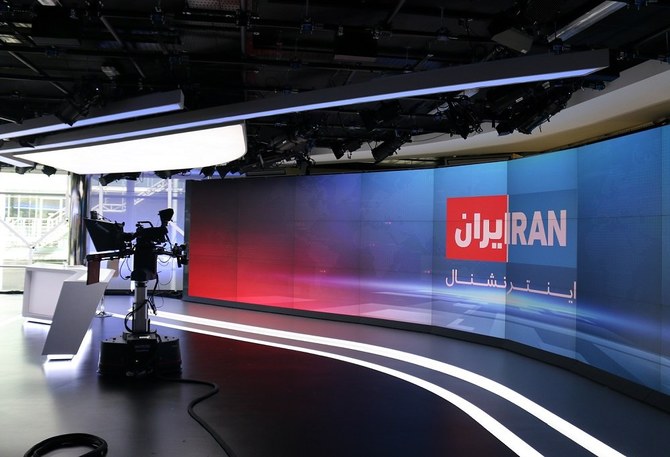
Iran International TV returns to air from high-security studio

The channel’s return to air comes at a time of heightened tensions between Iran and the West. (II/File)
Short Url
Updated 25 September 2023
Follow

Iran International TV returns to air from high-security studio

  • London-based broadcaster suspended operations in February over threats to staff
  • UK authorities claimed Iranian government behind threats, Tehran denied involvement

LONDON: Iran International returned to air on Monday from a new high-security studio in London.

The Farsi-language news broadcaster closed in February following alleged threats from the Iranian government.

But the TV channel’s head of news, Aliasghar Ramezanpoor, told The Sunday Times: “We are saying, ‘you are back — you are finding your voice again.’ As a journalist, I feel it is my moral obligation. People are putting their trust in us.”

British authorities claimed broadcast staff, particular those born in Iran, had been the target of “multiple threats,” adding that due to the studio’s former location in Chiswick Business Park police could not guarantee workers’ safety.

The station’s offices have been relocated to a new, high-security site in north London with steel barriers and armed patrols.

Following the decision to shut down the station in mid-February based on recommendations from Scotland Yard, the channel and parts of its staff were relocated to Washington as a temporary solution.

Ramezanpoor, who has reportedly received three credible death threats since last year, said that the suspension of the London operation had been a major blow to the broadcaster and expressed hope that the channel and its journalists would be able to reconnect with viewers.

Iran International, which is owned by private investors, including a British Saudi businessman, claimed to have 30 million viewers in Iran and among the Iranian diaspora.

The broadcaster, which provided round-the-clock updates during the protests that erupted in the country following the death of Mahsa Amini in police custody last year, said it relied heavily on amateur footage sent in by citizens in Iran.

Saeid Habil, a senior television and radio journalist at Iran International, said that the channel’s coverage of the events prompted the government to try and shut down its operations.

The Iranian government has denied any involvement in threats against Iran International staff. However, Iran’s intelligence minister, Esmail Khatib, recently described the station as a “terrorist network” and said the regime would take “offensive security measures … whenever and wherever we deem appropriate.”

The channel’s return to air comes at a time of heightened tensions between Iran and the West.

Tehran has been accused of providing drones to Russia for use in the war in Ukraine, and it is also facing international pressure over its nuclear program.

And an Iranian government official was recently accused by Iran International of attacking one its journalists covering President Ebrahim Raisi’s stay in New York.


Paris exhibition marks 200 years of Le Figaro and the enduring power of the press

Updated 17 January 2026
Follow

Paris exhibition marks 200 years of Le Figaro and the enduring power of the press

  • The exhibition celebrated the bicentennial of Le Figaro, offering visitors a rare opportunity to step inside the newspaper’s vast historical archive

PARIS: One of France’s most influential newspapers marked a major milestone this month with a landmark exhibition beneath the soaring glass nave of the Grand Palais, tracing two centuries of journalism, literature and political debate.
Titled 1826–2026: 200 years of freedom, the exhibition celebrated the bicentennial of Le Figaro, offering visitors a rare opportunity to step inside the newspaper’s vast historical archive. Held over three days in mid-January, the free exhibition drew large crowds eager to explore how the title has both chronicled and shaped modern French history.
More than 300 original items were displayed, including historic front pages, photographs, illustrations and handwritten manuscripts. Together, they charted Le Figaro’s evolution from a 19th-century satirical publication into a leading national daily, reflecting eras of revolution, war, cultural change and technological disruption.
The exhibition unfolded across a series of thematic spaces, guiding visitors through defining moments in the paper’s past — from its literary golden age to its role in political debate and its transition into the digital era. Particular attention was paid to the newspaper’s long association with prominent writers and intellectuals, underscoring the close relationship between journalism and cultural life in France.
Beyond the displays, the program extended into live journalism. Public editorial meetings, panel discussions and film screenings invited audiences to engage directly with editors, writers and media figures, turning the exhibition into a forum for debate about the future of the press and freedom of expression.
Hosted at the Grand Palais, the setting itself reinforced the exhibition’s ambition: to place journalism firmly within the country’s cultural heritage. While the exhibition has now concluded, the bicentennial celebrations continue through special publications and broadcasts, reaffirming Le Figaro’s place in France’s public life — and the enduring relevance of a free and questioning press in an age of rapid change.