

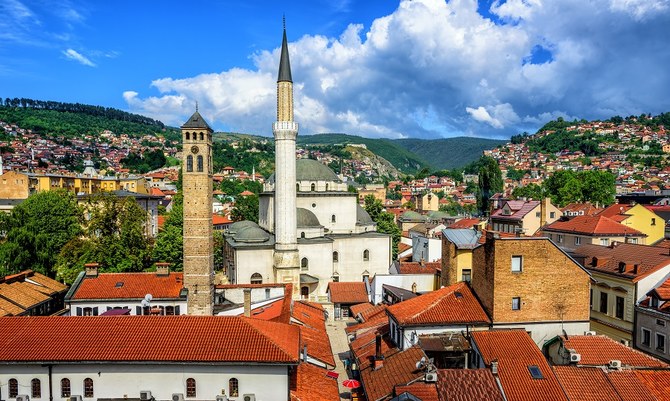

As the leaves begin to fall and Europe’s landscapes are painted in autumnal hues, a captivating expedition awaits travelers. It is a voyage that invites you to retrace the steps of Arab-Muslim pioneers who left an indelible mark on this continent, from the bustling bazaars of Sarajevo to the elegant Alhambra Palace in Granada, Spain.
Day 1: Arrival in Sarajevo, Bosnia and Herzegovina
As the first light of dawn breaks over the horizon, your journey begins in the heart of Sarajevo, the capital of Bosnia and Herzegovina. This city, where East meets West, is an emblem of resilience and cross-cultural heritage. The echoes of its Ottoman past resound through the labyrinthine streets of the Baščaršija, Sarajevo’s old bazaar and the historical and cultural center of the city built in the 15th century. The air is infused with the fragrant aroma of spices, and the calls of merchants create a symphony of languages as diverse as the goods they offer.
The 500-year-old multi-domed Gazi Husrev-beg Mosque stands as a masterpiece of Ottoman architecture, a silent witness to the history that unfolded within its walls. The intricate details of the mosque’s facade tell stories of faith, culture, and the intertwining of civilizations.
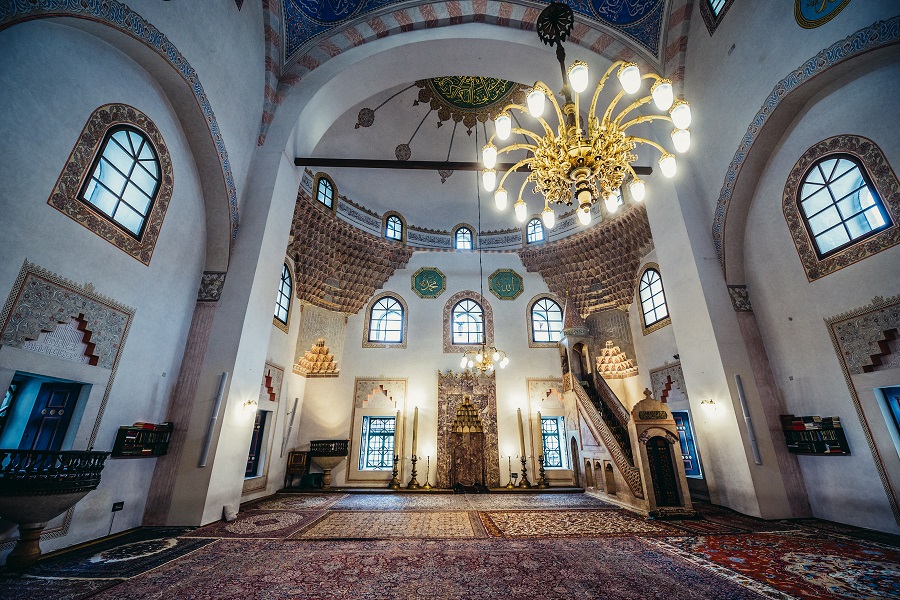
The interior of the 16th century Ottoman style Gazi Husrev-beg Mosque. (Shutterstock)
Day 2: Sarajevo Exploration
The sun rises over Sarajevo, casting a warm glow on the city’s rich history. Today, you will embark on an exploration that delves deeper into the layers of this dynamic city. Svrzo’s House stands as a living museum, offering a glimpse into the daily life of an Ottoman-era family. The Sarajevo War Tunnel, constructed between March and June 1993 during the Siege of Sarajevo in the midst of the Bosnian War, is a stark reminder of the city’s recent past and speaks to its enduring spirit and resilience.

The Sarajevo Tunnel which provided a lifeline for Bosnian citizens' survival during the Siege of Sarajevo from 1992-1995. (Shutterstock)
Day 3: Travel to Skopje, North Macedonia
It is time to journey to the captivating city of Skopje in North Macedonia. A short flight whisks you away and as you land, you’re greeted by the majestic Vardar River, which has witnessed the ebb and flow of history.
One of the oldest and largest marketplaces in the Balkans is Skopje’s Old Bazaar, a labyrinth of cobblestone streets and artisan shops. It beckons with its Ottoman-era charm. Here, you’ll find hidden courtyards and intricately designed facades that harken back to a bygone era. Built on Roman foundations under the patronage of Sultan Mehmed II the Conqueror, the Stone Bridge, an iconic symbol of the city, spans the river, connecting the past with the present.

Skopje’s Old Bazaar. (Shutterstock)
Day 4: Skopje and its surroundings
Today, you’ll delve further into Skopje’s rich history and venture beyond its borders. A day trip to Tetovo offers a glimpse of the Arab-Muslim influence in the region. The 600-year-old Painted Mosque, adorned with vibrant frescoes and intricate designs, is a testament to the enduring cultural exchanges that have shaped North Macedonia.
Returning to Skopje, the city’s architectural wonders continue to unfold. Situated on the highest point in the city overlooking the Vardar River, the Kale Fortress with foundations dating back to the early 6th century offers panoramic views of the cityscape. As the sun sets, you’ll find yourself immersed in the enchanting blend of cultures that defines Skopje.
Day 5: Journey to Granada, Spain
Your journey takes a new turn as you bid farewell to Skopje and set your sights on the sun-drenched landscapes of Granada, Spain. A flight transports you to a land where Moorish architecture and European charm intertwine harmoniously. As you check in to your accommodation, the Alhambra Palace looms in the distance, promising a glimpse into a world of architectural marvels.
Dating back to 1238, Alhambra, a masterpiece of Islamic art and culture, is your gateway to centuries past. The Nasrid Palaces with their intricate stucco work and delicate mosaics showcase the artisans’ dedication to perfection. The Generalife Gardens, a tranquil oasis of fountains and greenery, provide respite as you traverse this living testament to history.

The fortress and palace complex Alhambra. (Shutterstock)
Day 6: Granada’s Albaicín and Albayzín
The allure of Granada extends beyond the Alhambra’s walls. The Albaicín and Albayzín neighborhoods, with their narrow winding streets and white-washed houses, transport you to another era. The Mesquite Mayor de Granada, a former mosque, reflects the city’s multicultural history and spiritual significance.
Day 7: Travel to Lisbon, Portugal
Leaving behind the enchanting vistas of Granada, you board a flight to Lisbon, Portugal – a city that echoes with tales of explorers, poets, and a rich mosaic of cultures. Settle into your accommodation and venture into the Alfama district.
As you wander through the tangled alleys of Alfama, the Moorish influence is palpable. It’s in the graceful archways that frame your path and the ornate tilework that adorns the buildings, each tile whispering stories of centuries past.
The soulful strains of fado music fill the air, evoking a deep sense of nostalgia and longing. This genre of music, with its roots in Portuguese-Arabic poetry, encapsulates the complex emotions of saudade — a deep, melancholic yearning for something lost.
Alfama’s essence is a testament to the enduring legacy of the Moors and Arabs who once called this district home. Their architectural marvels and cultural contributions continue to shape the identity of Lisbon and remind us of the rich tapestry of influences that have shaped Europe’s heritage.

Alfama in Lisbon. (Shutterstock)
Day 8: Algarve Adventure
Your journey takes you south to the Algarve, where the golden beaches and rugged cliffs meet the azure waters of the Atlantic. Silves, a town with a rich history, showcases remnants of Arab-Muslim influence in its red sandstone castle and archaeological sites. In Faro, the Algarve’s capital, the Arco da Vila gate serves as a gateway to the past, inviting you to explore its charming streets.
As your eight-day journey draws to a close, take a moment to reflect on the threads of history you’ve traced through these remarkable destinations. Cherish the memories of Sarajevo’s bustling bazaars, Skopje’s Ottoman architecture, Granada’s Alhambra, Lisbon’s Alfama, and the Algarve’s coastal splendor.
From the bustling markets to the serene courtyards, from the opulent palaces to the humble neighborhoods, each step you’ve taken has been a step through time.


