

Saudi Arabia elected president of Asian organization for audit institutions for 2027-2030

1 / 4
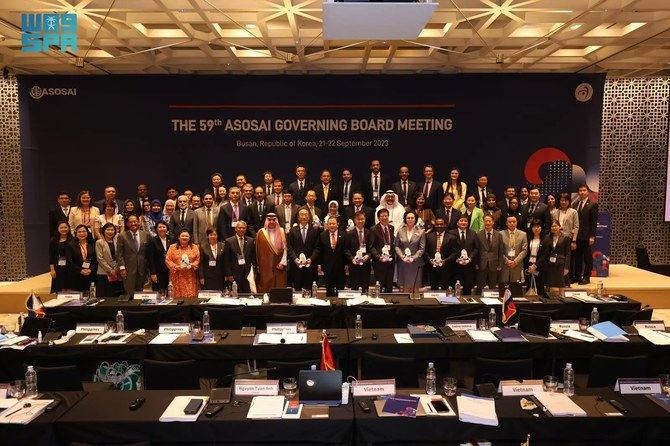
Hussam Al-Angari, president of the General Court of Audit, takes part in 59th Asian Organization of Supreme Audit Institutions meeting in Korea. (SPA)
2 / 4
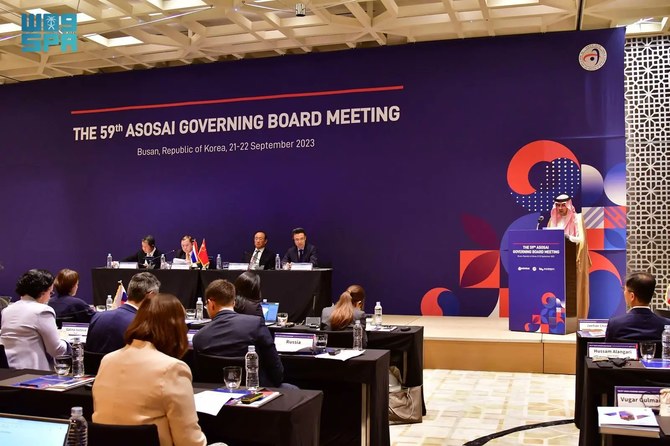
Hussam Al-Angari, president of the General Court of Audit, takes part in 59th Asian Organization of Supreme Audit Institutions meeting in Korea. (SPA)
3 / 4
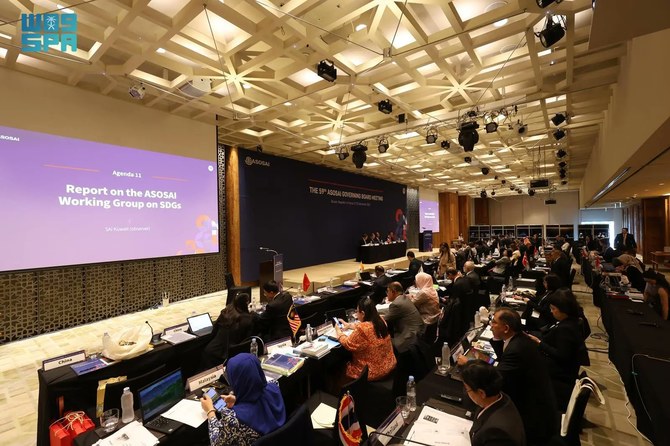
Hussam Al-Angari, president of the General Court of Audit, takes part in 59th Asian Organization of Supreme Audit Institutions meeting in Korea. (SPA)
4 / 4
Hussam Al-Angari, president of the General Court of Audit, takes part in 59th Asian Organization of Supreme Audit Institutions meeting in Korea. (SPA)
Short Url
Updated 23 September 2023
Follow

Saudi Arabia elected president of Asian organization for audit institutions for 2027-2030

  • The Kingdom was selected in a vote by the Asian Organization of Supreme Audit Institutions during its 59th meeting, which took place in Busan, South Korea this week

RIYADH: Saudi Arabia, represented by its General Court of Audit, has been elected to be president of the Asian Organization of Supreme Audit Institutions from 2027 to 2030.

The Kingdom was selected in a vote by the organization’s board of governors during its 59th meeting, a four-day event in Busan, South Korea, that concluded on Friday.

Hussam Al-Angari, president of the General Court of Audit, congratulated the Saudi leadership for the success of the country in being awarded the role, which he said “would not have been achieved without the high status enjoyed by the Kingdom,” the Saudi Press Agency reported on Friday.

He added that the honor reflects the great leadership role and reputation of the Kingdom, through its General Auditing Bureau, in the financial sector and in the fields of auditing, drawing up public financial-monitoring policies at the regional and international levels, and its effective participation in policy development and decision-making related to international professional policies and practices.

Established in 1978, the organization has 48 member states and is currently chaired by Thailand’s State Audit Office, while China’s auditor general carries out the duties of its General Secretariat.

The regional branch is affiliated with the International Organization of Supreme Audit Institutions, which is considered the professional reference and international incubator for public financial oversight and accounting.


Saudi deputy foreign minister calls for Sudanese unity during meeting in Cairo

Updated 8 sec ago
Follow

Saudi deputy foreign minister calls for Sudanese unity during meeting in Cairo

  • Waleed Al-Khuraiji says a political solution to the civil war in Sudan must be based on respect for its sovereignty
  • He rejects quasi-government formed by one of the warring factions in July, denounces external intervention in form of weapons supplies and foreign fighters

LONDON: Saudi Arabia’s deputy foreign minister, Waleed Al-Khuraiji, on Wednesday stressed the important need to maintain the territorial integrity of Sudan.

Speaking at the fifth Sudan peace coordination meeting in Cairo, he said a political solution to the civil war that began in April 2023 must be based on respect for Sudanese sovereignty and unity.

He highlighted the efforts the Kingdom is making in an attempt to ensure stability in Sudan, help reach a ceasefire agreement that ends the conflict, prevent the collapse of state institutions, and maintain the unity, territorial integrity and capabilities of the country, the Saudi Press Agency reported.

Al-Khuraiji also said that Saudi efforts to address the worsening humanitarian crisis caused by the war are continuing, in an attempt to alleviate the suffering of the Sudanese people.

It is important that the conflicting factions return to political dialogue, he added, as stated in the Jeddah Declaration of May 2023 and the short-term ceasefire deal that was agreed that same month.

The war in Sudan, between rival military factions the Sudan Armed Forces and the paramilitary Rapid Support Forces, poses a threat to regional stability, Al-Khuraiji warned.

He rejected the quasi-government formed by the Rapid Support Forces in July last year as an obstruction to ongoing efforts to resolve the crisis, a threat to the unity and sovereignty of Sudan, and a risk to regional security and the safety of the Red Sea.

“The announcement of parallel entities outside the framework of legitimate institutions is worrying and disrupts efforts through the political track to solve the crisis,” he said.

The prevention of external intervention in the conflict, including illegal support in the form of weapon supplies and foreign fighters, is crucial for efforts to achieve a ceasefire and facilitate humanitarian operations, Al-Khuraiji added.

He also called for the establishment of safe corridors so that deliveries of aid can reach those in need, similar to a mechanism established in August last year at the Adre crossing on Sudan’s border with Chad.