

UNESCO adds Saudi Arabia’s Uruq Bani Ma’arid Reserve to World Heritage List  

1 / 2
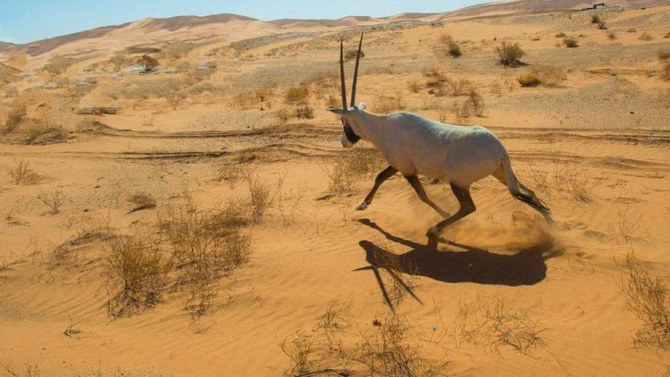
Uruq Bani Ma’arid is in the Kingdom’s southwestern desert. (SPA/File Photo)
2 / 2
(Supplied)
Short Url
Updated 21 September 2023
Follow

UNESCO adds Saudi Arabia’s Uruq Bani Ma’arid Reserve to World Heritage List  

  • Marks Kingdom’s first location on UNESCO Natural Heritage Site list

DUBAI: Saudi Arabia’s Uruq Bani Ma’arid Reserve has officially been added to the UNESCO World Heritage List, it was announced on Wednesday.  

This marks the Kingdom’s first UNESCO Natural Heritage Site on the list. 
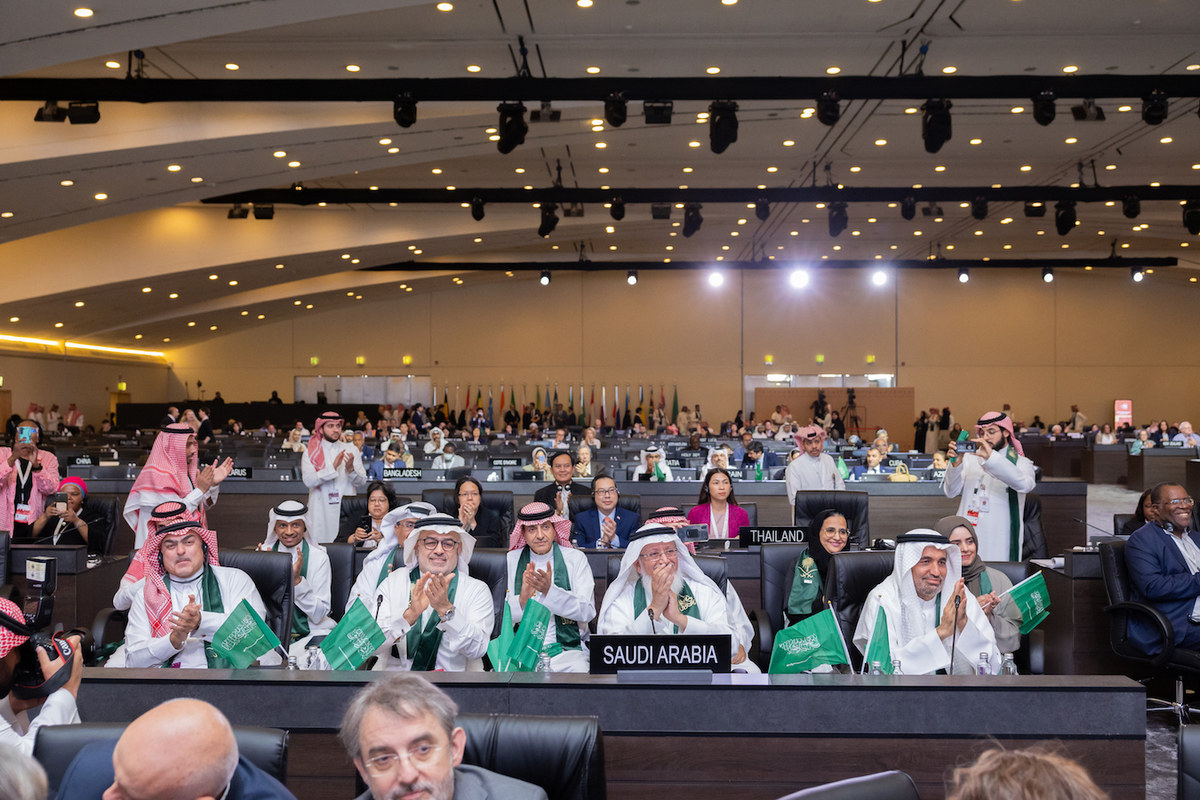


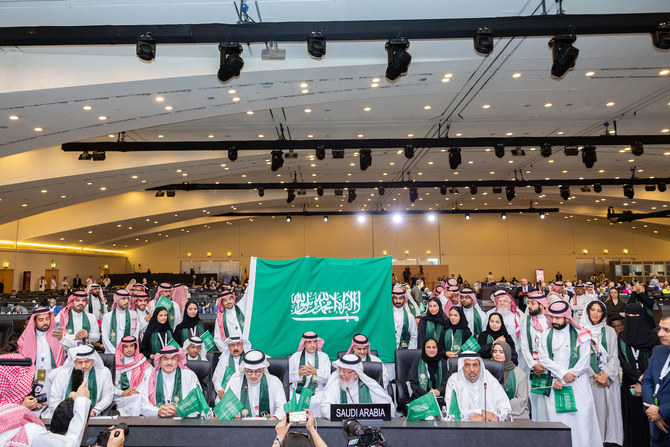
The decision was taken during the extended 45th session of the UNESCO World Heritage Committee held in Riyadh. (Supplied)

The decision – announced by Prince Bader bin Abdullah bin Farhan Al-Saud, the Saudi minister of culture – was taken during the extended 45th session of the UNESCO World Heritage Committee held in Riyadh between Sept. 10-25. 

“The inscription of the Reserve on the UNESCO World Heritage List as the first Natural Heritage Site in the Kingdom contributes to highlighting the importance of natural heritage on a global scale and reflects the outstanding value of the Reserve,” the minister of culture said in a released statement.  
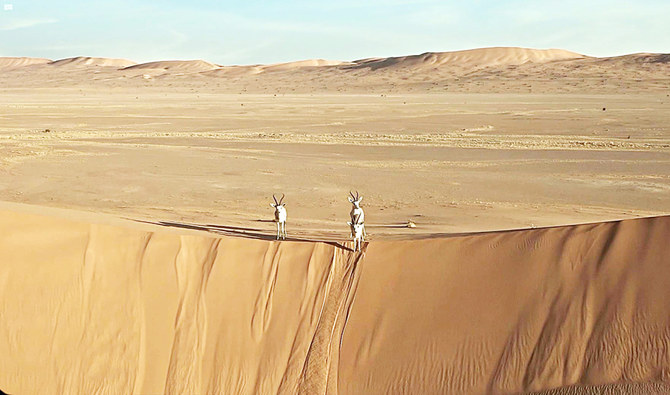


It occupies an area of over 12,750 km2. (SPA)

The Uruq Bani Ma’arid Reserve is situated along the western edge of Ar-Rub al-Khali, The Empty Quarter. It is making a name for itself with its unique vistas, diverse wildlife and eco-tourism offerings.  

It occupies an area of over 12,750 km2 and is the only major sand desert in tropical Asia and the largest continuous sand sea on Earth.  

It is a showcase of the environmental and biological evolution of flora and fauna in Saudi Arabia and provides vital natural habitats for the survival of more than 120 indigenous plant species, as well as endangered animals living in harsh environments, including gazelles and the only free-ranging herd of Arabian Oryx in the world.  

The inscription of the Uruq Bani Ma’arid Reserve adds to the six other Saudi UNESCO sites, which are Al-Ahsa Oasis, Al-Hijr Archaeological Site, At-Turaif District in ad-Dir'iyah, Ḥimā Cultural Area, Historic Jeddah, and Rock Art in the Hail Region.

Saudi Arabia's heritage treasures
The five historic sites inscribed on UNESCO’s World Heritage List tell a story of universal importance

Enter


keywords

‘Palestine 36’ set for Saudi cinemas in January

Updated 04 January 2026
Follow

‘Palestine 36’ set for Saudi cinemas in January

DUBAI: Filmmaker Annemarie Jacir’s “Palestine 36,” which screened at Jeddah’s Red Sea International Film Festival, is scheduled for release in Saudi cinemas on Thursday.

The sweeping historical epic — Palestine’s official entry to the Oscars this year, which made it to the official longlist — is a deep exploration of resistance, resilience and the struggle of the Palestinian people. 

“Palestine 36” is set during the 1936 Arab Revolt and follows five interconnected narratives as villages across Palestine confront British colonial rule.

With rising numbers of Jewish immigrants escaping antisemitism in Europe, and the Palestinian population uniting against Britain’s 30-year dominion, all sides spiral toward inevitable collision in a decisive moment for the British Empire and the future of the entire region. 

The film won the Best Film award at the Tokyo International Film Festival.

Jacir — whose three previous feature films “Salt of this Sea,” “When I Saw You,” and “Wajib” were also official Palestinian Oscar entries — hopes “Palestine 36” will provide a mirror for audiences, particularly those from colonized or war-affected countries.  

“I hope people see themselves in the film,” she told Arab News in December. “I don’t want to teach anyone anything. There’s a lot of history in the film and there’s a lot of history that’s been erased. I hope that’s something that comes through.” 

The film features an ensemble cast, including Oscar-winner Jeremy Irons, “Game of Thrones” star Liam Cunningham, and Tunisian actor Dhafer L’Abidine, alongside Palestinian talents Hiam Abbass, Yasmine Al-Massri, Kamel El Basha, and Saleh Bakri.

At the Red Sea International Film Festival premiere of the film in December, Jacir walked the red carpet with Palestinian Jordanian designer Reema Dahbour, who dressed the director for the event.

Dahbour created a custom piece titled “From the River to the Sea,” which she described on social media as “a dress born from our narrative, our symbols, and our enduring connection to the land. A garment that mirrors the spirit showcased so powerfully in the film.”