UNESCO adds Iran caravanserais to heritage sites list
UNESCO adds Iran caravanserais to heritage sites list/node/2375451/travel
UNESCO adds Iran caravanserais to heritage sites list
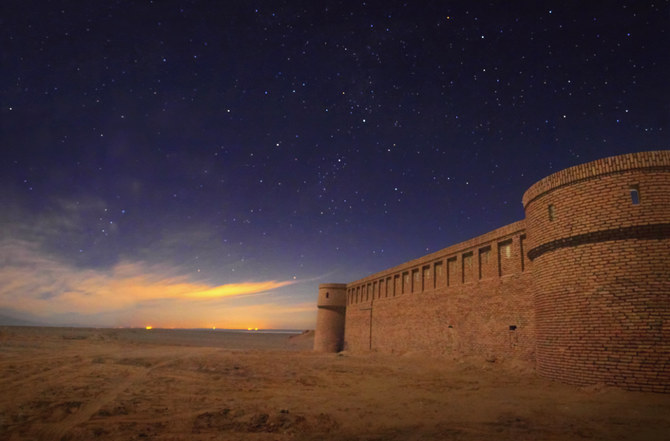
An ancient Iranian caravanserai (caravan serai) at the background of night sky full of stars and sunset in Maranjab desert near Kashan and Aran va Bidgol, Iran. (Shutterstock)
UNESCO adds Iran caravanserais to heritage sites list
Iran boasts more than 200 caravanserais on historic trade routes that traverse the country linking Asia and Europe, including the Silk Road
Updated 18 September 2023
AFP
TEHRAN, Iran: The United Nations cultural organization on Sunday added many of Iran’s caravanserais, roadside rest stops for travelers along the country’s ancient trade routes, to its World Heritage List.
The decision to register the 56 caravanserais, just a small percentage of the structures built in Iran, was made in Riyadh during the 45th session of the World Heritage Committee.
Caravanserais provided “shelter, food and water for caravans, pilgrims and other travelers,” UNESCO said its website.
Iran boasts more than 200 caravanserais on historic trade routes that traverse the country linking Asia and Europe, including the Silk Road.
“They are considered to be the most influential and valuable examples of the caravanserais of Iran, revealing a wide range of architectural styles, adaptation to climatic conditions, and construction materials, spread across thousands of kilometers and built over many centuries,” said UNESCO.
Among them are the caravanserais of Qasr-e Bahram near the city of Semnan, Deyr-e Gachin near Qom, and Anjireh Sangi near Yazd.
Iran now has 27 UNESCO-listed historical sites, including the ancient city of Persepolis, the capital of the Achaemenid Empire, Armenian monasteries in the northwest and the historic city of Yazd itself.
AlUla’s ancient scripts come alive after dark at Ikmah
Gen-Z local Omer Mohammad guided Arab News through the vast outdoor setting of ‘Secrets of the Scribe’
Updated 04 January 2026
Jasmine Bager
ALULA: Ikmah Mountain, also known as Jabal Ikmah, one of AlUla’s landmark archeological sites, is offering visitors a new experience this week as part of the Winter at Tantora programming, which ends on Jan. 10.
Near the ancient city of Dadan, Ikmah highlights AlUla’s role as a major cultural and religious center long before the rise of the Nabataeans. It is being activated under the stars in a brand new, old way.
The site, often described as “an open-air library” for its hundreds of ancient inscriptions carved on its canyon walls thousands of years ago, provides visitors with have a chance to etch their own names, using the ancient alphabet, on a block of stone they can take home.
The team at ‘Ikmah After Dark: Secrets of the Scribe’ showing a visitor how to carve on a stone. (Supplied)
Written mainly in Dadanitic and Lihyanite, the ancient texts once recorded religious dedications, laws, names of rulers and traced everyday life, providing rare insights into the beliefs and social structures of early Arabian kingdoms.
Arab News spoke with Gen-Z local Omer Mohammad, who guided us through the vast outdoor setting of the “Secrets of the Scribe — Ikmah After Dark” experience.
“When the guests arrive, we welcome them ... give them some tea to get refreshed. After that, if the group is big, we split them into two; some of the group goes to go to the carving where they are going to learn how to carve. And the other group is going to go to explore the gorge,” he said.
Storytelling was such an important thing here 3,000 years ago. People from all over the world used to bring their animals and rest here; it had a river so it had some water and everything.
Omer Mohammad, AlUla local
The gorge is an elevated path with candles lighting the way on both sides.
“In the scripts and descriptions you’re going to see (in the mountains), you will get to know more about Dadani lives and what they used to do here,” he said.
After the hike down, visitors from both groups join at the gathering point where everyone is encouraged to rest, mingle and enjoy small bites such as dates and other goodies, as well as tea.
While it is a new experience, the tradition is old.
“Storytelling was such an important thing here 3,000 years ago. People from all over the world used to bring their animals and rest here; it had a river so it had some water and everything,” he said.
Dressed in garb from olden times and speaking in poetic prose, Mohammad and his peers guided us to see the light in the dark night.
“It is significant to me personally to work on this project to get people to come here and get excited (about) what’s happening, enjoy our stories and know more about Dadani life,” he said.
On a personal note, Mohammad is grateful to know more about his own history and wants to continue passing on that newfound knowledge to all generations — both younger and older than his own — and be part of the unfolding story of the land and its people.
“I guess you can say that this is the land of my ancestors. I really love history, and I really would like to know more about history — and my history,” Mohammad said. “But I just learned about this ancient history three years ago when I started working here.
“I never had the experience before, so when I knew more about it, I was so happy. And it was so good. Everyone should come,” he said.