



JEDDAH: The Saudi Ardah, formerly known as the Najdi Ardah, holds global cultural importance. Originally a martial dance, it was performed before significant battles and victories by tribes of the Arabian Peninsula including the ruling family of Al-Saud.
The Ardah is a UNESCO-listed dance that combines traditional chanting, swordplay, and rhythmic drums. It was originally used to motivate warriors and embodies loyalty and pride in Saudi culture.
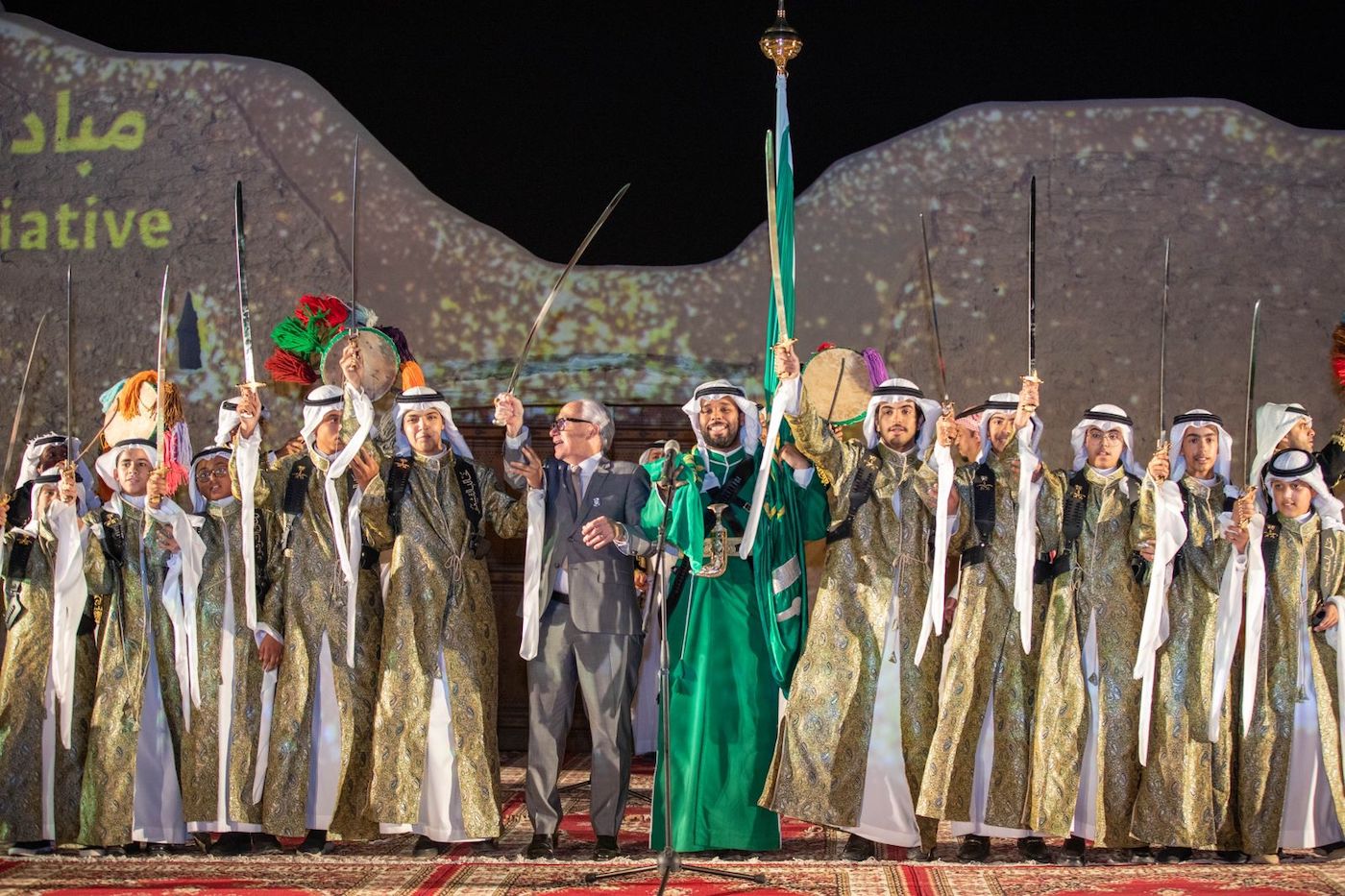
People perform the Saudi Ardah in Diriyah. (DGDA)
Sami Al-Shamrani, supervisor of the Heritage and Folklore Committee of the Culture and Arts Association in Jeddah and supervisor of the Arts and Heritage Club at King Abdulaziz University, said: “It’s a magnificent and exquisite form of performance art that melds dance, drumming, and poetic chants.
This art form is now an integral part of various significant events, both at the onset and conclusion of national gatherings, including concerts, national festivals, and royal ceremonies held to welcome dignitaries.”
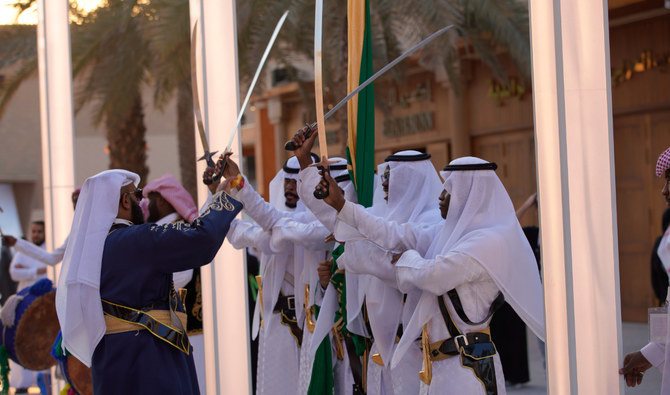
People perform the Saudi Ardah. (Supplied)
The dance is performed on many occasions, such as weddings, graduations, various events organized by Saudi embassies worldwide and on the grand celebration of Saudi National Day.
The Ardah dance, known for its displays of strength, originated in the central region of Saudi Arabia, particularly in the Najd region. The tradition, passed down over generations, has been embraced by kings, princes and sheikhs.
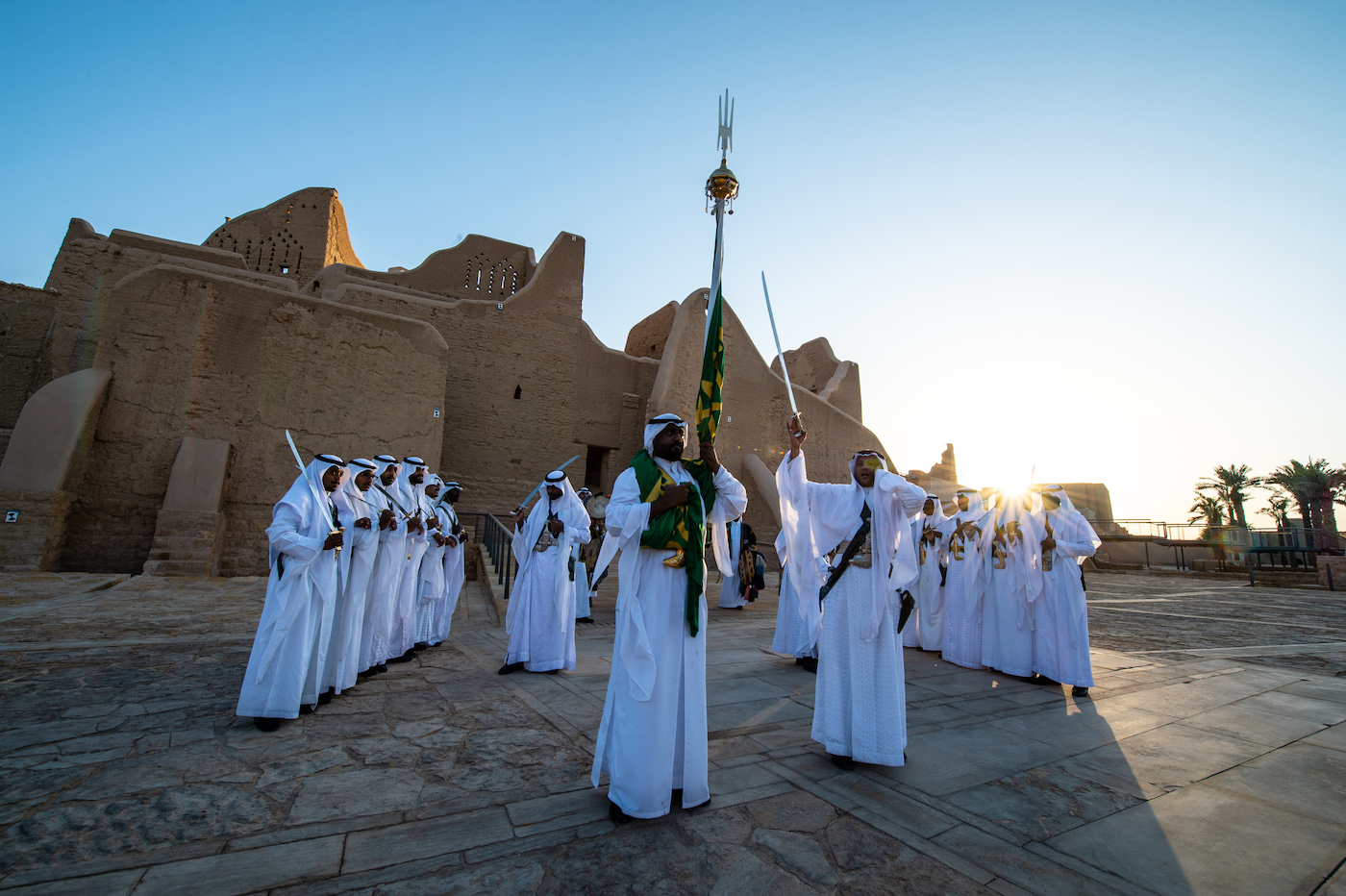
People perform the Saudi Ardah. (Supplied)
According to Al-Shamrani, participants in the Ardah dance must wear the traditional Saudi dress, which includes the ghutra (headscarf) and agal (headband). They must also wear an ornamental gown called Saya or Dagla, while drummers wear Furmaliyah gowns. Attention is given to accessories like daggers, pistol holsters, and bullet belts.
Al-Shamrani said that due to deviations from the authentic essence of the Ardha dance, certain musical groups were denied permission to perform.
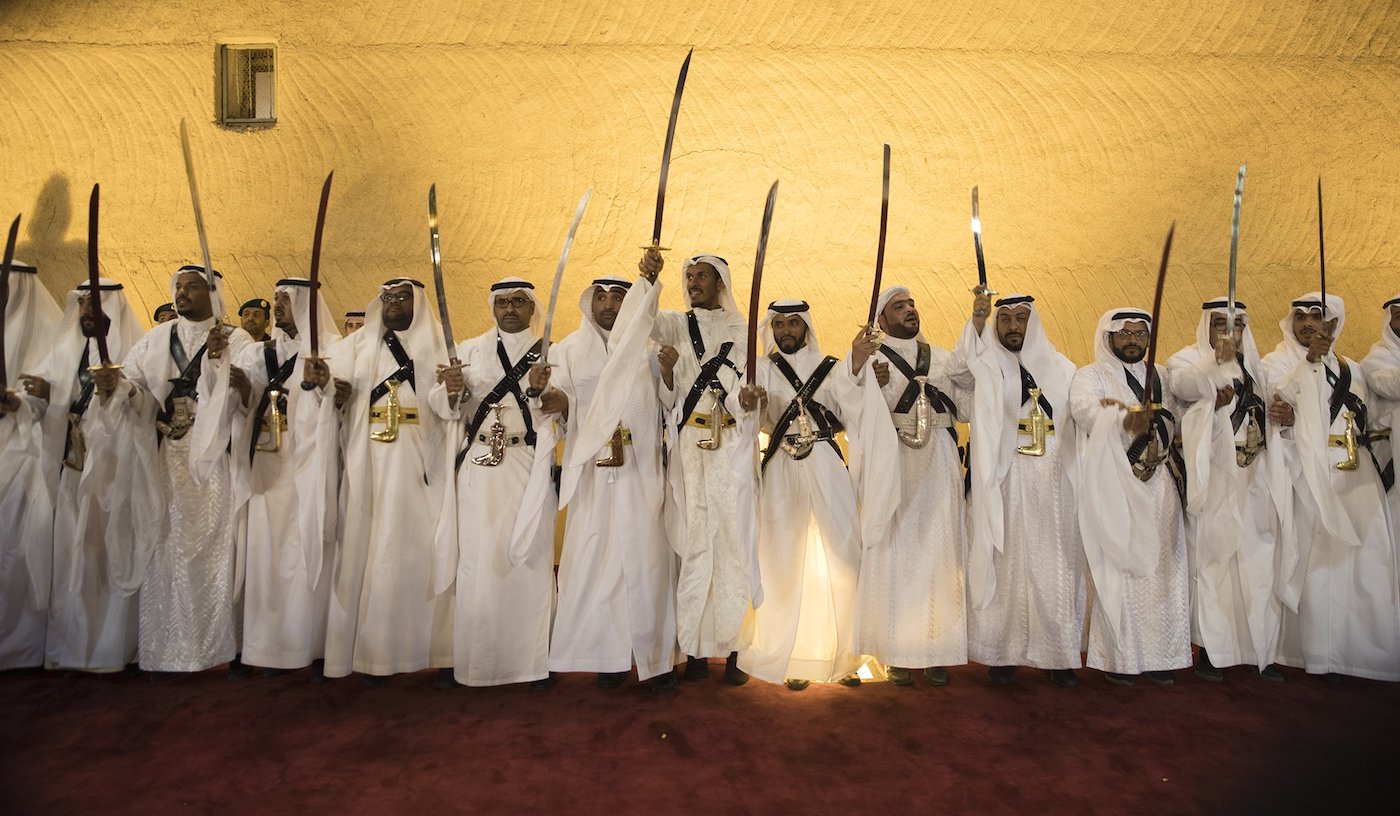
People perform the Saudi Ardah. (Supplied)
“A joint directive from the Royal Court and the King Abdulaziz Foundation for Research and Archives emphasized the importance of adhering to fundamental principles and established traditions. This includes preserving original elements, pillars, and poetic verses.
“Approval from the foundation is required for any creation of new verses. The Ardha dance is to be performed within its traditional elements, honoring this cherished and widely recognized dance,” he said.
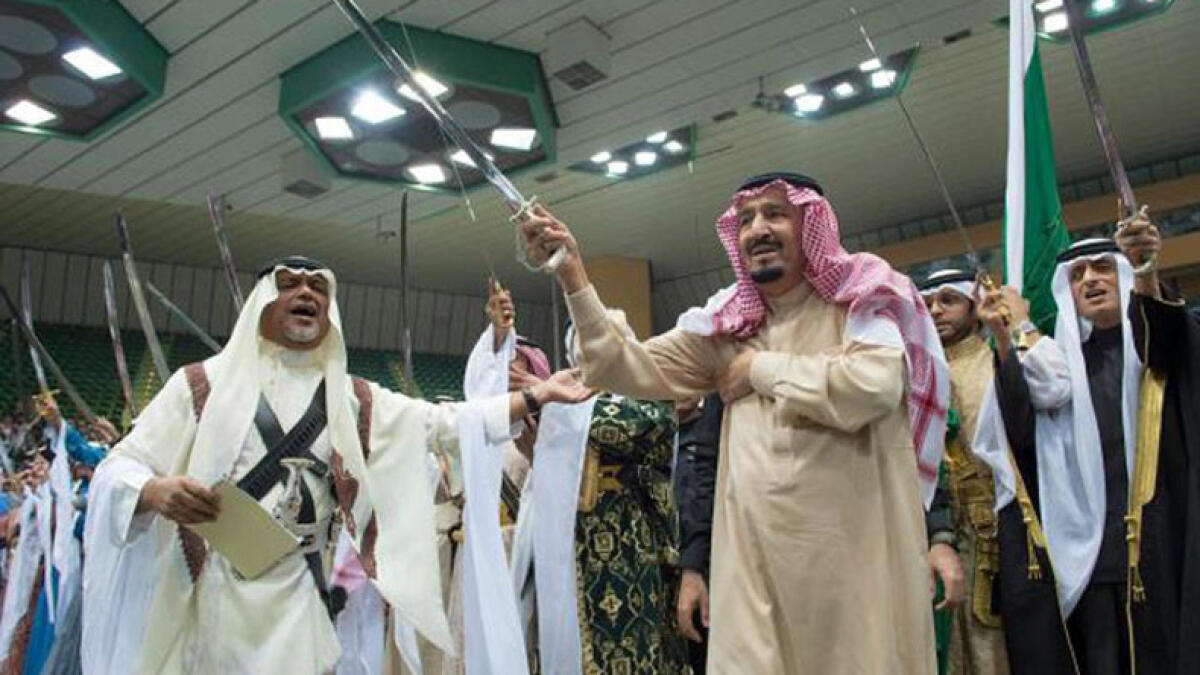
King Salman performs the Saudi Ardah at the Janadriyah National Festival for Heritage and Culture in Riyadh. (SPA)
How many people participate?
Al-Shamrani said: “When the king and the crown prince are present, the assembly comprises over 150 to 200 performers, encompassing drummers and a poet responsible for conveying poetic verses to the performance segments.
“During celebrations and weddings, the performer count should not dip below 25 to 30 individuals, all (dressed) in their customary garments and paraphernalia,” he added. This includes musical instruments, drums, banners and swords, and apparel.
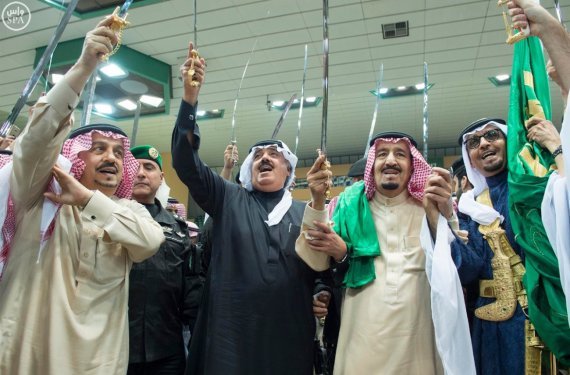
King Salman performs the Saudi Ardah at the Janadriyah National Festival for Heritage and Culture in Riyadh. (SPA)
How is the performance executed?
The Ardha is a collective endeavor, with participants arranged in rows, singing and performing together. The spectacle usually lasts 15 to 25 minutes, as described by Al-Shamrani.
He said: “During the Ardha, participants begin by shifting their shoulders toward their teammate’s shoulder. They then align their shoulders and lift their knees, followed by propelling their left shoulder over their teammate’s shoulder. This cycle of movements repeats throughout the performance, with the dancer maintaining the sequence.
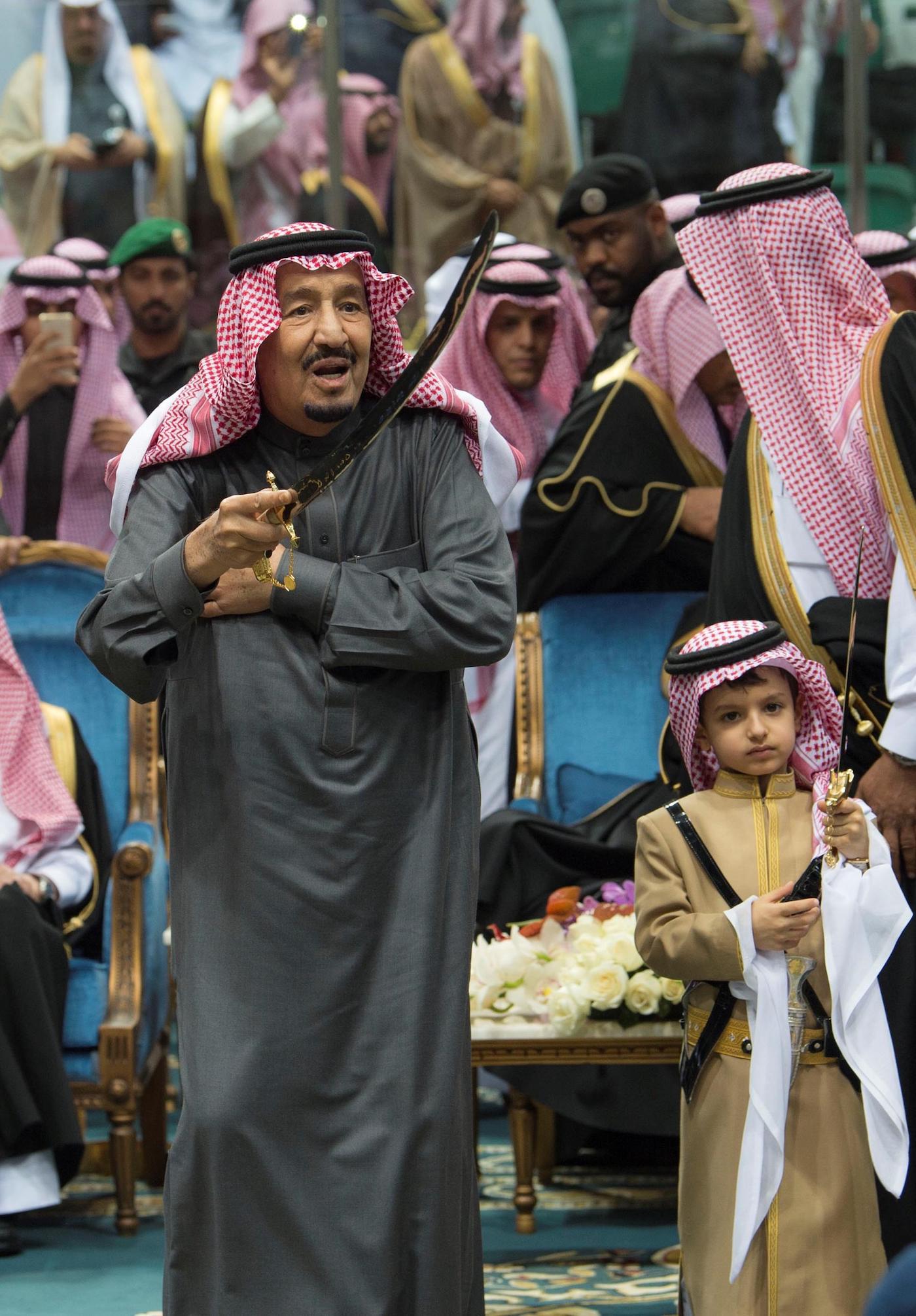
King Salman performs the Saudi Ardah at the Janadriyah National Festival for Heritage and Culture in Riyadh. (Reuters)
“The poetic verses are passed from the first row to the opposing row, creating a poetic debate-like structure. This harmonizes with the vocal expressions and melodic rendition of the Ardah.”
Before the performance starts, the poet initiates a vocal call called muharrabah, accompanied by rhythmic beats. The rows converge, with the poet leading the chant and the drums setting the rhythm. The flag dancer starts the dance by spinning right, and the rows follow in sync.
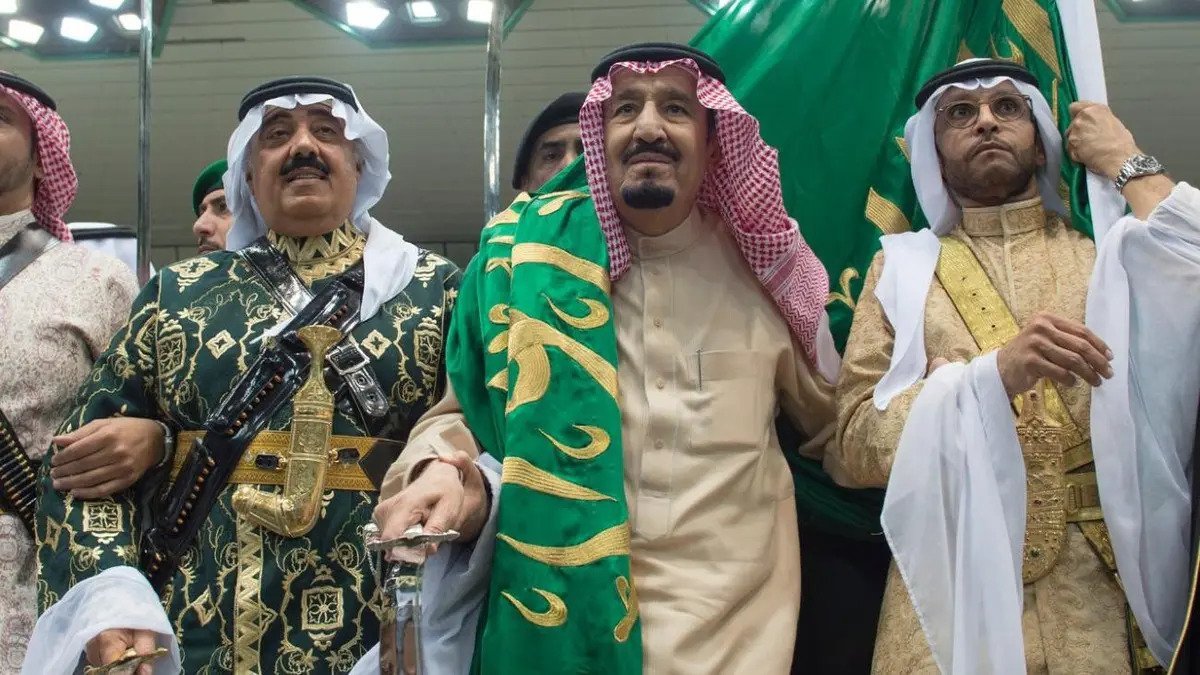
King Salman performs the Saudi Ardah at the Janadriyah National Festival for Heritage and Culture in Riyadh. (SPA)
Al-Shamrani said: “Renowned poets, including Fahd bin Dahim, have penned poetic verses for Ardah. These poems, known for their wisdom and fervor, celebrate the Kingdom’s triumphs and have been passed down through generations.”
In Ardah, men use percussion instruments called Al-Tathleeth and strike them with bamboo rods. There is also a group of drummers who play larger drums called Al-Takhmeer, positioned behind them.
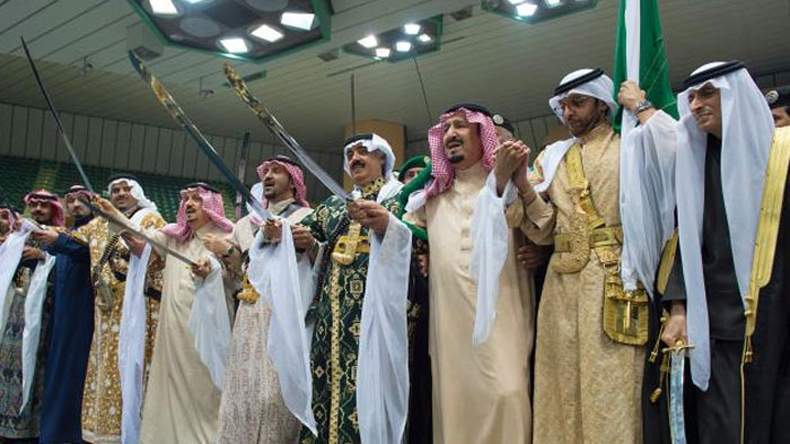
King Salman performs the Saudi Ardah at the Janadriyah National Festival for Heritage and Culture in Riyadh. (SPA)
The National Center for Saudi Ardah has guidelines in place for managing items like flags, drums, and other instruments.
The Saudi flag used in the dance routine should be at least 120 x 80 cm in size. It should be in good condition, not touching the ground or sagging. The flag bearer must be in parade uniform, carrying the flag on the left side but placing it on the right shoulder.

Former US President Donald Trump joins dancers with swords at a welcome ceremony at the Murabba Palace in Riyadh. (AFP)
In 2021, the Diriyah Gate Development Authority and the National Center for Saudi Ardah launched the Diriyah House of Ardah initiative. It aims to train young people in the art of Ardah with the help of skilled performers, contributing to the preservation and revival of the Kingdom’s cultural heritage.
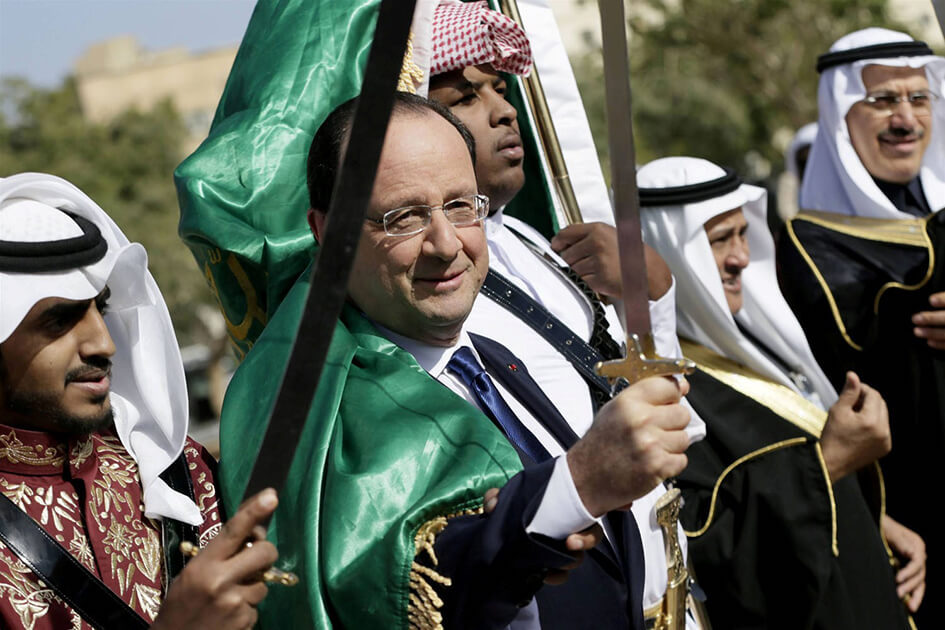
Former President of France Francois Hollande performs the Saudi Ardah. (Supplied)


