



LONDON: The London-based Arab British Chamber of Commerce has launched an emergency appeal for aid for Morocco and Libya after an earthquake and floods respectively hit the North African countries over recent days.
The chamber said in a statement: “The world has watched in shock as two devastating natural disasters struck the kingdom of Morocco and the state of Libya in recent days, leaving thousands of their people dead, injured and missing.
“Entire cities in both countries have been destroyed with thousands of families left homeless and traumatized.
“Local emergency services assisted by friendly nations around the world are presently engaged in rescue operations to save lives and provide urgent relief.”
Morocco’s strongest-ever earthquake, registering a magnitude of 6.8, struck at 11:11 p.m. local time last Friday, some 70 km south of Marrakech, leaving a trail of destruction in its wake and killing nearly 3,000 people and wounding more than 5,600, according to official figures.
This had left “many remote rural villages devastated, making rescue operations difficult,” the chamber added.
In eastern Libya, a massive flash flood triggered by Storm Daniel on Sunday killed more than 3,000 people, left more than 10,000 missing and entire neighborhoods in ruins.
The chamber said: “Libya is just starting to count the cost of the weekend’s flooding, whose force, without parallel, led to the bursting of two dams in the eastern city of Derna.
“The Arab British Chamber of Commerce extends its deepest heartfelt sympathies to the Libyan and Moroccan people, to all the families who have lost loved ones, and to all who have been affected by these unprecedented disasters.
“The people of Morocco and Libya remain uppermost in all our thoughts as they struggle to recover from these unimaginable disasters, and we will stand in solidarity with them as they embark on the long process of rebuilding their communities.”
Appeals have begun to enable individuals to make donations to the disaster relief efforts.
For those wishing to help Morocco’s earthquake victims, a special emergency fund has been opened by the Moroccan central bank. For donations to help the Libyan disaster relief, the chamber has advised people to contact the Red Cross and Red Crescent via its Libya floods appeal.
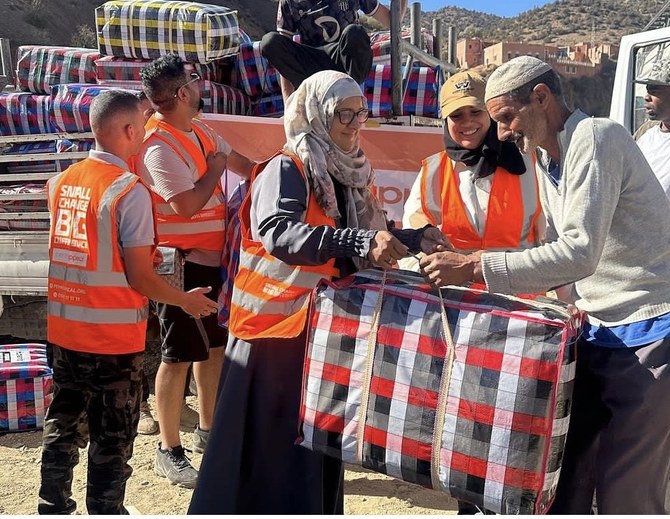
Meanwhile, international humanitarian charity Penny Appeal has urgently called upon individuals, businesses, and organizations worldwide to come together in support of the victims of the earthquake in Morocco and the floods in Libya.
“Countless homes and buildings lie in ruins, and already vulnerable communities have been left with virtually nothing,” it said in a statement.
In response to this “dire situation,” Penny Appeal said it was “committed to making a difference in the lives of those in need, and has immediately mobilized its resources and is collaborating with our partners on the ground.”
It added: “Our resolute teams are working tirelessly to provide essential aid to the communities affected by this tragic earthquake.”
The Muslim charity, one of the largest in the world, said it was focusing on “reaching those most in need, and every effort is being made to save as many lives as possible, recognizing the immense damage this disaster has caused.”
Ridwana Wallace-Laher, CEO of Penny Appeal, said: “The road to recovery will be long and challenging, and the people of Morocco need your help now more than ever.
“Your generous donations will enable us to provide vital food, clean water, medical supplies, and shelter to those who have lost everything. Together, we can make a meaningful impact and help rebuild the lives of those affected by this tragedy.”
The charity said the devastation caused in Libya “is becoming more tragic every minute with lifeless bodies being found in the sea, in the valleys and under buildings,” calling on the public to help them “deliver essential medical aid to people in desperate need.”


