CAIRO: Egypt declared three days of mourning on Tuesday “in solidarity with our brothers in Morocco and Libya” for the victims of the earthquake and storm that hit the two North African countries in recent days.
“President Abdel Fattah El-Sisi extended his as well as the Egyptian people’s sincere condolences over the victims of the humanitarian catastrophes in Morocco and Libya,” spokesman Ahmed Fahmy said.
“Three days of mourning were declared in the Arab Republic of Egypt in solidarity with the brothers in Morocco and Libya over the victims,” Fahmy added.
El-Sisi gave directives to the Egyptian Armed Forces to provide immediate humanitarian aid to both states during a meeting with a number of senior commanders on Tuesday.
Egyptian Foreign Minister Sameh Shoukry reaffirmed Egypt’s support for and full solidarity with Morocco following the earthquake, that has caused thousands of deaths and injuries, during a phone call with Nasser Bourita, Morocco’s minister of foreign affairs, African cooperation and expatriates.
Ahmed Abu Zeid, spokesman for the Egyptian Ministry of Foreign Affairs, said that Bourita appreciated the condolences sent to its leadership and people, as well as Cairo’s decision to declare a state of mourning.
Speaker of the Egyptian House of Representatives Hanafy Gebal also offered his sincere condolences on behalf of the chamber on Tuesday to both Morocco and Libya, the latter of which was struck by Storm Daniel at the weekend.
He was joined in his condolences by Shawqi Allam, the grand Mufti of Egypt, who expressed his full solidarity with the families of the victims.
Egypt’s Ministry of Religious Endowments, or Awqaf, allocated 30 million Egyptian pounds ($970,666) of its budget as part of a broad aid package provided by the Egyptian state, divided equally between Morocco, Libya, and Slovenia after devastating floods his the Balkan country.
Mohammed Mokhtar Gomaa, the Egyptian minister of religious endowments, confirmed that the time has come to put the outcomes of the climate conference in Sharm El-Sheikh into practice and to join international efforts to confront the challenges of climate change and its devastating effects.
Moroccan television reported on Monday that the death toll from the earthquake that struck the country had reached 2,862, while the number of injured reached 2,562.
Since most of the areas affected by the earthquake are difficult to reach, the authorities have not issued any estimates for the number of missing people.
Moroccan rescuers, supported by foreign teams, continue to search for survivors and provide assistance to hundreds of people who have lost their homes.
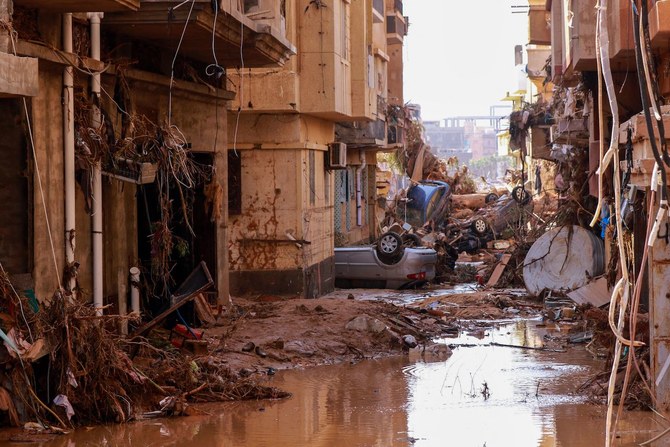
In Libya, the head of the government appointed by Parliament, Osama Hammad, said in a statement that Storm Daniel “caused about 2,000 deaths and thousands of missing people.”
The storm swept eastern Libya on Sunday afternoon, leaving behind damage to infrastructure and public facilities.
The Libyan Presidential Council declared the cities of Derna, Shahat, and Al-Bayda in Cyrenaica disaster zones and requested international support to confront the effects of the floods caused by the storm.


![]()

Egypt declares three days of mourning in solidarity with Morocco and Libya
Short Url
https://arab.news/pwk7u
Egypt declares three days of mourning in solidarity with Morocco and Libya
- El-Sisi gave directives to the Egyptian Armed Forces to provide immediate humanitarian aid to both states during a meeting with a number of senior commanders on Tuesday


Latest updates


© 2026 SAUDI RESEARCH & PUBLISHING COMPANY, All Rights Reserved And subject to Terms of Use Agreement.