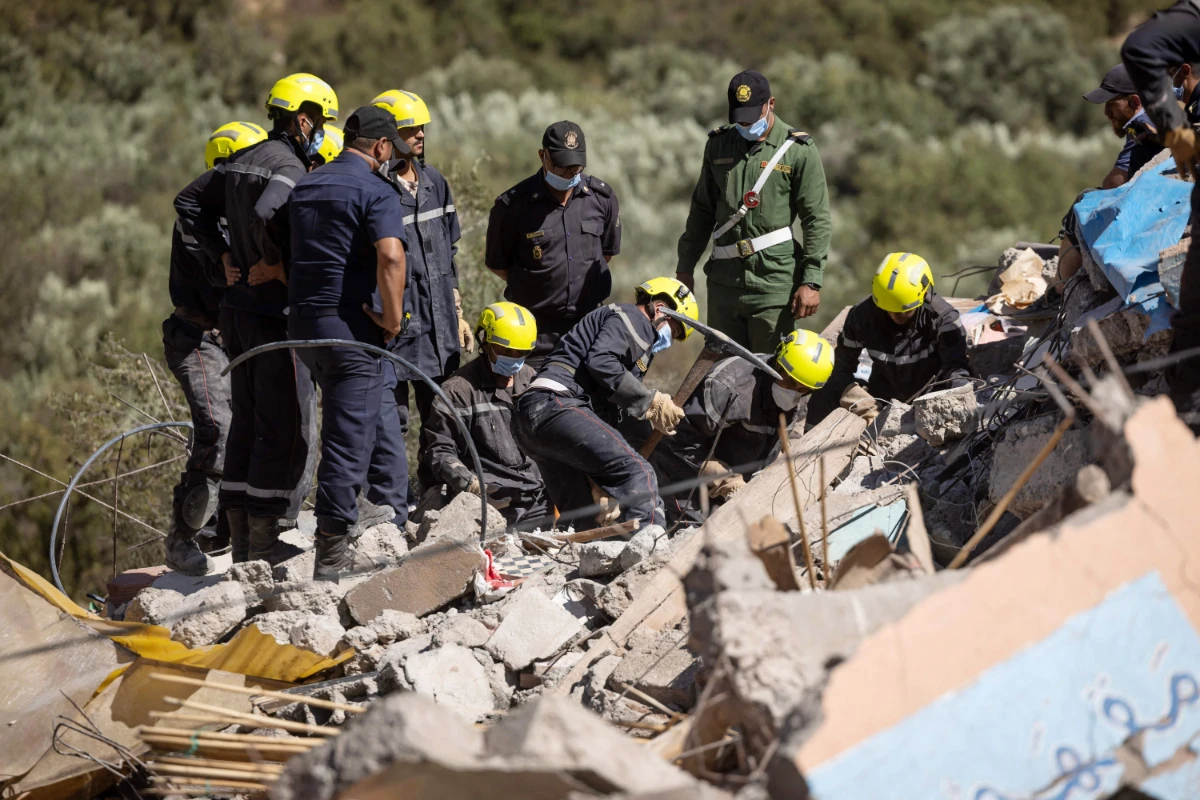
- The Interior Ministry said it was accepting search and rescue-focused international aid from Spain, Qatar, Britain and the United Arab Emirates, bypassing offers from French President Emmanuel Macron and U.S. President Joe Biden
- Aid groups said the government has not made a broad appeal for help and accepted only limited foreign assistance
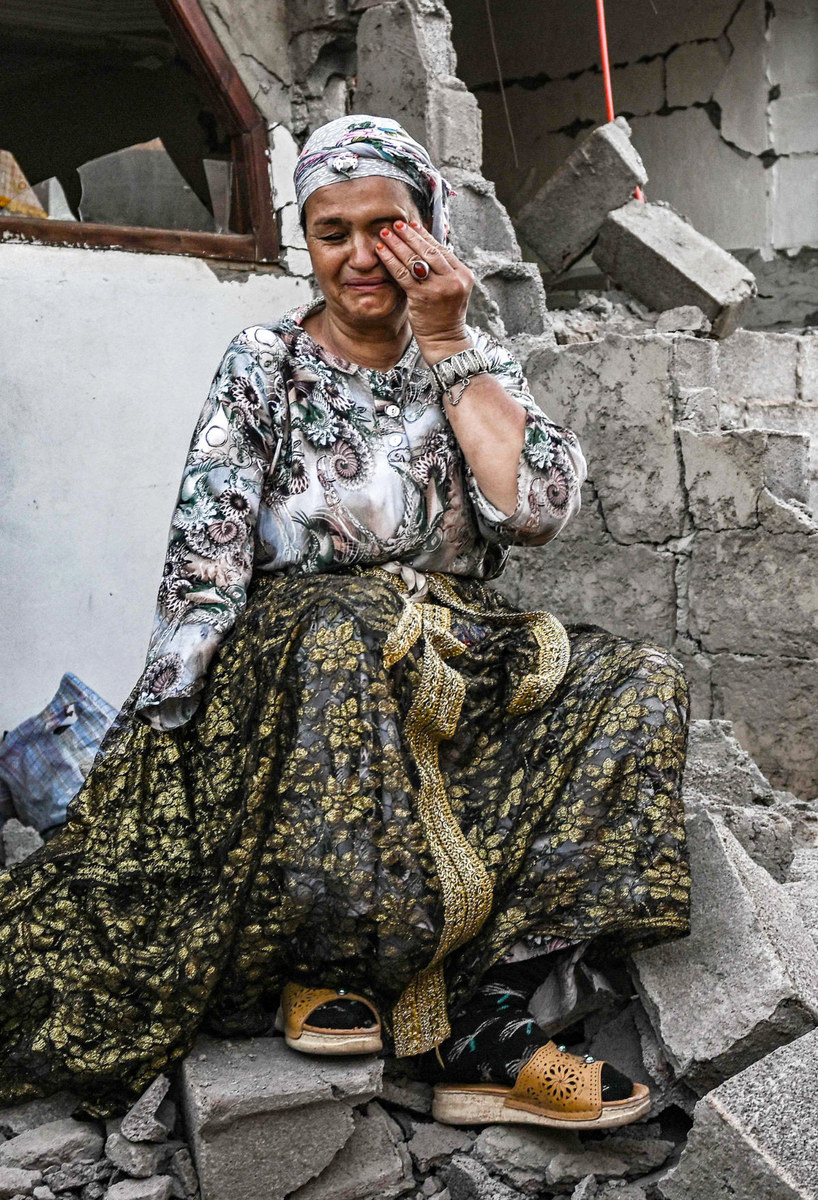
RABAT: An earthquake has sown destruction and devastation in Morocco, where death and injury counts continue to rise as rescue crews dig out people both alive and dead in villages that were reduced to rubble.
Law enforcement and aid workers — both Moroccan and international — have arrived in the region south of the city of Marrakech that was hardest hit by the magnitude-6.8 tremor on Friday night and several aftershocks. Residents await food, water and electricity, and giant boulders now block steep mountain roads.
Here’s what you need to know:
WHAT ARE THE AREAS MOST AFFECTED?
The epicenter was high in the Atlas Mountains about 70 kilometers (44 miles) south of Marrakech in Al Haouz province.
The region is largely rural, made up of red-rock mountains, picturesque gorges and glistening streams and lakes.
For residents like Hamid Idsalah, a 72-year-old mountain guide from the Ouargane Valley, it is unclear what the future holds.
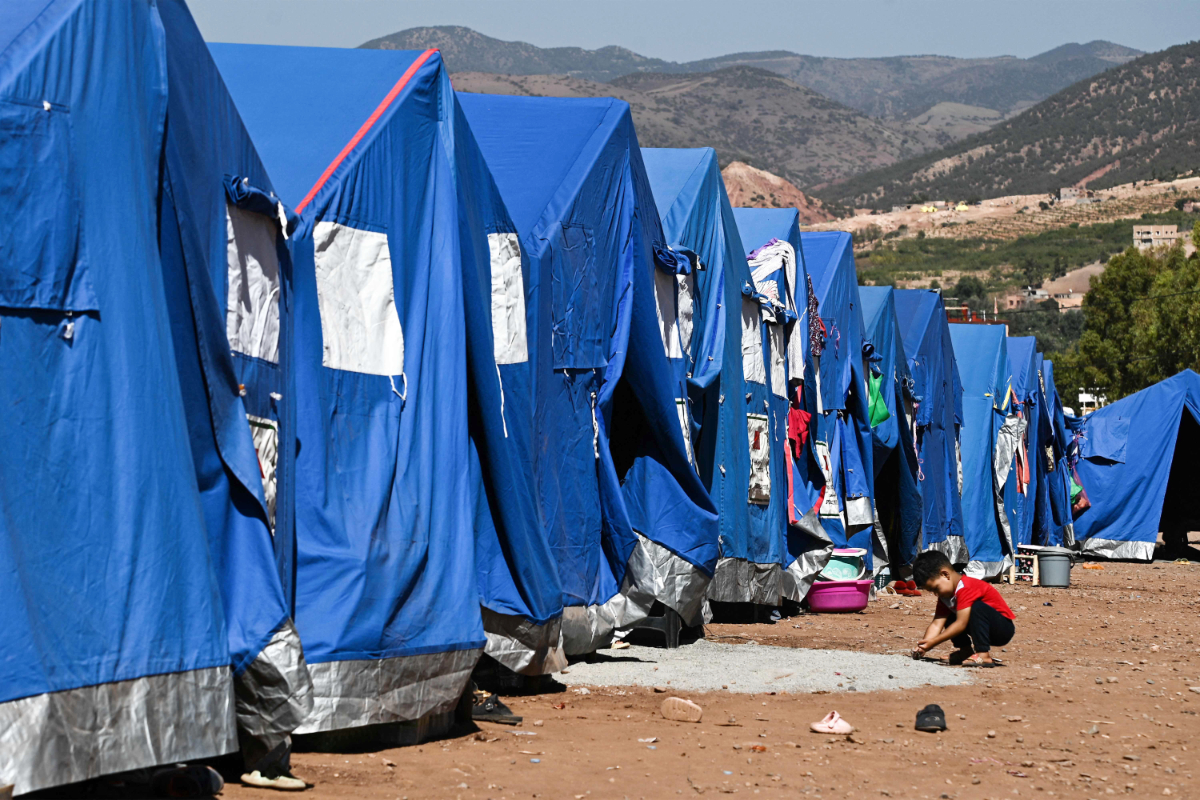
Idsalah relies on Moroccan and foreign tourists who visit the region due to its proximity to both Marrakech and Toubkal, North Africa’s tallest peak and a destination for hikers and climbers.
“I can’t reconstruct my home. I don’t know what I’ll do. Still, I’m alive so I’ll wait,” he said as rescue teams traversed the unpaved road through the valley for the first time this weekend.
The earthquake shook most of Morocco and caused injury and death in other provinces, including Marrakech, Taroudant and Chichaoua.
WHO WAS AFFECTED?
Of the 2,681 deaths reported as of Monday afternoon, 1,591 were in Al Haouz, a region with a population of around 570,000, according to Morocco’s 2014 census.
People speak a combination of Arabic and Tachelhit, Morroco's most common Indigenous language. Villages of clay and mud brick built into mountainsides have been destroyed.
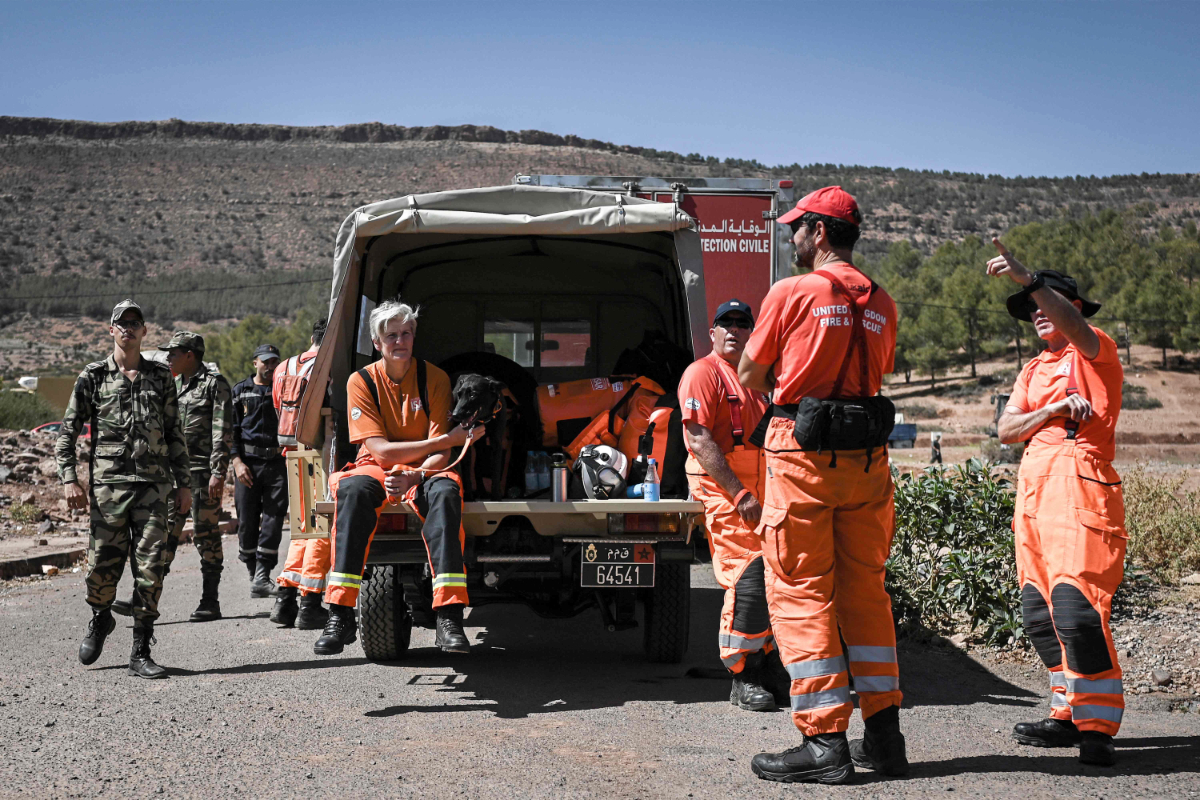
Though tourism contributes to the economy, the province is largely agrarian. And like much of North Africa, before the earthquake Al Haouz was reckoning with record drought that dried rivers and lakes, imperiling the largely agricultural economy and way of life.
Outside a destroyed mosque in the town of Amizmiz, Abdelkadir Smana said the disaster would compound existing struggles in the area, which had reckoned with the coronavirus pandemic in addition to the drought.
“Before and now, it’s the same,” said the 85-year-old. “There wasn’t work or much at all.”
Most of the dead have already been buried. The government reports 2,501 injuries.
WHO IS PROVIDING AID?
Morocco has deployed ambulances, rescue crews and soldiers to the region to help assist with emergency response efforts.
Aid groups said the government has not made a broad appeal for help and accepted only limited foreign assistance.
The Interior Ministry said it was accepting search and rescue-focused international aid from Spain, Qatar, Britain and the United Arab Emirates, bypassing offers from French President Emmanuel Macron and U.S. President Joe Biden.
“We stand ready to provide any necessary assistance for the Moroccan people," Biden said Sunday on a trip to Vietnam.
WHY IS MARRAKECH HISTORIC?
The earthquake cracked and crumbled parts of the walls that surround Marrakech's old city, a UNESCO World Heritage site built in the 12th century. Videos showed dust emanating from parts of the Koutoubia Mosque, one of the city's best known historic sites.
The city is Morocco's most widely visited destination, known for its palaces, spice markets, tanneries and Jemaa El Fna, its noisy square full of food vendors and musicians.
HOW DOES THIS COMPARE TO OTHER QUAKES?
Friday’s earthquake was Morocco’s strongest in over a century, but, though such powerful tremors are rare, it isn’t the country’s deadliest.
Just over 60 years ago, the country was rocked by a magnitude-5.8 quake that killed over 12,000 people on its western coast, where the city of Agadir, southwest of Marrakech, crumbled.
That quake prompted changes in construction rules in Morocco, but many buildings, especially rural homes, are not built to withstand such tremors.
There had not been any earthquakes stronger than magnitude 6.0 within 310 miles (500 kilometers) of Friday's tremor in at least a century, according to the U.S. Geological Survey. Northern Morocco experiences earthquakes more often, including tremors of magnitude 6.4 in 2004 and magnitude 6.3 in 2016.
Elsewhere this year, a magnitude 7.8 temblor that shook Syria and Turkey killed more than 21,600 people.
The most devastating earthquakes in recent history have been above magnitude 7.0, including a 2015 tremor in Nepal that killed over 8,800 people and a 2008 quake that killed 87,500 in China.
WHAT ARE THE NEXT STEPS?
Emergency response efforts are likely to continue as teams traverse mountain roads to reach villages hit hardest by the earthquake. Many communities lack food, water, electricity and shelter.
But once aid crews and soldiers leave, the challenges facing hundreds of thousands who call the area home will likely remain.
Members of the Moroccan Parliament are scheduled to convene Monday to create a government fund for earthquake response at the request of King Mohammed VI.