

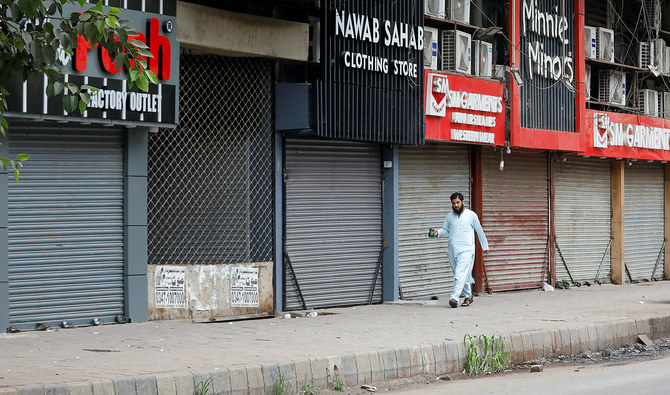

KARACHI: Business activity remained closed across major trading centers in Pakistan’s commercial hub of Karachi on Friday as traders continued protests against high electricity bills and a fuel price hike and announced a nationwide strike for Saturday.
Pakistan on Friday hiked petrol and diesel prices to a record high, raising petrol prices by 14.9 rupees to 305.4, and diesel prices 18.4 rupees to 311.8, the finance ministry said. The move came as protests that began in Karachi on August 17 have spread throughout the country against high electricity bills.
Pakistan secured a badly-needed $3 billion short-term financial package from the IMF in late June that helped it avoid default but came with tough conditions and fiscal reforms, including a petroleum levy of up to 50 rupees a liter, alongside a string of painful measures such as raising extra revenues, increasing energy prices and a market-based exchange rate, which has already fueled inflation.
“The government’s latest move to increase petroleum prices has invigorated the strike call in the city which remained completely shut down for business activities,” Atiq Mir, chairman of the All Karachi Tajir Itehad (AKTI), an umbrella of various trade associations, told Arab News.
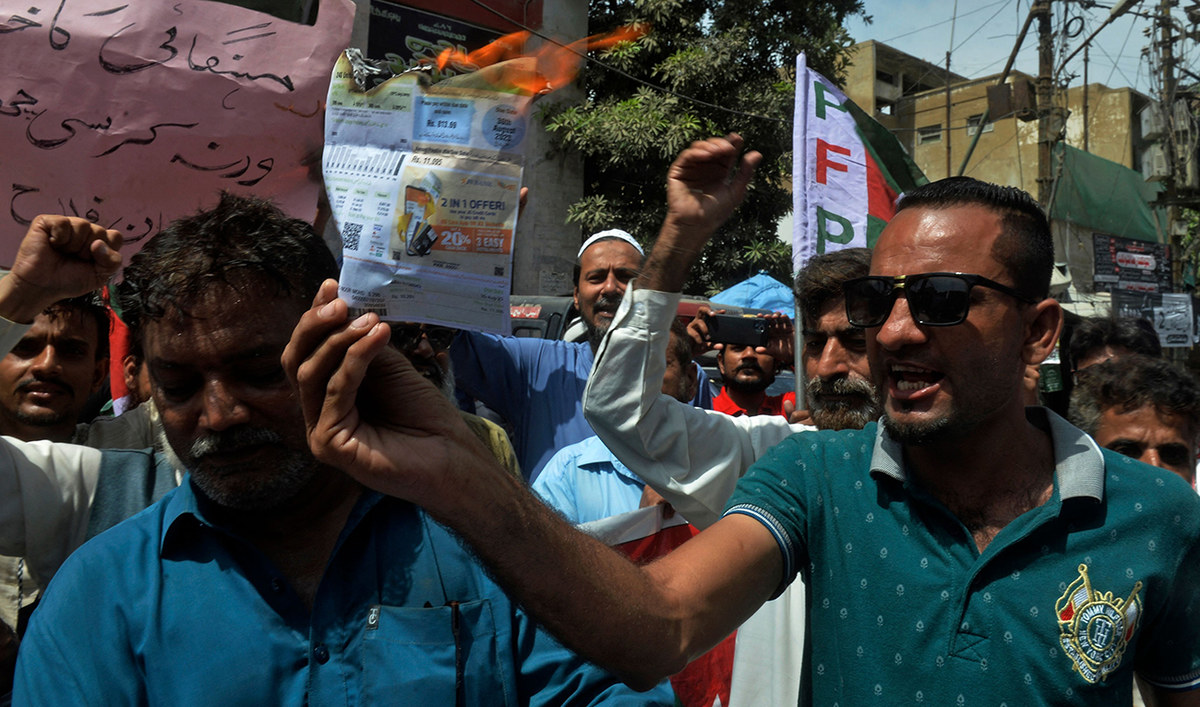
A man burns an electricity bill during a protest against the surge in prices of electricity and fuel in Karachi on September 1, 2023. (AFP)
Responding to requests from Karachi’s trade organizations, key commercial hubs like Saddar, Clifton, Bolton Market, and Tariq Road, were completely shut down on Friday.
“Worst inflationary pressure, unemployment and rising cost of petrol, gas, and electricity are factors that forced shopkeepers in the city to keep their businesses closed in protest,” Mir said, adding that traders would decide their future course of action depending on what relief the government provided.
Meanwhile, the Markazi Tanzeem-e-Tajran Pakistan, a central body of traders, announced a nationwide strike for Saturday.
“All trader organizations of the country will observe a shutter down strike on September 2, 2023 across the country against oppressive measures of the government, including petrol and electricity price hike,” Kashif Chaudhry, the president of the organization, announced at a press conference in Islamabad.
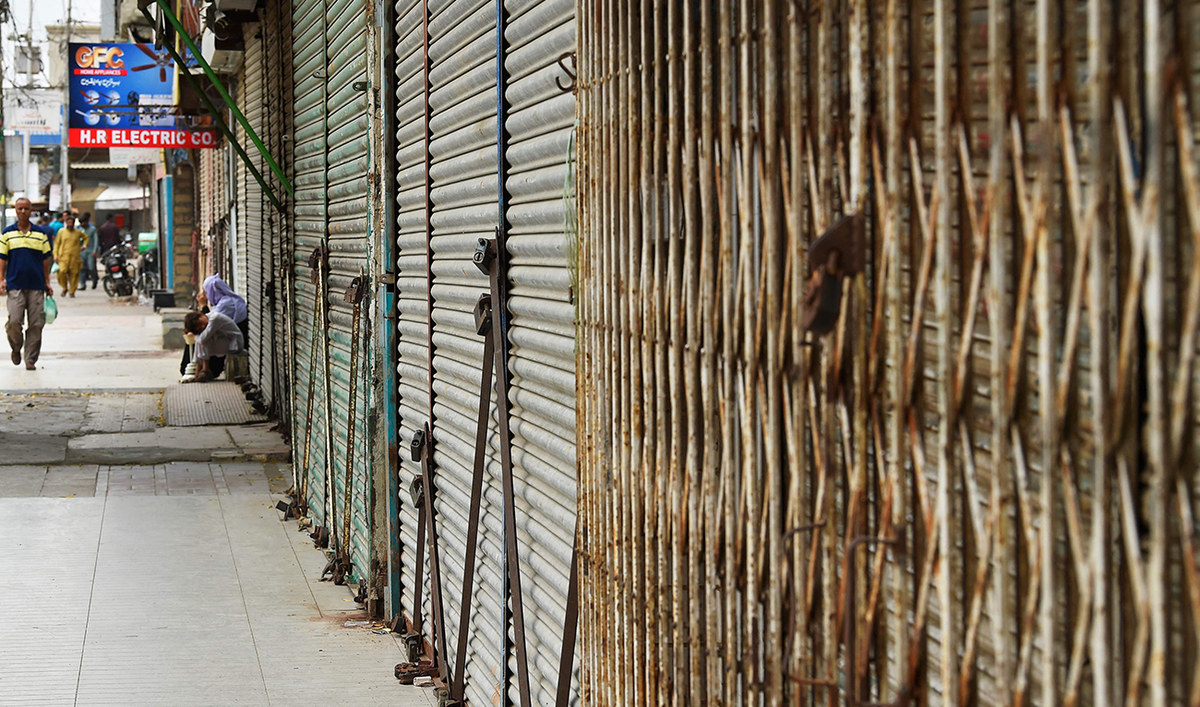
People walk past closed shops during a strike by traders, against the surge in electricity prices and inflation, in Karachi on September 1, 2023. (AFP)
Chaudhry called Friday’s strike in Karachi “a rehearsal” for a complete shutdown on Saturday against a “third petrol bomb dropped on the public.”
Irfan Iqbal Sheikh, the president of the Federation of Pakistan Chambers of Commerce and Industry (FPCCI), said the government had not taken into account the socioeconomic repercussions of the latest hike in petroleum prices.
“FPCCI can see inflationary pressures beyond the control of any sector or industry to absorb. Industrial shutdowns, decline in exports, dwindling domestic demand, social unrest, unemployment and non-existent economic growth will follow,” he said in a statement on Friday.
The FPCCI chief added that the most glaring and worrisome aspect of the last few fuel price hikes was that the petroleum levy on petrol had increased to Rs60 per liter:
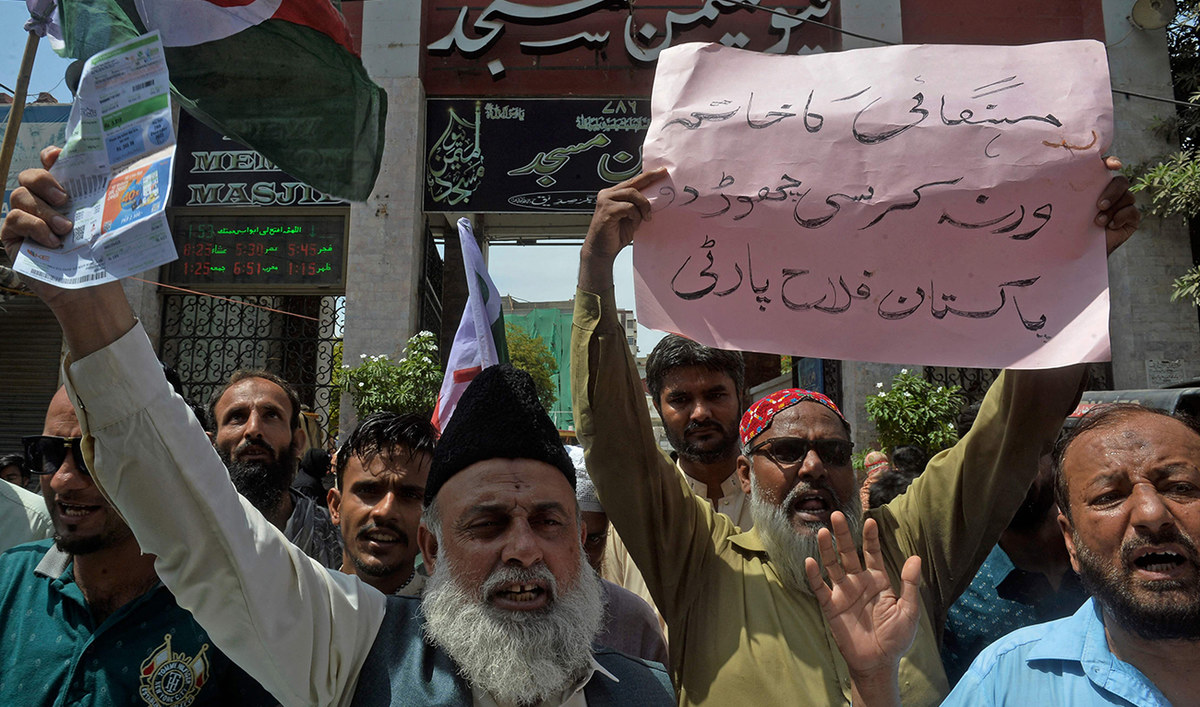
People shout slogans and hold placards reading "End the inflation or leave the chair" during a protest against the surge in prices of electricity and fuel in Karachi on September 1, 2023. (AFP)
“This is bad economics in these times of stagflation and recessionary tendencies in the economy, as we need out-of-the-box solutions to stabilize the economy instead of ruthlessly counterproductive decisions.”
The South Asian nation is grappling with a deepening economic crisis amid rising energy prices that pushed the inflation rate to a historic high of 38 percent in May this year. At present, it hovers around 28 percent.
The rupee closed at Rs305.90 against the US dollar in the interbank market during early trading hours on Friday and closed weekend trading at Rs305.47 with 0.02 percent appreciation. The currency was trading at Rs328 against the dollar in the open market as compared to Rs323 on Thursday, according to the central bank and the Exchange Companies Association’s data.
The country’s stock market also closed the weekend on a positive note with a gain of 310 points to close at the 45,312 level.


