Pakistan seeks IMF approval to allow customers to pay electricity bills in installments

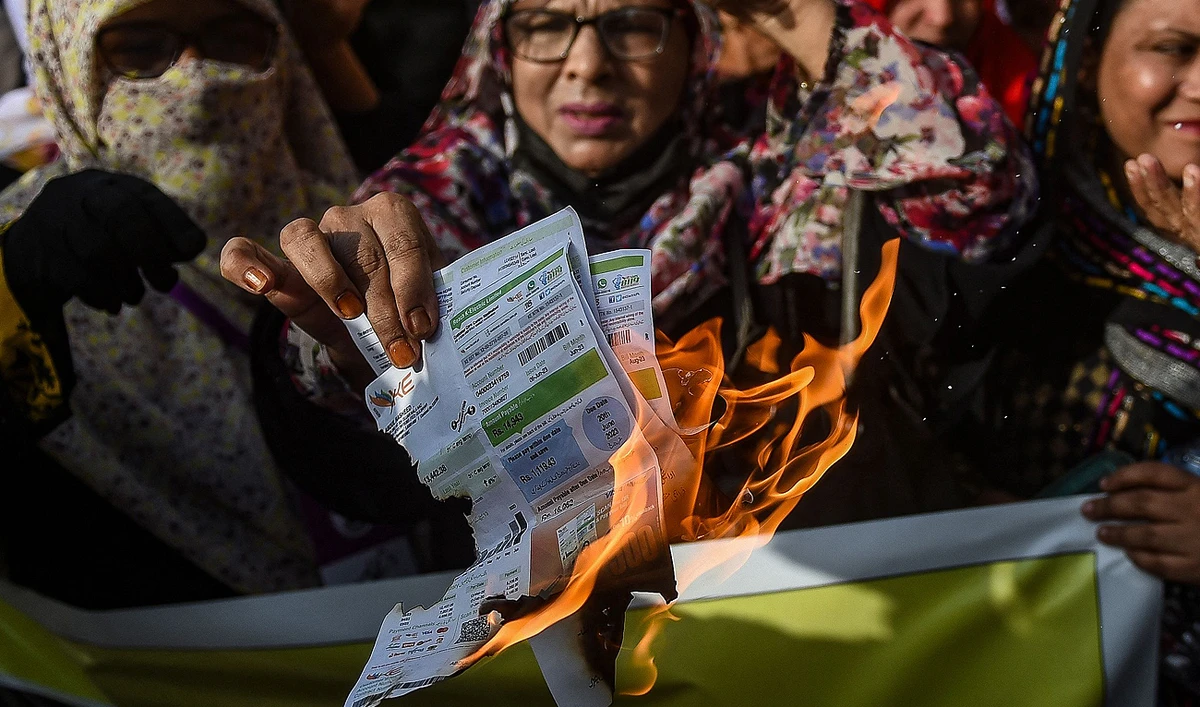
Women activists of Pakistan's Jamat-e-Islami party set electricity bills on fire during a protest against the surge in electricity prices along a street in Karachi on August 31, 2023. (AFP)
Short Url
Updated 31 August 2023
Follow

Pakistan seeks IMF approval to allow customers to pay electricity bills in installments

  • If approved, consumers will be allowed to deposit bills in installments and increase in tariff will be applied in phases
  • Price hike was agreed with IMF earlier this year when it approved short-term $3 billion bailout package for Pakistan

ISLAMABAD: The Pakistan government has shared a proposal with the International Monetary Fund (IMF) seeking approval for domestic customers to be able to pay electricity bills in installments, a senior official of the finance ministry told Arab News on Thursday, as protests continued for a second week against electricity bills.

An electricity price hike was agreed with the IMF earlier this year when the international lender approved a short-term $3 billion bailout package for Pakistan. Protests against steep bills began in Karachi on August 17 and have since spread across the country.

A Rs7 increase in basic tariff was approved last month to be levied from September, while last week the National Electric Power Regulatory Authority approved a further hike of Rs4.96 per unit, whose notification has been delayed due to ongoing protests.

“We have shared a detailed plan with the IMF seeking approval for relief to electricity consumers of up to 400 units and that the increase of Rs7 per unit be applied in phases,” the official, who declined to be named, said.

It could take a “day or two” to get approval from the IMF, after which the measures would be made public:

“If the IMF grants the approval, the ministry will allow collection of August and September electricity bills in installments.”

The government also planned to collect at least Rs250 billion by curbing electricity theft, the official said.

To a question about multiple taxes added in bills, he said the government could not reduce or abolish taxes in bills as long as Pakistan was part of an IMF program.

IMF resident representative Esther Perez Ruiz did not respond to questions seeking comment for the story. Director General Media for the finance ministry, Biraj Lal Dosani, declined to comment on the issue.

The previous government of former Prime Minister Shehbaz Sharif had agreed with the IMF to raise taxes and power prices to secure a bailout deal that helped the nation avert a sovereign debt default.

The official said the Sharif government had agreed with the IMF to keep power sector circular debt below Rs2.3 trillion and thus Pakistan was not in a position to extend any relief to the public without prior approval of the fund.

Samiullah Tariq, Director Research at Pakistan Kuwait Investment Company, said the government did not have the fiscal space to extend relief to electricity consumers as power prices and the formula were predetermined.

“The government can allow the consumers to deposit their bills in instalments, but this was also not the solution as the electricity would cost the public more next month,” he told Arab News.

Tariq said the government would have to pass on the burden to consumers with a change in currency parity as the rupee was rapidly depreciating on a daily basis against the US dollar.

“The authorities are caught in a vicious cycle now,” Tariq said, “where we can all only pray for the better.”
Islamabad hits back after Indian minister blames Pakistan army for ‘ideological hostility’

Updated 10 sec ago
Follow

Islamabad hits back after Indian minister blames Pakistan army for ‘ideological hostility’

  • Jaishankar tells a public forum most of India’s problems with Islamabad stem from Pakistan’s military establishment
  • Pakistan condemns the remarks, accusing India of waging a propaganda drive to deflect from its destabilizing actions

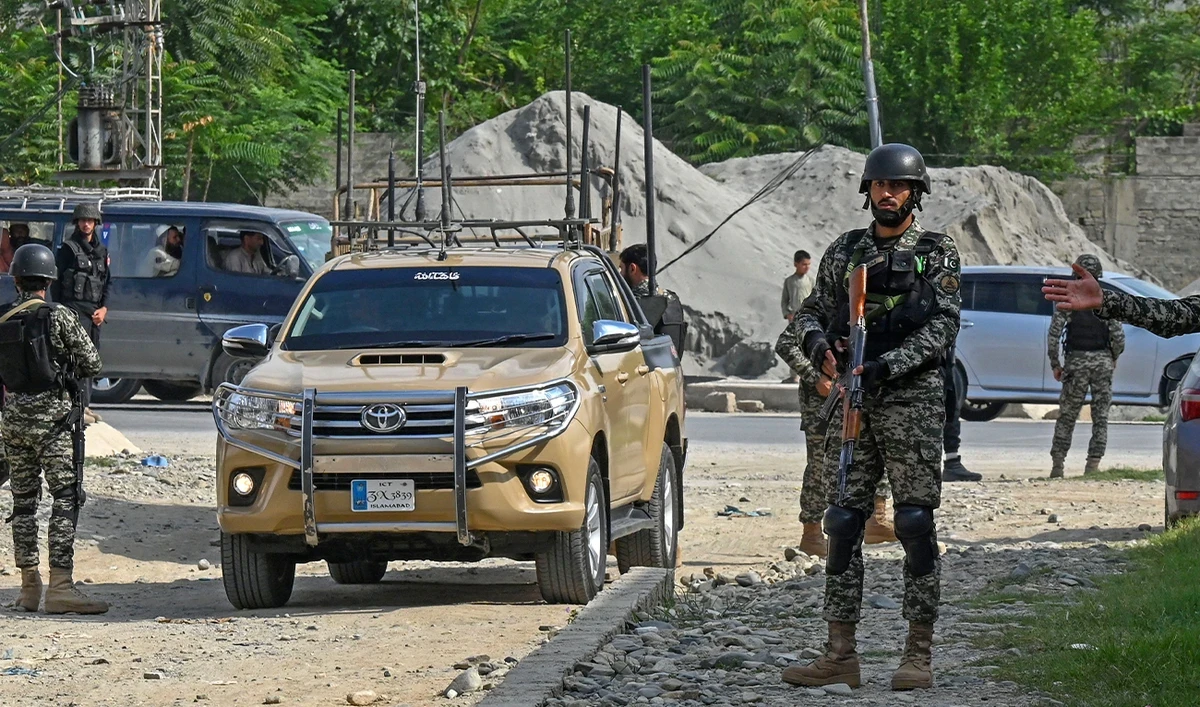
ISLAMABAD: Pakistan accused India on Sunday of running a propaganda campaign to malign its state institutions, a day after Indian External Affairs Minister Subrahmanyam Jaishankar attributed what he described as Pakistan’s “ideological hostility” toward New Delhi to the country’s powerful army.

Addressing a public forum in New Delhi, Jaishankar said most of India’s problems with Pakistan stemmed from its military establishment, which he argued had cultivated and sustained an entrenched animosity toward India.

His remarks came months after a brief but intense military confrontation between the nuclear-armed neighbors, during which both sides exchanged artillery and missile fire and deployed drones and fighter jets.

Responding to the comments, Pakistan’s Foreign Office spokesperson Tahir Andrabi called them “highly inflammatory, baseless and irresponsible.”

“Pakistan is a responsible state and its all institutions, including armed forces, are a pillar of national security, dedicated to safeguarding the sovereignty and territorial integrity of the country,” Andrabi said in a statement. “The May 2025 conflict vividly demonstrated Pakistan armed forces’ professionalism as well as their resolve to defend the motherland and the people of Pakistan against any Indian aggression in a befitting, effective yet responsible manner.”

“The attempts by Indian leadership to defame Pakistan’s state institutions and its leadership are a part of a propaganda campaign designed to distract attention from India’s destabilising actions in the region and beyond as well as state-sponsored terrorism in Pakistan,” he said, adding that such “incendiary rhetoric” showed the extent of India’s disregard for regional peace and stability.

Andrabi said that rather than making “misleading remarks about the armed forces of Pakistan,” India should confront the “fascist and revisionist Hindutva ideology that has unleashed a reign of mob justice, lynchings, arbitrary detentions and demolition of properties and places of worship.”

He warned that the Indian state and its leadership had become hostage to “this terror in the name of religion.”

India and Pakistan have fought three wars since independence in 1947. They have also engaged in countless border skirmishes and major military standoffs, including the 1999 Kargil conflict.

The four-day conflict in May 2025 ended with a US-brokered ceasefire, after Washington said both sides had expressed willingness to pursue dialogue.

Pakistan said it was ready to discuss all outstanding issues, but India declined talks.


-End