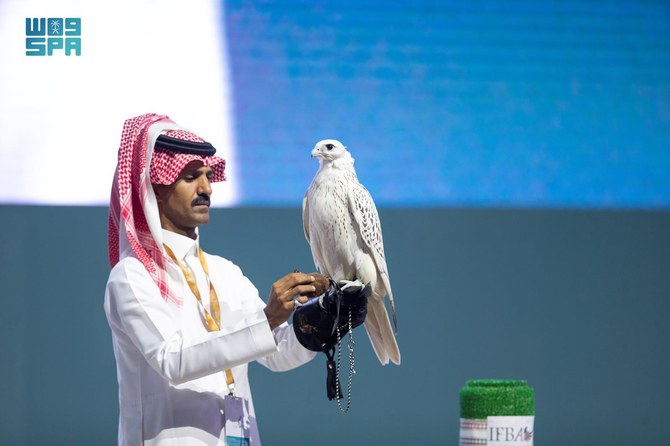
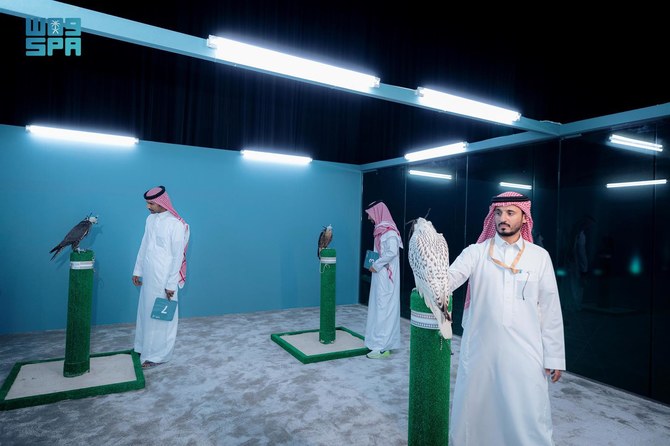
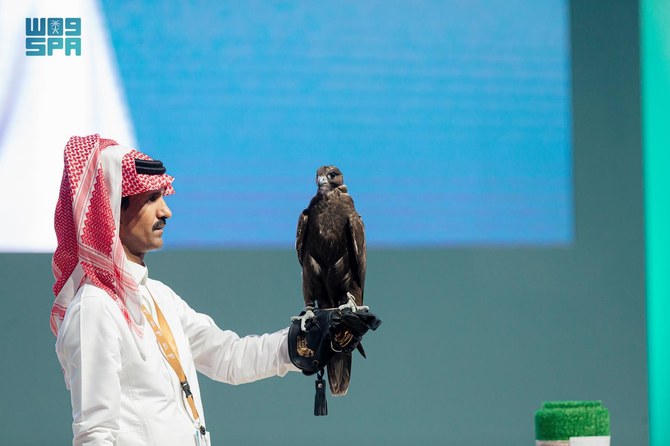
RIYADH: A Saudi breeding farm acquired rare falcons from Siberia as part of its efforts to produce sought-after specimens at the International Falcon Breeders Auction in Riyadh.
The auction at the headquarters of the Saudi Falcons Club in Malham, about 80 km north of Riyadh, has attracted participation from leading international falcon breeding farms. Selling will continue until Aug. 25.
Falconer Soliman Al-Dahas, owner of Al-Dahas Falcon Farm, said that racing falcons sold at the auction are rare breeds preferred by falconers for their speed and beauty.
The farm sold a rare black Hur falcon, bred from parents living in the Altai Mountains of southern Siberia, he said.
Al-Dahas set up the farm in 2020 to breed racing falcons.
Special genetic compositions produce birds characterized by strength, high levels of focus, and the ability to pounce on prey.
Several pairs of falcons from the farm have also won Mazayen beauty pageants at the King Abdulaziz Falconry Festival, Al-Dahas said.
Genetic compositions focus on color, appearance, weight and other desirable traits favored by falconers, he added.
Meanwhile, a pure gyr falcon from a Canadian farm made its first appearance at the auction, where it was offered for sale at SR15,000 ($4,000) and eventually sold for SR45,000.
A shaheen falcon from an Austrian farm also listed for sale was bought for SR30,000, while a Qarmousha falcon from a British farm was bought for SR25,000.
The auction has become a key marketplace for both local and international falcon breeding farms, and offers business opportunities to professional falconers by showcasing a selection of elite breeds.
It also contributes to preserving and enhancing the heritage and traditions of falconry in Saudi Arabia, and supports breeding farms and their efforts to enhance the Kingdom’s position as a global destination for falconers.
During the previous two editions, the event recorded sales of more than SR10 million through the auction of more than 800 falcons.
The club showcases top auctioned falcons, with participants competing live on TV and social media, while selected falcons are announced before each auction night.


![]()
![]()
![]()

World breeding farms gather for Riyadh falcon auction
Short Url
https://arab.news/8257f
World breeding farms gather for Riyadh falcon auction
- Event offers business opportunities and celebrates falconry heritage
- Several pairs of falcons from the farm have also won Mazayen beauty pageants at the King Abdulaziz Falconry Festival


Latest updates



Recommended


© 2026 SAUDI RESEARCH & PUBLISHING COMPANY, All Rights Reserved And subject to Terms of Use Agreement.