

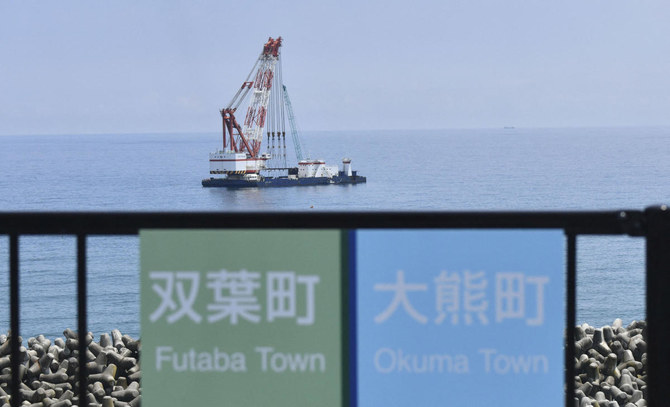

TOKYO: Japan will begin releasing cooling water from the stricken Fukushima power plant on Thursday, 12 years after one of the world’s worst nuclear disasters.
The announcement came despite opposition from fishermen and protests by China, which has already banned food shipments from several Japanese prefectures.
Japan insists the gradual release into the sea of the more than 500 Olympic swimming pools’ worth of water that has accumulated at the stricken nuclear plant is safe, a view backed by the UN atomic agency.
Prime Minister Fumio Kishida announced the start date on Tuesday, a day after talks with fishing industry representatives who are opposed, “if weather and sea conditions do not hinder it.”
The Fukushima-Daiichi nuclear plant was knocked out by a massive earthquake and tsunami that killed around 18,000 people in March 2011, with three of its reactors sent into meltdown.
Since then, operator TEPCO has collected 1.34 million tons of water used to cool what remains of the still highly radioactive reactors, mixed with groundwater and rain that has seeped in.
TEPCO says the water has been diluted and filtered to remove all radioactive substances except tritium, levels of which are far below dangerous levels.
“Tritium has been released (by nuclear power plants) for decades with no evidential detrimental environmental or health effects,” Tony Hooker, a nuclear expert from the University of Adelaide, told AFP.
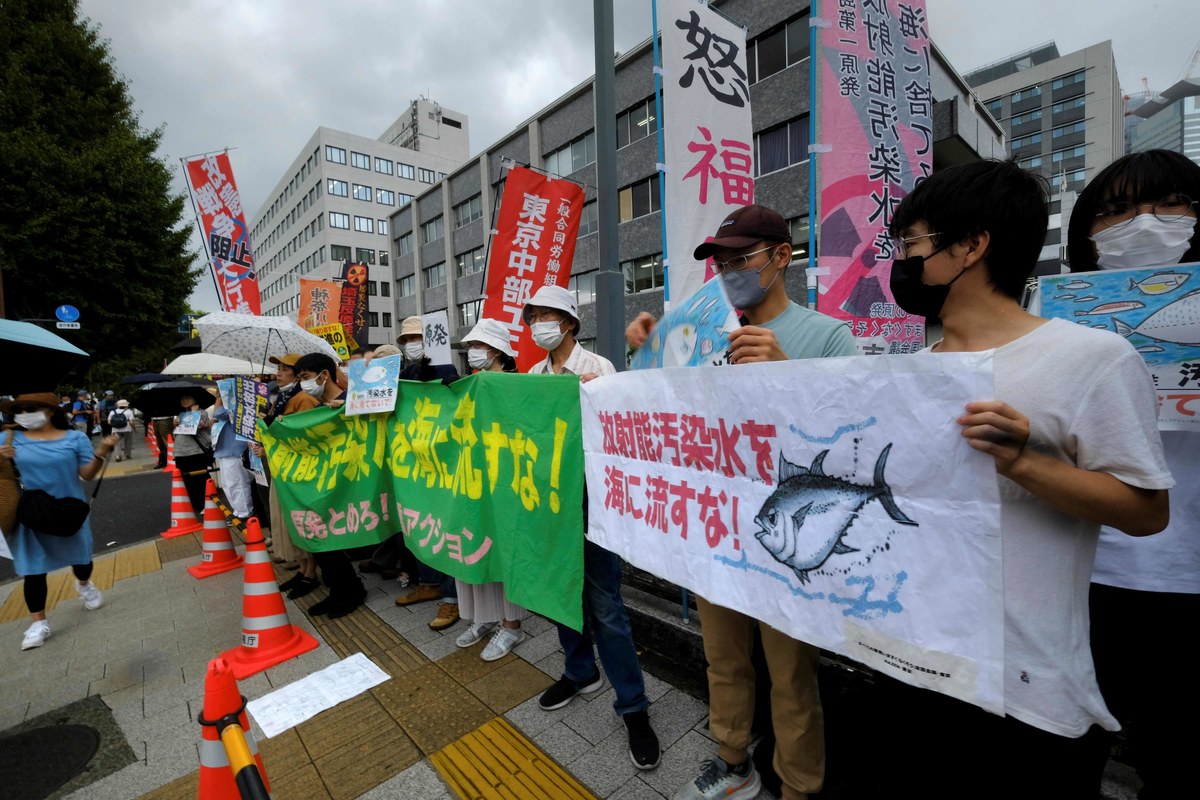
Protesters hold signs reading "Don't throw radioactive contaminated water into the sea!"(R) as they take part in a rally against the Japanese government's plan to release treated wastewater from the crippled Fukushima Daiichi power plant into the ocean, outside the prime minister's office in Tokyo. (AFP)
This water will now be released into the ocean off Japan’s northeast coast at a maximum rate of 500,000 liters (132,000 US gallons) per day.
Environmental pressure group Greenpeace has said the filtration process is flawed and that an “immense” quantity of radioactive material will be dispersed into the sea over the coming decades.
Japan “has opted for a false solution — decades of deliberate radioactive pollution of the marine environment — during a time when the world’s oceans are already facing immense stress and pressures,” Greenpeace said Tuesday.
The UN atomic watchdog said in July that the release would have a “negligible radiological impact on people and the environment.”
Many South Koreans are alarmed at the prospect of the release, staging demonstrations and even stocking up on sea salt because of fears of contamination.
But President Yoon Suk Yeol’s government, taking political risks at home, has sought to improve long-frosty relations with Japan and has not objected to the plan.
Yoon last week held a first-ever trilateral summit with Kishida and US President Joe Biden at Camp David, the three united by worries about China and North Korea.
China has accused Japan of treating the ocean like a “sewer,” banning imports of food from 10 Japanese prefectures even before the release and imposing strict radiation checks.
Hong Kong, an important market for Japanese seafood exports, has also threatened restrictions.
This has worried people involved in Japan’s fishing industry, just as business was beginning to recover more than a decade after the nuclear disaster.
“Nothing about the water release is beneficial to us,” third-generation fisherman Haruo Ono, 71, whose brother was killed in 2011, told AFP in Shinchimachi, 60 kilometers (40 miles) north of the nuclear plant.
James Brady from the Teneo risk consultancy said that while China’s safety concerns may be sincere, there was a distinct whiff of geopolitics and economic rivalry in its harsh reaction.
“The multifaceted nature of the Fukushima wastewater release issue makes it quite a useful one for Beijing to potentially exploit,” Brady told AFP.
Beijing can “leverage a degree of economic pressure on the trade axis, exacerbate internal domestic political cleavages on the issue within Japan... and even potentially put pressure on improving diplomatic ties between Seoul and Tokyo.”
Naoya Sekiya from the University of Tokyo last year conducted a survey which found that 90 percent of people China and South Korea thought Fukushima food was “very dangerous” or “somewhat dangerous.”
“I think that’s because Japan hasn’t properly dispelled such concerns,” Sekiya told AFP.
“(We) have to make a proper and sufficient explanation.”


