

Saudi minister approves creation of investment firm for Najran region

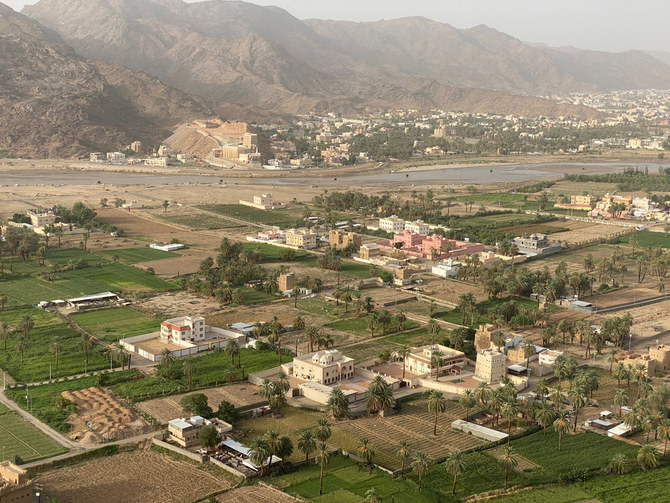
The new entity, operating as a closed joint-stock government firm, will serve as an investment arm for Najran region’s municipality, marking a valuable addition to its business sector. (Shutterstock)
Short Url
Updated 21 August 2023
Follow

Saudi minister approves creation of investment firm for Najran region

  • Abdullah Al-Fadel, the official spokesperson for the municipality, emphasized that this move is expected to contribute positively to the region’s economic development

RIYADH: Investment activity in the municipal sector in Saudi Arabia’s Najran region is set for a significant boost with the creation of the Najran Municipality Investment Co.    

Saudi Minister of Municipal and Rural Affairs and Housing Majid Al-Hogail has given the green light to establish this new company, which is fully owned by the region’s municipality, reported the Saudi Press Agency.     

The new entity, to be operated as a closed joint-stock government firm, will serve as an investment arm of the region’s municipality and a valuable addition to its businesses.    

FASTFACT

The new entity, to be operated as a closed joint-stock government firm, will serve as an investment arm of the region’s municipality and a valuable addition to its businesses.    

Abdullah Al-Fadel, the official spokesperson for the municipality, emphasized that this move is expected to contribute positively to the region’s economic development.    

He also explained that the new company will work on three main axes. The first is the axis of managing and developing municipal investment contracts. 

The second axis includes managing municipal service contracts. The spokesman added that the third axis involves establishing tourism development projects with the participation of the private sector. 

In February, during a briefing by the Center for Government Communications in Riyadh, Al-Hogail discussed several issues, including the supply of real estate, housing loan facilities, improvements to the urban landscape and the effects of heavy rain. 

He stated that the ministry provided 30,000 housing units in 2022 for families in greatest need and aims to provide 95,000 by 2025. 

Homeownership is rising among Saudis, he added, and has reached 60 percent of the population.   

“More than 1.4 million families benefited from housing support, and there were also nine different housing and financing options available to enable ownership,” said Al-Hogail, adding that the goal is to offer 365,000 additional housing units by 2025. 

In March, Al-Hogail noted, at the National Transformation Forum in Riyadh, that Saudi Arabia seeks to have three cities ranked among the top 100 in terms of quality of life. 


Saudi Arabia’s foreign reserves rise to a 6-year high of $475bn

Updated 10 sec ago
Follow

Saudi Arabia’s foreign reserves rise to a 6-year high of $475bn

RIYADH: Saudi Arabia’s foreign reserves climbed 3 percent month on month in January to SR1.78 trillion, up SR58.7 billion ($15.6 billion) from December and marking a six-year high.

On an annual basis, the Saudi Central Bank’s net foreign assets rose by 10 percent, equivalent to SR155.8 billion, according to data from the Saudi Central Bank, Argaam reported.

The reserve assets, a crucial indicator of economic stability and external financial strength, comprise several key components.

According to the central bank, also known as SAMA, the Kingdom’s reserves include foreign securities, foreign currency, and bank deposits, as well as its reserve position at the International Monetary Fund, Special Drawing Rights, and monetary gold.

The rise in reserves underscores the strength and liquidity of the Kingdom’s financial position and aligns with Saudi Arabia’s goal of strengthening its financial safety net as it advances economic diversification under Vision 2030.

The value of foreign currency reserves, which represent approximately 95 percent of the total holdings, increased by about 10 percent during January 2026 compared to the same month in 2025, reaching SR1.68 trillion.

The value of the reserve at the IMF increased by 9 percent to reach SR13.1 billion.

Meanwhile, SDRs rose by 5 percent during the period to reach SR80.5 billion.

The Kingdom’s gold reserves remained stable at SR1.62 billion, the same level it has maintained since January 2008.

Saudi Arabia’s foreign reserve assets saw a monthly rise of 5 percent in November, climbing to SR1.74 trillion, according to the Kingdom’s central bank.

Overall, the continued advancement in reserve assets highlights the strength of Saudi Arabia’s fiscal and monetary buffers. These resources support the national currency, help maintain financial system stability, and enhance the country’s ability to navigate global economic volatility.

The sustained accumulation of foreign reserves is a critical pillar of the Kingdom’s economic stability. It directly reinforces investor confidence in the riyal’s peg to the US dollar, a foundational monetary policy, by providing SAMA with ample resources to defend the currency if needed.

Furthermore, this financial buffer enhances the nation’s sovereign credit profile, lowers national borrowing costs, and provides essential fiscal space to navigate global economic volatility while continuing to fund its ambitious Vision 2030 transformation agenda.