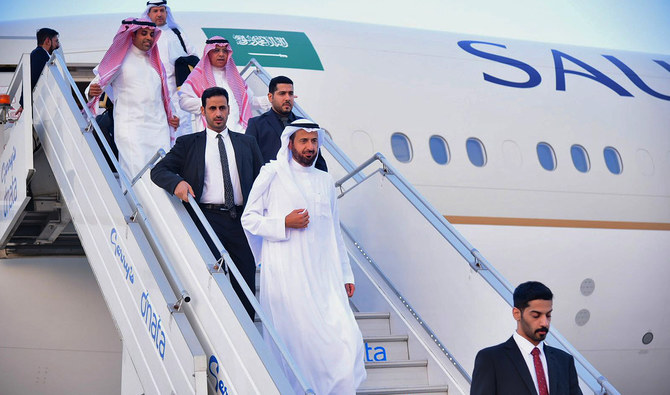

ISLAMABAD: Saudi Minister for Hajj and Umrah, Dr. Tawfiq Al-Rabiah arrived in Islamabad on Sunday on a four-day official visit to discuss matters concerning the annual Hajj pilgrimage and to promote religious tourism between the two countries, Pakistan's religion ministry said.
Al-Rabiah, who is also the chairman of the administrative board of the Two Holy Mosques, is leading a large delegation comprising the deputy ministers of Hajj and Umrah, tourism, international cooperation, presidents of Saudi Airlines, general authority of civil aviation, and representatives from the Saudi Aviation.
“Caretaker Minister of Religious Affairs Aneeq Ahmed, Saudi Ambassador to Pakistan Nawaf Al-Maliki, former minister of religious affairs Senator Muhammad Talha Mahmood, and other officials of the ministry welcomed the esteemed guests,” Muhammad Umer Butt, a spokesperson for the Pakistani religious affairs ministry, told Arab News.
He said the Saudi minister and his delegation's visit was of great importance for Pakistan, adding that Al-Rabiah had been given the status of a state guest by the government.
“During the visit, multiple issues related to facilities for Hajj and Umrah pilgrims and expansion of the Route to Makkah project to other Pakistani cities will be discussed,” he added.
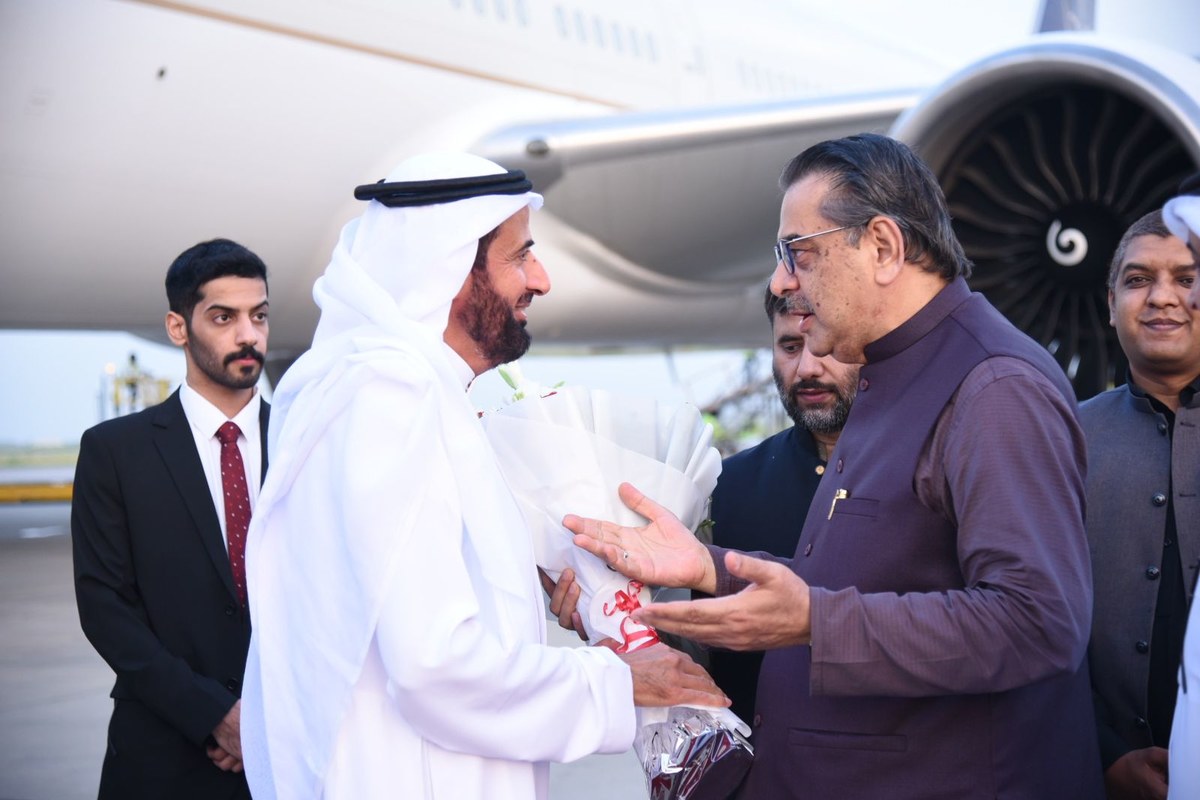
Pakistani Caretaker Minister of Religious Affairs Aneeq Ahmed receives Saudi Minister for Hajj and Umrah, Dr. Tawfiq Al-Rabiah, as he arrives in Islamabad on four-day visit to Pakistan on August 20, 2023. (Photo courtesy: Ministry of Religious Affairs)
In 2019, Saudi Arabia introduced the Makkah Route initiative in Pakistan and four other countries, streamlining Hajj visas, customs and health requirements at their departure airports and thus saving substantial time upon arrival in the Kingdom. This year, over 26,000 Pakistani pilgrims benefited from the project from Islamabad airport.
On Saturday, Pakistani religious affairs ministry stated that a memorandum of understanding (MoU) will also be signed during the visit to enhance future Hajj arrangements.
“We will also discuss increase in Hajj quota according to the population of Pakistan under the new census and if they [Saudi delegation] agree, then our Hajj quota will be the highest in the world on the basis of the new census,” Butt said.
“Along with delegation-level talks with religious affairs minister, the visiting Saudi minister will also meet Pakistan’s president, the prime minister, and the chief of army staff,” he added.
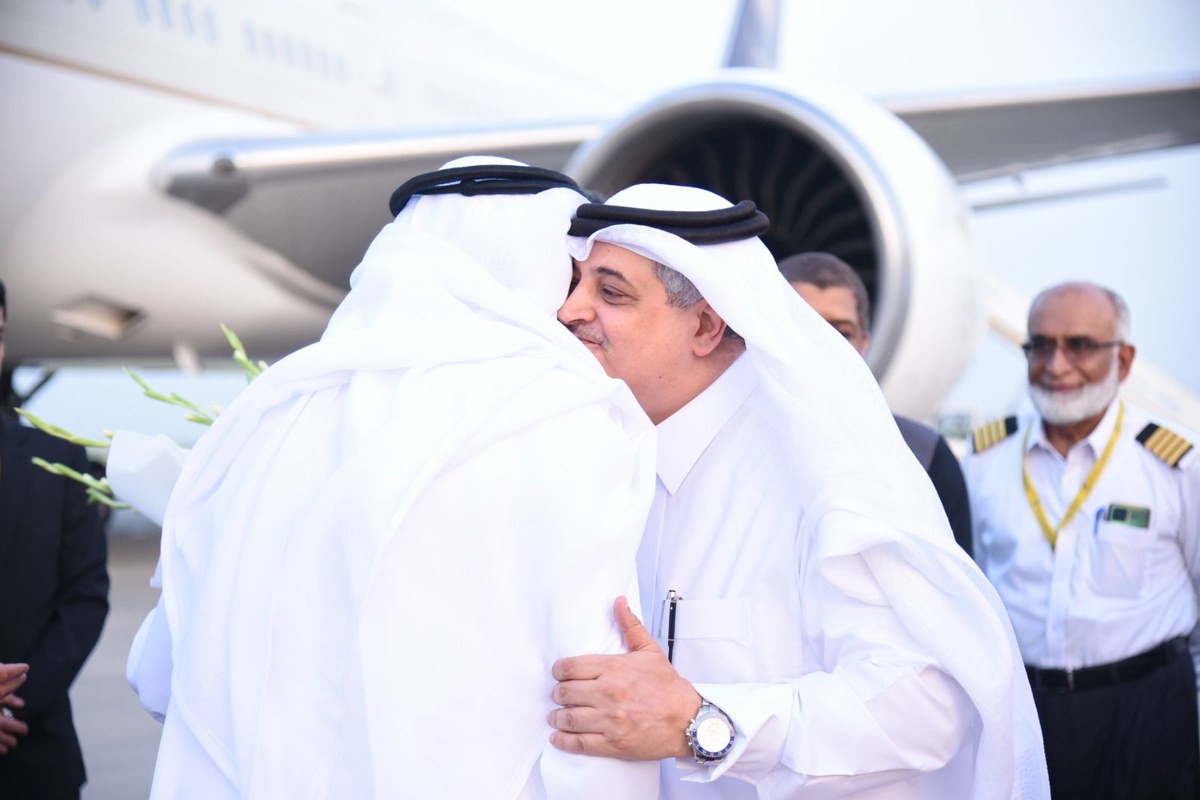
Saudi Arabia's ambassador to Pakistan Nawaf bin Said Al-Malki receives Saudi Minister for Hajj and Umrah, Dr. Tawfiq Al-Rabiah, as he arrives in Islamabad on four-day visit to Pakistan on August 20, 2023. (Photo courtesy: Ministry of Religious Affairs)
During the four-day visit, the delegation plans to visit Pakistan's southern port city of Karachi and meet dignitaries and the business community in the Pakistani commercial hub.
“The Saudi delegation will also meet people involved in Hajj, Umrah, and religious tourism,” Butt said, adding that Pakistan had the highest rate of Umrah for many years and the country stood at number two in terms of the number of Hajj pilgrims.
Saudi Arabia and Pakistan are close allies and enjoy brotherly relations as the Kingdom is home to over 2.5 million Pakistani expatriates and plays a pivotal role in providing remittances and oil supplies to the South Asian country.
In June this year, Saudi Arabia extended assistance to Pakistan by depositing $3 billion in its central bank, helping Islamabad avert a sovereign default and secure an International Monetary Fund (IMF) bailout deal.