

Lebanon and Kuwait ban ‘Barbie’ film

1 / 3
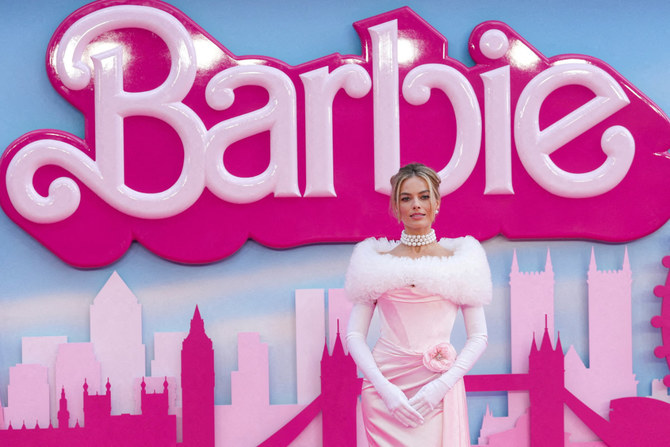
Margot Robbie attends the European premiere of "Barbie" in London on July 12, 2023. (REUTERS/File Photo)
2 / 3
3 / 3
Short Url
Updated 10 August 2023
Follow

Lebanon and Kuwait ban ‘Barbie’ film

  • Lebanon’s culture minister Mohammad Mortada says Barbie “promotes homosexuality” and contradicts religious values
  • Aside from banning Barbie, Kuwait also forbids showing of supernatural horror film “Talk to Me”

BEIRUT: Lebanon’s culture minister moved to ban the film “Barbie” from cinemas on Wednesday, saying it “promotes homosexuality” and contradicts religious values.

Minister Mohammad Mortada is backed by powerful Shiite armed group Hezbollah, whose head Sayyed Hassan Nasrallah has ramped up his rhetoric against the LGBT community, referring in a recent speech to Islamic texts that call for punishing offenders with death.
Mortada’s decision said the film was found to “promote homosexuality and sexual transformation” and “contradicts values of faith and morality” by diminishing the importance of the family unit.
Based on Mortada’s move, Interior Minister Bassam Mawlawi in turn asked General Security’s censorship committee, which falls under the interior ministry and is traditionally responsible for censorship decisions, to review the film and give its recommendation.
Kuwait followed in Lebanon’s footsteps later in the day, saying it had banned “Barbie” and supernatural horror film “Talk to Me” to protect “public ethics and social traditions,” the state news agency said.
Lebanon was the first Arab country to hold a gay pride week in 2017 and has generally been seen as a safe haven for the LGBT community in the broadly conservative Middle East.
But the issue has come into sharper focus recently, sparking tensions. Mawlawi last year took a decision to ban events “promoting sexual perversion” in Lebanon, understood to refer to LGBT-friendly gatherings.
In a speech last month, Nasrallah called on Lebanese authorities to take action against materials he deemed to be promoting homosexuality, including by “banning” them.
He said homosexuality posed an “imminent danger” to Lebanon and should be “confronted.” In the case of a homosexual act, Nasrallah said in late July, “from the first time, even if he is unmarried, he is killed.”
On Tuesday, Lebanon’s cabinet urged citizens to “cling” to family values following a meeting with the country’s top Christian cleric Patriarch Bechara Boutros Al-Rai, although it did not mention the LGBT community specifically.
Ayman Mhanna, executive director at the non-profit civic Samir Kassir Foundation, told Reuters that Mortada’s move came amid “a wave of bigotry.”
“This is part of a broader campaign that is bringing together Hezbollah, the Christian far right, and other top religious leaders in a focused campaign against LGBT people,” Mhanna said.
Starring Margot Robbie and Ryan Gosling as Barbie and Ken, the movie sends Mattel Inc’s doll on an adventure into the real world. The film has topped $1 billion in box office ticket sales worldwide since its July 21 debut.


Review: ‘Sorry, Baby’ by Eva Victor

Eva Victor appears in Sorry, Baby by Eva Victor, an official selection of the 2025 Sundance Film Festival. (Supplied)
Updated 27 December 2025
Follow

Review: ‘Sorry, Baby’ by Eva Victor

  • Victor makes a deliberate narrative choice; we never witness the violence of what happens to her character

There is a bravery in “Sorry, Baby” that comes not from what the film shows, but from what it withholds. 

Written, directed by, and starring Eva Victor, it is one of the most talked-about indie films of the year, winning the Waldo Salt Screenwriting Award at Sundance and gathering momentum with nominations, including nods at the Golden Globes and Gotham Awards. 

The film is both incisive and tender in its exploration of trauma, friendship, and the long, winding road toward healing. It follows Agnes, a young professor of literature trying to pick up the pieces after a disturbing incident in grad school. 

Victor makes a deliberate narrative choice; we never witness the violence of what happens to her character. The story centers on Agnes’ perspective in her own words, even as she struggles to name it at various points in the film. 

There is a generosity to Victor’s storytelling and a refusal to reduce the narrative to trauma alone. Instead we witness the breadth of human experience, from heartbreak and loneliness to joy and the sustaining power of friendship. These themes are supported by dialogue and camerawork that incorporates silences and stillness as much as the power of words and movement. 

The film captures the messy, beautiful ways people care for one another. Supporting performances — particularly by “Mickey 17” actor Naomi Ackie who plays the best friend Lydia — and encounters with strangers and a kitten, reinforce the story’s celebration of solidarity and community. 

“Sorry, Baby” reminds us that human resilience is rarely entirely solitary; it is nurtured through acts of care, intimacy and tenderness.

A pivotal scene between Agnes and her friend’s newborn inspires the film’s title. A single, reassuring line gently speaks a pure and simple truth: “I know you’re scared … but you’re OK.” 

It is a reminder that in the end, no matter how dark life gets, it goes on, and so does the human capacity to love.