Saudi artist awarded 2023-24 Hayy Jameel Facade Commission

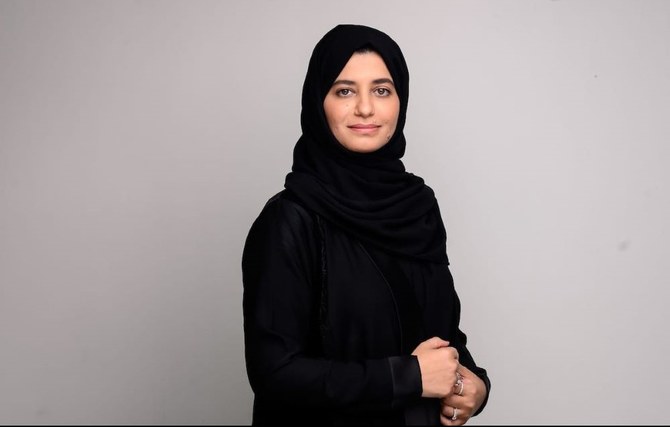
Zahrah Al-Ghamdi has been awarded the 2023-24 Hayy Jameel Facade Commission. (Supplied)
Short Url
Updated 07 August 2023
Follow

Saudi artist awarded 2023-24 Hayy Jameel Facade Commission

  • Zahrah Al-Ghamdi’s artwork ‘The Cell’ will go on public display in December
  • Zahrah Al-Ghamdi: ‘Regarding the idea behind the work, I tried to make it a universal concept that touches on the thoughts and feelings of people in general’

JEDDAH: Saudi contemporary artist Zahrah Al-Ghamdi has been chosen as the winner of the 2023-24 Hayy Jameel Facade Commission.

A professor of visual art and design at the University of Jeddah, she was selected by an international jury to create a significant public artwork on a 25-meter canvas located on the front of the Jeddah building.

Her proposed work, titled “The Cell,” will showcase her style of integrating art with its surroundings.

Al-Ghamdi said: “I feel a mix of different emotions. I am excited, proud, and happy to see others appreciate the idea behind my work. At the same time, I also feel anxious, cautious, and under pressure to meet the expectations of the viewers and maintain the level of creativity expected of me.”

She noted that her aim had been to create a universal concept that resonated with people from all walks of life.

“Regarding the idea behind the work, I tried to make it a universal concept that touches on the thoughts and feelings of people in general, regardless of their nationality or culture,” she added.

In December, Al-Ghamdi’s facade design will be unveiled to the public.

Nora Razian, deputy director of arts at Art Jameel, said: “This is the third iteration of the Hayy Jameel Facade Commission, an annual program that connects our beloved creative complex with our neighborhood and the wider city of Jeddah.

“Through a competitive open call that received over 50 proposals this year, the esteemed jury, which is an international ensemble of artists, curators, and museum directors, alongside myself, unanimously selected Zahrah Al-Ghamdi’s proposal ‘The Cell’ for its bold vision, material experimentation on a grand scale, and transformative potential for our facade.

“With Al-Ghamdi’s work, the Hayy Jameel Facade Commission continues to support the creation of innovative public art and support the creative community, while leaving an indelible mark on the urban experience of Jeddah.”

The jury for the Facade Commission this year included Saudi artist Manal Al-Dowayan, Razian, the curator of international art at the Tate Modern, Nabila Abdel Nabi, and chair of modern and contemporary arts at The Met Museum, Sheena Wagstaff.

The jury gave a special mention to Basmah Felemban, Abeer Sultan, Mubarak Mahdi, and Sarah Al-Abdali, among the shortlisted proposals, in recognition of their exceptional artistic contributions and innovative approaches to the project.

The annual program offers a unique opportunity for a single artist or collective to publicly display a work of art. Previous edition awardee Mohammed Alfaraj’s “The Face of the City” will remain on show until December.


Lebanese filmmaker turns archival footage into a love letter to Beirut

Updated 28 February 2026
Follow

Lebanese filmmaker turns archival footage into a love letter to Beirut

LONDON: Lebanese filmmaker Lana Daher’s debut feature “Do You Love Me” is a love letter of sorts to Beirut, composed entirely of archival material spanning seven decades across film, television, home videos and photography.

The film premiered at the 82nd Venice International Film Festival in September and has since traveled to several regional and international festivals.

Pink Smoke (2020) by Ben Hubbard. (Supplied)

With minimal dialogue, the film relies heavily on image and sound to reconstruct Lebanon’s fragmented history.

“By resisting voiceover and autobiography, I feel like I had to trust the image and the shared emotional landscape of these archives to carry the meaning,” Daher said.

A Suspended Life (Ghazal el-Banat) (1985) by Jocelyne Saab. (Supplied)

She explained that in a city like Beirut “where trauma is rarely private,” the socio-political context becomes the atmosphere of the film, with personal memory expanding into a collective experience — “a shared terrain of emotional history.”

Daher said: “By using the accumulated visual representations of Beirut, I was, in a way, rewriting my own representation of home through images that already existed."

Whispers (1980) by Maroun Bagdadi. (Supplied)

Daher, with editor Qutaiba Barhamji, steered clear of long sequences, preferring individual shots that allowed them to “reassemble meaning” while maintaining the integrity of their own work and respecting the original material, she explained.

The film does not feature a voice-over, an intentional decision that influenced the use of sound, music, and silence.

The Boombox (1995) by Fouad Elkoury. (Supplied)

“By resisting the urge to fill every space with dialogue or score, we created room for discomfort,” Daher said, adding that silence allows the audience to sit with the image and enter its emotional space rather than being guided too explicitly.

 The film was a labor of love, challenging Daher personally and professionally.

“When you draw from personal memory, you’re not just directing scenes, you’re revisiting parts of yourself and your childhood,” she said. “There’s vulnerability in that.”